


A Day Longer Than a Year
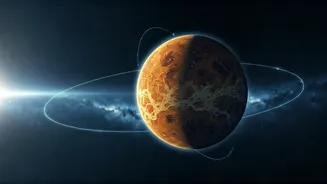
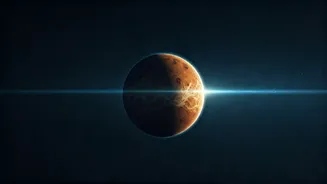
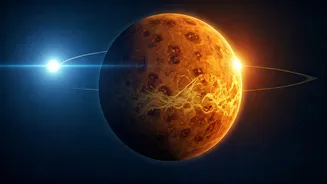
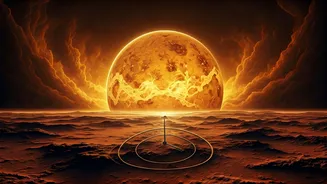
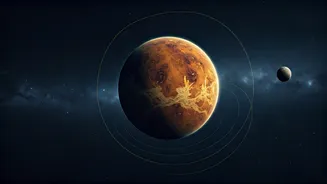
It sounds like a riddle, but it's a simple, mind-bending fact. A 'year' on Venus—the time it takes to complete one orbit around the Sun—is about 225 Earth days. However, a 'day' on Venus—the time it takes to rotate once on its axis—is a staggering 243
Earth days. This means that on Venus, a day is nearly 18 Earth days longer than its year. You would celebrate your first birthday before you’d even seen your first full sunrise and sunset cycle. This cosmic quirk makes Venus unique in our solar system and begs the question: how did our neighbouring planet get so strange?
Spinning the Wrong Way
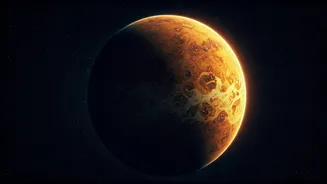
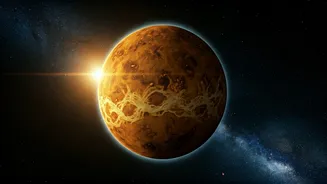
The length of its day is only half the story. Most planets in our solar system, including Earth, have a 'prograde' rotation. They spin on their axis in the same direction that they orbit the Sun (counter-clockwise if you look down from above the Sun's north pole). Venus is the odd one out. It has a 'retrograde' rotation, meaning it spins clockwise. If you could stand on the surface of Venus, you would see the Sun rise in the west and set in the east. Only one other planet, Uranus, is similarly strange (it's tilted so far over it's essentially spinning on its side), but Venus’s slow, backward spin is a puzzle scientists have been trying to solve for decades.
Theories of a Violent Past
So, why the slow, backward spin? The leading theories point to a chaotic and violent history. One major hypothesis suggests that early in its formation, Venus was struck by a massive planet-sized object. This colossal impact could have been powerful enough to not just halt its original rotation but actually reverse it, sending it into its current slow, backward spiral. Another theory points to a more gradual process. Venus has an incredibly thick, heavy atmosphere—about 92 times denser than Earth's. Some models suggest that the powerful friction between this dense, fast-moving atmosphere and the solid planet, combined with gravitational tides from the Sun, could have acted as a brake over billions of years, slowing Venus’s rotation to a crawl and eventually flipping it over.
A Hellish Climate Connection
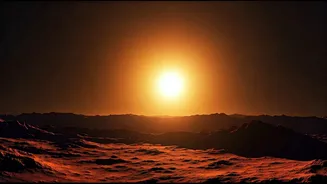
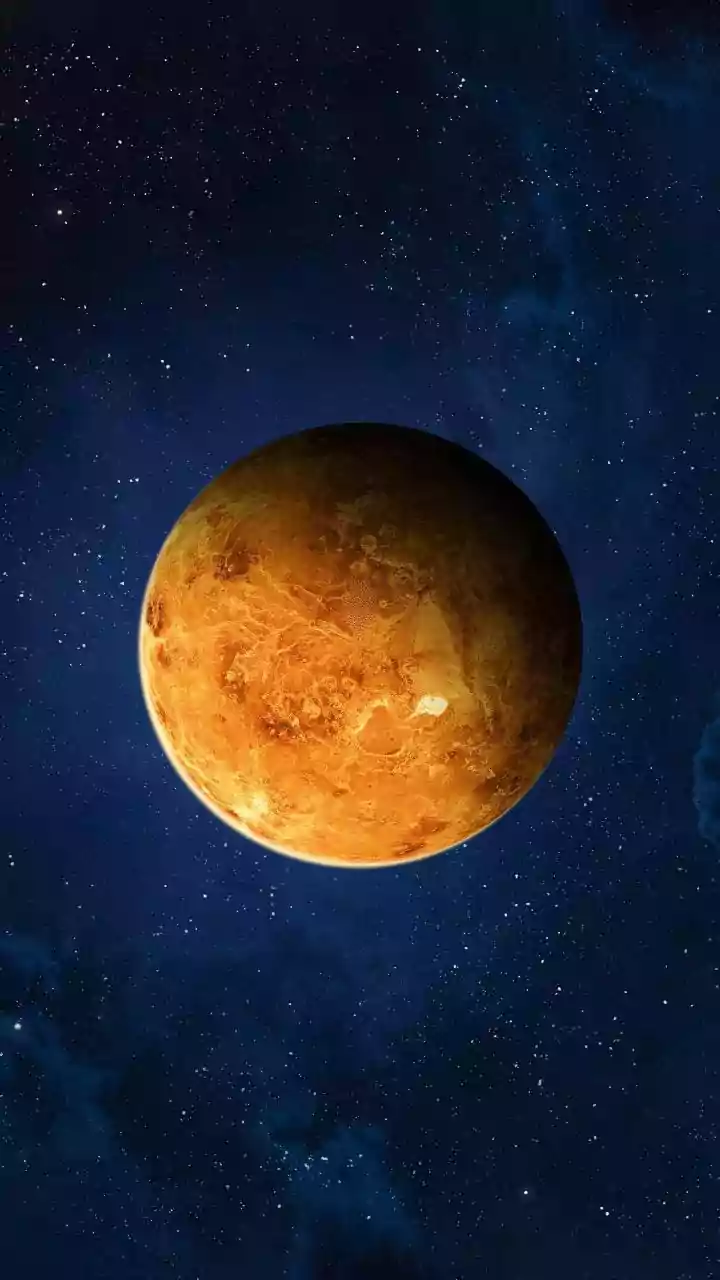
This bizarre rotation is not just a fun fact; it's deeply connected to Venus's hellish environment. The planet is the hottest in our solar system, with surface temperatures reaching 465°C—hot enough to melt lead. This is due to a runaway greenhouse effect, where its thick carbon dioxide atmosphere traps heat. The slow rotation contributes to this extreme climate. With one side of the planet facing the Sun for months at a time, it absorbs an immense amount of solar radiation. While the super-fast winds in its upper atmosphere do a surprisingly good job of distributing this heat around the planet (preventing one side from being unimaginably hotter than the other), the overall energy balance is that of an oven. The slow day prevents any significant cooling on the night side, keeping the entire planet at a consistent, scorching temperature.
Earth's Twisted Sister
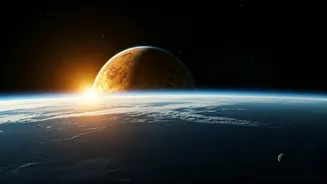
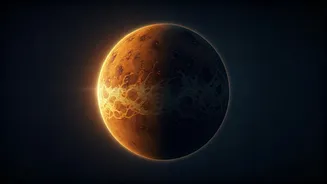
Venus is often called Earth's 'twin' because the two planets are similar in size, mass, and composition. They are rocky worlds that formed in the same neighbourhood of the solar system. Yet, they couldn't be more different. While Earth developed a stable rotation, a temperate climate, and liquid water, Venus became a toxic, boiling inferno. Studying Venus's strange day and its runaway greenhouse effect is a crucial lesson in planetary science. It serves as a cautionary tale of how a world so similar to our own could end up on such a drastically different and inhospitable path. Understanding why our twin went wrong helps us better appreciate the delicate balance that makes life on Earth possible.