







What is Sonification?
At its core, sonification is the process of translating data into sound. It’s the auditory equivalent of data visualisation, where charts and graphs become melodies and rhythms. You’ve likely encountered a basic form of it with a Geiger counter, which
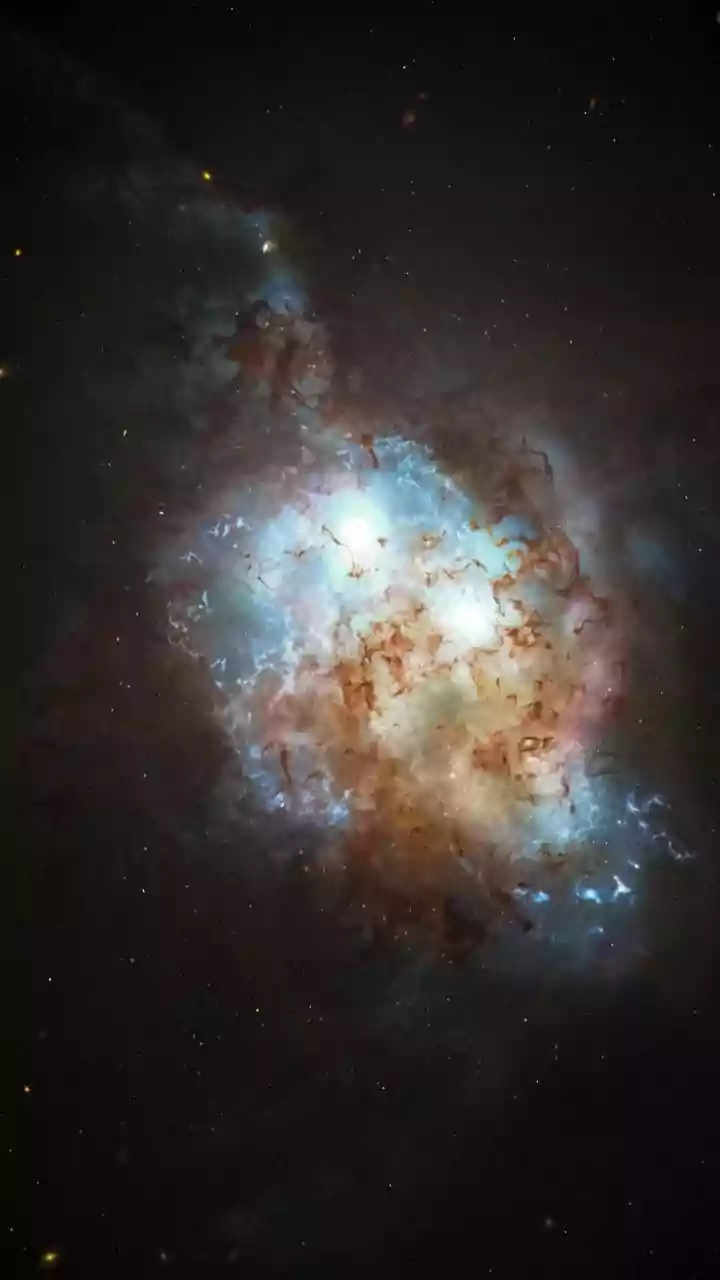
clicks to represent radiation levels. NASA has taken this concept to a cosmic scale. Telescopes like the Chandra X-ray Observatory and the James Webb Space Telescope collect data as digital signals—ones and zeros—that are usually converted into breathtaking images. The sonification project adds another layer, mapping this same data to sound, allowing us to “listen” to the stars.
Composing a Cosmic Symphony
So how do you turn a galaxy into a piece of music? A team of scientists, musicians, and accessibility experts collaborate on the process. Typically, they assign musical attributes to different properties of an astronomical image. For example, light from the top of an image might be assigned a higher pitch, while light from the bottom gets a lower one. The brightness of a star or nebula often controls the volume—the brighter the object, the louder the sound. Individual stars can be represented by single notes, while vast clouds of gas and dust might become an evolving drone. The process often involves scanning across an image from left to right, playing the sounds as the cursor moves, creating a temporal soundscape of a static image.
A Universe for Your Ears
The results are as diverse as the cosmos itself. In the sonification of the Galactic Center, there’s a rising crescendo as the scan reaches the supermassive black hole, Sagittarius A*. Here, data from Chandra, Hubble, and Spitzer telescopes are assigned to different instruments, creating an ensemble performance. For supernova remnants like Cassiopeia A, the expanding blast wave and the elements within it are translated into distinct sounds, with some data assigned to modified piano sounds and others to string and brass instruments. These aren’t just random noises; they are carefully crafted compositions based on real scientific data, turning cosmic events into auditory experiences that can be haunting, beautiful, and deeply informative.
More Than Just Pretty Sounds
While listening to a spiral galaxy is certainly a novel experience, the purpose of sonification goes far beyond entertainment. A primary goal of the project is to make astronomy more accessible, particularly for blind and visually impaired communities. It provides a new way to engage with scientific data that doesn't rely solely on sight. Furthermore, sonification can be a powerful tool for scientific discovery. The human ear is exceptionally good at detecting patterns and changes over time. By listening to data, scientists can sometimes perceive subtle details or anomalies that might be missed in a purely visual analysis. It offers researchers another tool to sift through enormous datasets, potentially revealing new insights into the physics of our universe.