



The Grand Arrival
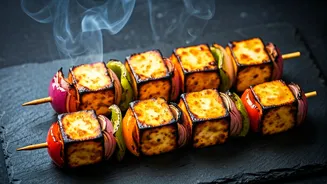
Before you see it, you hear it. That unmistakable sizzle announces its arrival, turning heads as the waiter navigates the restaurant floor. Then comes the aroma: a heady mix of charred paneer, toasted spices, and smoky promise. Presented on a sizzling
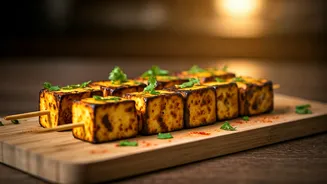
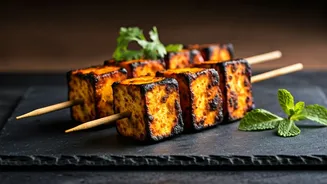
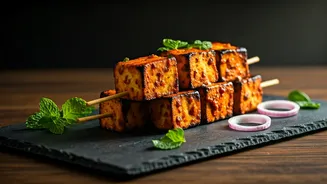
platter or skewered straight from the tandoor, Paneer Tikka isn’t just food; it’s an event. The vibrant colours—deep orange from the marinade, green from the capsicum, white from the onion, and a touch of black from the perfect char—make it a feast for the eyes before it even reaches your plate. Served with rings of raw onion and a wedge of lime, accompanied by a vibrant mint chutney, it’s a complete sensory package. This is the moment where conversations pause, and everyone leans in, ready to claim their piece.
The Anatomy of Perfection
What makes Paneer Tikka so consistently brilliant? Its genius lies in its harmonious simplicity. First, the hero: the paneer. The ideal cube is soft yet firm, capable of absorbing the marinade without crumbling under the intense heat of the tandoor. It acts as a creamy, mild canvas for the explosion of flavours to come. The magic, however, is in the marinade. A thick, luscious blend of hung curd (yoghurt), ginger-garlic paste, and a symphony of spices—typically turmeric, red chilli powder, garam masala, and chaat masala—clings to the paneer, tenderising it and infusing it with flavour. A touch of gram flour (besan) helps the marinade stick and gives it a beautiful crust. When this creation meets the searing, dry heat of a clay tandoor, something special happens. The outside develops a smoky char while the inside remains pillowy and soft. It’s a textural masterpiece.
A Legacy of Flavour
While the exact origin story of Paneer Tikka is debated, its roots are firmly planted in the tandoori cooking traditions of the Punjab region. The tandoor, a cylindrical clay oven, has been used for centuries to bake breads and cook meats. The concept of ‘tikka’—small chunks of marinated food cooked on a skewer—was traditionally associated with chicken. Paneer Tikka emerged as its brilliant vegetarian counterpart, offering the same smoky, spice-laden experience without the meat. It quickly became a staple, democratising the tandoori experience and proving that vegetarian starters could be just as robust and flavourful. It’s a dish that feels both ancient in its technique and modern in its universal appeal, a testament to culinary innovation within a traditional framework.
The Great Unifier
Beyond its taste, Paneer Tikka plays a significant social role. It’s the ultimate diplomatic dish. Have a table of fussy eaters? Order Paneer Tikka. A mix of vegetarians and non-vegetarians? Paneer Tikka is the bridge. Celebrating a promotion, a birthday, or just the end of a long week? It’s the go-to celebratory starter. Its consistent quality and familiar taste profile make it a low-risk, high-reward choice for any occasion. It’s the dish you order for your parents, your children, and your friends, confident that everyone will find something to love. It requires no complicated eating instructions, no acquired taste—just a simple, satisfying experience that brings people together.
Classic for a Reason
In a world of culinary fads and ever-changing menus, the classic Paneer Tikka endures. Sure, you’ll find modern variations—Achari Tikka with a pickle-like tang, Malai Tikka with a creamy white marinade, or Haryali Tikka infused with green herbs. These are delicious in their own right, but they all pay homage to the original. The classic red-orange tandoori version remains the benchmark, the gold standard against which all other starters are measured. Its staying power comes from its perfect balance: it’s spicy but not overpowering, rich but not heavy, simple in concept but complex in flavour.