






A Bridge Through History
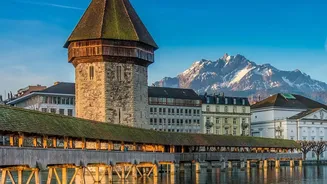
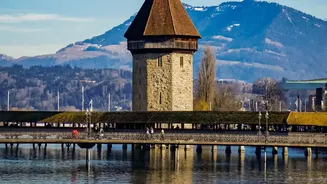
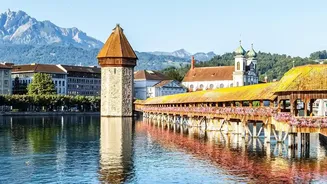
To understand the crowds, you first have to understand the appeal. The Kapellbrücke, or Chapel Bridge, is Europe's oldest surviving covered wooden bridge, originally built around 1360 as part of Lucerne's city fortifications. Its name comes from the nearby
St. Peter's Chapel. The adjacent octagonal Water Tower (Wasserturm) is even older, having served over centuries as a prison, treasury, and archive. As you walk its 205-metre length, you're supposed to look up. Tucked into the rafters are triangular 17th-century paintings depicting scenes from Lucerne's history and its patron saints. A devastating fire in 1993 destroyed a large section of the bridge and many of its precious paintings. The structure was swiftly rebuilt in just eight months, a testament to its importance to the city, but the charred beams and empty panels in some sections remain a poignant reminder of the loss.
The Reality of a Modern Icon
The bridge's historical significance and sheer beauty make it a magnet for visitors. On a typical summer day, the experience can be less of a peaceful stroll and more of a slow-moving procession. Crowds often funnel through between 10 a.m. and 4 p.m., especially when tour groups arrive from lake boats and mountain excursions. This can lead to a bottleneck of people pausing every few feet for the perfect photograph, making it difficult to appreciate the structure's details or the river views. The phenomenon of 'overtourism' is a real challenge for Lucerne, with local authorities even measuring visitor frequencies at key sites like the bridge to better manage the flow. While the city is beautiful, the concentration of tourists in a few key areas during peak hours can diminish the very charm they came to experience.
How to Visit Without the Crush
Experiencing the Chapel Bridge in relative peace is not impossible, but it requires strategy. The single most effective tactic is timing. The bridge is a public thoroughfare, open 24/7 and completely free to access. An early morning visit, before 9 a.m., offers soft light for photos and an almost empty bridge. The same is true for late evenings, after 6 p.m., when the bridge is beautifully illuminated and the day-trippers have departed. Visiting during the shoulder seasons of spring and autumn, or even winter, can also provide a quieter experience. When you do cross, take a moment to look up at the surviving and restored paintings; many visitors are so focused on the external views that they miss the art inside.
Beyond the Chapel Bridge
While the Chapel Bridge is a must-see, Lucerne offers other, less-congested treasures. A short walk downriver is the Spreuer Bridge, another 15th-century covered wooden bridge. It is often overlooked but features a fascinating and macabre 'Dance of Death' painting series from the 17th century, offering a completely different, and quieter, historical art experience. For sweeping views over the city, a walk along the Musegg Wall, the remains of Lucerne's 14th-century fortifications, is highly recommended. Several of its nine towers are open to climb for free during the warmer months, providing a stunning panorama of the old town, the lake, and the mountains beyond. Simply wandering the cobblestone streets of the Old Town on either side of the river also reveals painted facades, charming squares, and a sense of history away from the main thoroughfare.