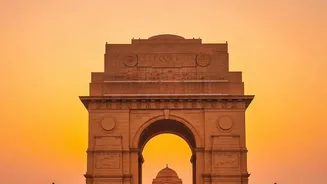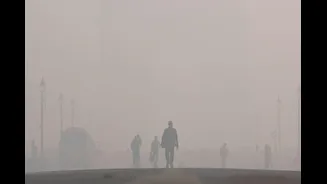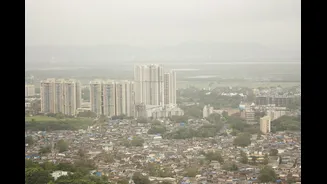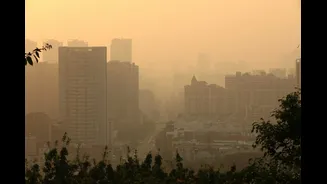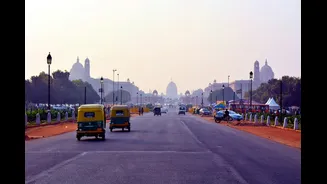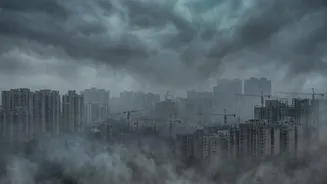




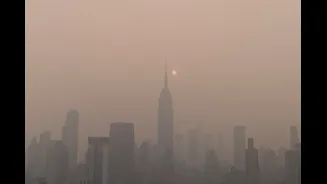
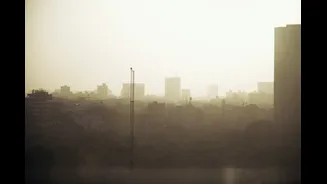
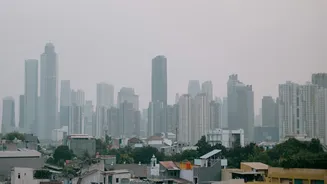
As November arrives, a familiar grey haze descends upon Delhi, blurring landmarks and turning the air acrid. Every year, it's the same story: soaring AQI, public health warnings, and a city struggling to breathe. Why is this an annual crisis?
A Perfect Storm of Pollution
Delhi's severe
winter air pollution isn't caused by a single event, but a combination of factors that create a toxic cocktail. The primary ingredients include emissions from vehicles and industry, dust from construction, and smoke from burning waste. These local pollutants form a baseline of poor air quality throughout the year. However, during the post-monsoon and winter months, this existing pollution is dangerously amplified by two major additions: smoke from agricultural fires in neighbouring states and specific meteorological conditions that trap pollutants over the city. The result is a thick, persistent smog that blankets the entire Indo-Gangetic Plain.
The Geographic and Weather Trap
Delhi's geography and winter weather patterns play a crucial role in the crisis. The city is landlocked and sits within the vast Indo-Gangetic Plain. In winter, wind speeds drop dramatically, preventing the dispersal of pollutants. This is compounded by a phenomenon called temperature inversion, where a layer of warmer air high above acts like a lid, trapping cooler, denser, pollutant-filled air near the ground. This 'lid effect' means that even with constant emission levels, the concentration of harmful particles like PM2.5 in the air people breathe skyrockets, sometimes for days on end.
The Impact of Stubble Burning
One of the most significant seasonal contributors is the practice of crop residue burning, or stubble burning, in the nearby states of Punjab and Haryana. Every year, after the rice harvest in October and November, farmers burn the leftover stubble to quickly and cheaply clear their fields for the next crop. The resulting smoke, carried by north-westerly winds, travels directly towards Delhi and the surrounding region. This influx of smoke can dramatically increase PM2.5 concentrations, contributing anywhere from 40% to as much as 75% of the particulate matter on the worst days. While some reports indicate a decrease in fire counts in recent years, the practice remains a major factor in triggering the region's most severe pollution episodes.
Local Sources: A Year-Round Problem
While stubble burning is a major seasonal trigger, it's Delhi's own local pollution that provides the foundation for the crisis. Vehicular emissions are a massive contributor, responsible for a significant share of PM2.5 pollution. This is alongside constant emissions from industries, large-scale construction activities that generate enormous amounts of dust, and the open burning of municipal waste. Special events like Diwali firecracker celebrations can also cause sharp, extreme spikes in pollution for short periods. These local sources ensure that even without smoke from farm fires, the city's air quality often remains in the 'poor' to 'very poor' category, ready to be tipped into 'severe' by winter conditions.
The Health and Economic Cost
The consequences of this annual smog are severe. PM2.5 particles are small enough to bypass the body's defenses, entering deep into the lungs and even the bloodstream, leading to respiratory illnesses, cardiovascular disease, strokes, and even cancer. Public health experts have equated breathing Delhi's worst air to smoking dozens of cigarettes a day. Beyond the devastating health impact, the economic costs are staggering. Air pollution leads to lost productivity from illness, reduced consumer activity, disruptions in sectors like construction and transport, and massive healthcare expenditures. Reports have estimated that air pollution costs the Indian economy billions of dollars annually, hindering overall growth.