





A deadly high-speed train collision in Spain's Toledo province has cast a shadow over rail safety, sparking inevitable questions for India as it progresses with its own ambitious bullet train project. How do the systems compare, and are we safe?
What Happened in Spain?
On October
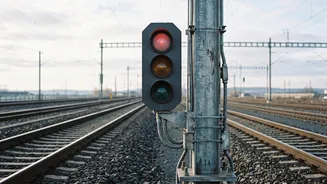
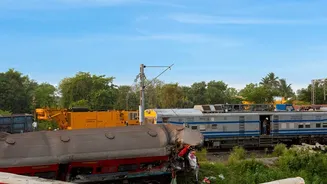
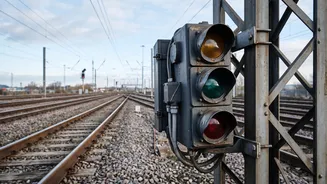
28, 2026, a high-speed AVE train collided with a stationary train from another operator, Iryo, near Urda in the province of Toledo. The devastating crash on the Madrid-Seville line resulted in 69 fatalities and left hundreds injured. According to preliminary information, the incident occurred after the line's automatic signalling system, known as LZB, experienced a failure. This forced a switch to manual control. Reports suggest that a human error in the control centre led to one train being authorised to proceed while the other remained stopped on the same track, leading to the rear-end collision. This was Spain's second fatal high-speed rail accident in 2026, raising serious questions about safety and maintenance on its extensive network.
Spain's AVE: A Mixed Picture of Safety
Spain's Alta Velocidad Española (AVE) network is the second-largest high-speed system in the world and has long been considered a success. It uses a mix of technologies, including German-designed signalling systems like the LZB involved in the Toledo crash, and rolling stock from French and German manufacturers. While rail travel is generally very safe, the recent incidents have put a spotlight on what happens when automated systems fail. The Toledo crash highlights the critical risks associated with the 'human factor' when manual override is required. While the network has advanced monitoring, the failure points appear to be at the intersection of technology malfunction and human decision-making under pressure.
India's Shinkansen Shield: A Different Philosophy
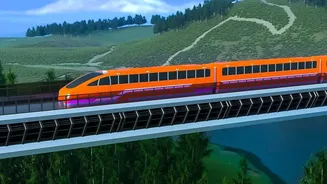
India's Mumbai-Ahmedabad High-Speed Rail Corridor is being built on a fundamentally different technological and philosophical foundation: the Japanese Shinkansen system. The Shinkansen is world-renowned for its unparalleled safety record, boasting zero passenger fatalities from derailments or collisions since it began operations in 1964. This record is built on the core principle of 'crash avoidance'. This is achieved through two main pillars: a completely dedicated and isolated track, and a sophisticated Automatic Train Control (ATC) system.
Dedicated Tracks vs. Interoperability
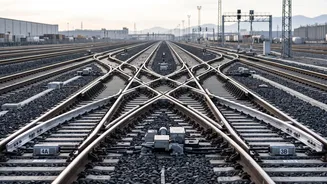
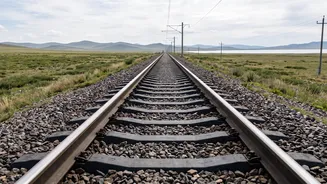
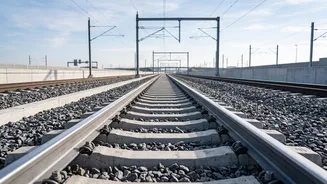
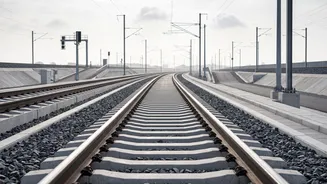
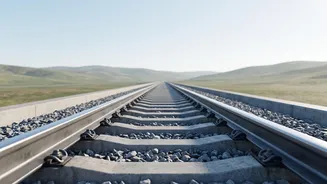
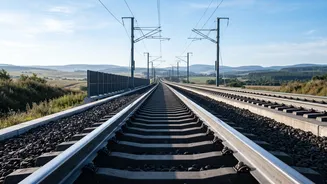
A key difference lies in the tracks themselves. Many European high_speed systems, including parts of Spain's, are designed for 'interoperability', meaning high_speed trains sometimes share lines with conventional, slower_moving passenger or freight trains. The Shinkansen system, which India is adopting, uses completely dedicated and grade_separated tracks. This means no level crossings, no freight trains, and no slower local services on the same line, effectively eliminating the risk of collisions with other trains or road vehicles.
Automatic Control : Shinkansen vs. European Systems
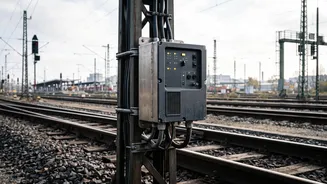
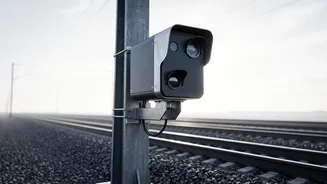
The ATC system in the Shinkansen is all–encompassing. It doesn't just monitor speed ; it actively controls the train , automatically braking to prevent collisions or overspeeding , making human error in this regard virtually impossible . Furthermore , the system is integrated with extensive environmental sensors . For the Mumbai–Ahmedabad corridor , this includes $28$ seismometers for early earthquake detection , which can automatically shut down power and apply brakes before severe tremors hit . It also features advanced systems to monitor wind speed and heavy rainfall , allowing for proactive speed adjustments or service halts . This 'total system' approach , where the train , track , and control centre operate as one integrated unit , is the bedrock of Shinkansen 's safety .