


In a major leap for solar physics, India's Aditya-L1 and the European Space Agency's Proba-3 missions have joined forces. This international partnership is providing unprecedentedly detailed measurements of solar eruptions close to the Sun.
Two Missions, One Shared Vision
At the heart
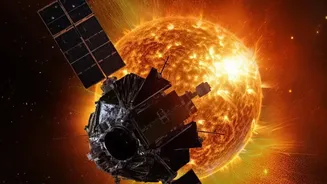
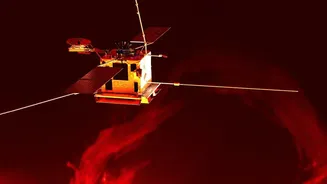
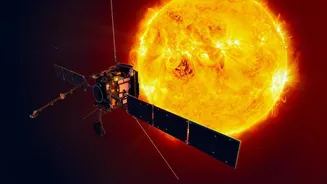
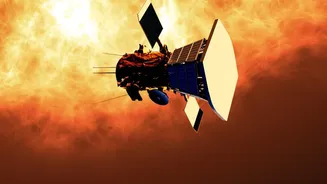
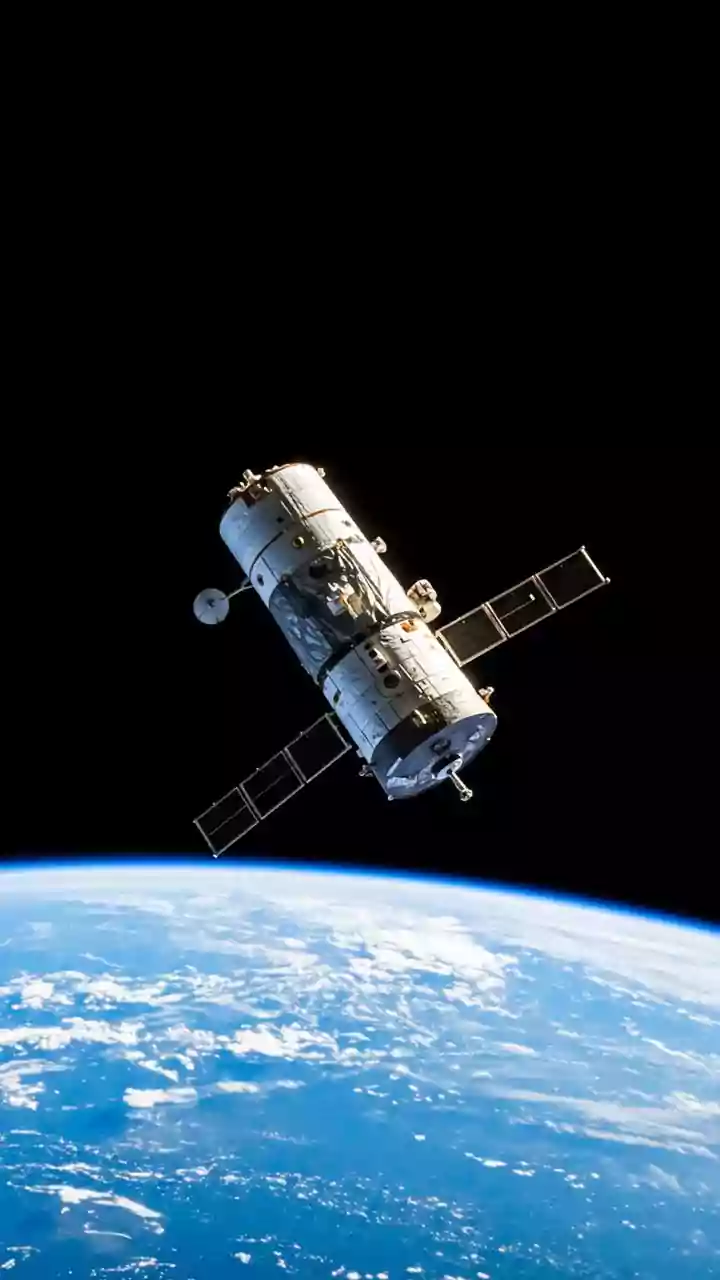
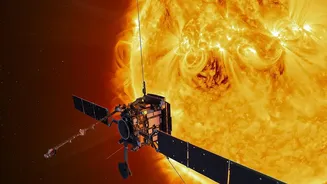
of this collaboration are two highly sophisticated space missions. Aditya-L1 is India's first dedicated solar observatory, launched by ISRO in September 2023. Positioned 1.5 million kilometres from Earth at a strategic location called Lagrange Point 1 (L1), it has an uninterrupted view of the Sun. Its primary instrument, the Visible Emission Line Coronagraph (VELC), is designed to study the Sun's outer atmosphere, or corona. The European Space Agency's (ESA) Proba-3, launched in December 2024 by an ISRO PSLV rocket, is a trailblazer in its own right. It is the world's first precision formation-flying mission, comprising two satellites that fly in perfect alignment about 150 metres apart to create a prolonged, high-quality artificial solar eclipse in space. This allows its coronagraph, ASPIICS, to get a crystal-clear look at the Sun's faint corona, extremely close to the solar disk.
A Complementary Approach to Solar Science
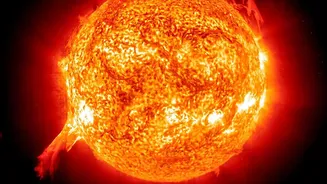
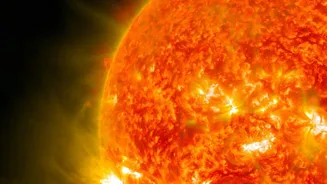
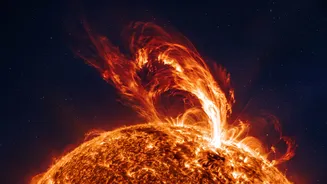
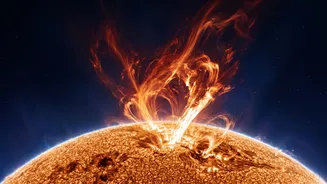
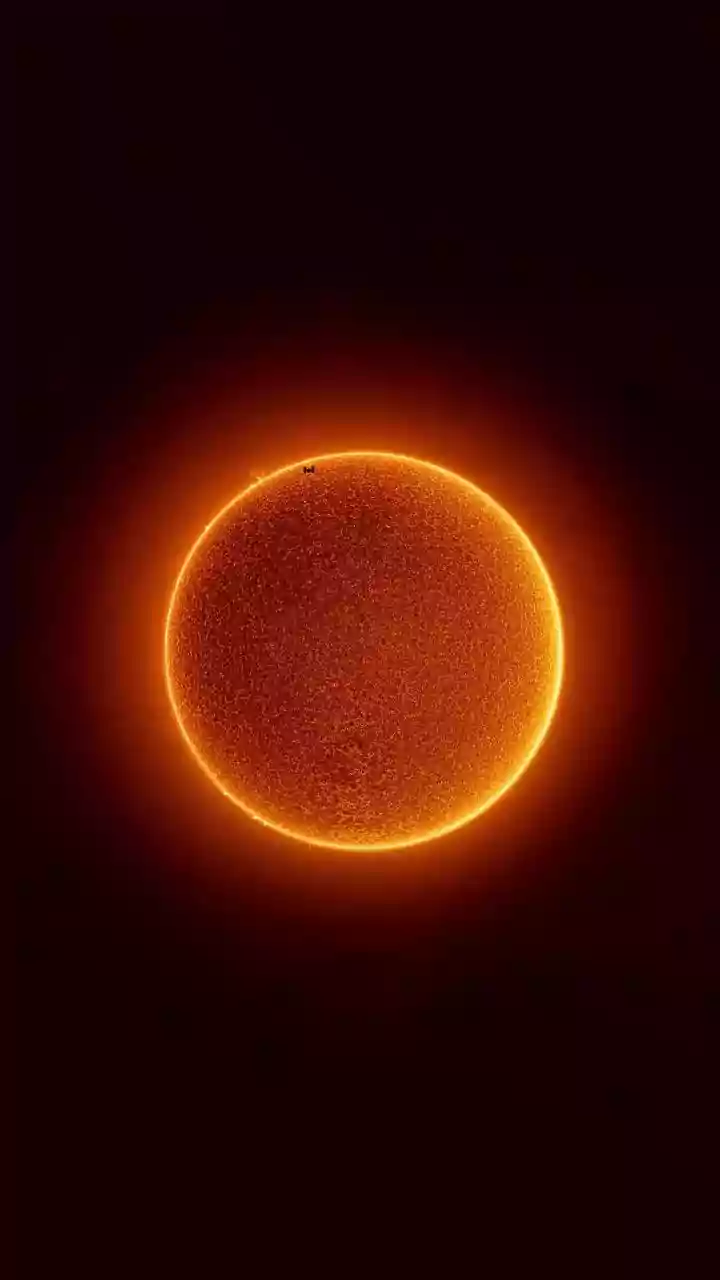
Observing the Sun's corona has long been a challenge for scientists. This tenuous region is a billion times fainter than the Sun's bright surface, making it incredibly difficult to see. More importantly, it's the launchpad for powerful events like Coronal Mass Ejections (CMEs)—colossal explosions of magnetised plasma. Understanding how these eruptions begin and gain energy is vital, but previous instruments could not fully track their earliest moments. This is where the synergy between Aditya-L1 and Proba-3 becomes crucial. Aditya-L1's VELC instrument performs spectroscopy, analysing the properties of the coronal gas, like its temperature and density. Meanwhile, Proba-3's ASPIICS coronagraph captures sharp images. By combining these two different types of observation for the same event, scientists can cross-check their data and build a much more complete picture of a CME's birth.
Decoding Coronal Mass Ejections
In a first-of-its-kind study, researchers from the Indian Institute of Astrophysics (IIA) in Bengaluru and their international partners jointly analysed two CMEs captured simultaneously by both missions on September 14 and 16, 2025. The joint observations allowed them to measure the mass, density, and crucially, the energy of these eruptions with a new level of precision. How the energy of a CME is distributed between motion, heat, and magnetic fields right after it erupts has been a poorly understood aspect of solar physics. This collaboration provides independent estimates for these properties, filling critical gaps in our knowledge. The data revealed two distinct events: a fast_moving CME travelling at about 645 km/s and a much slower one at 145 km/s, allowing scientists to study the dynamics of very different eruptions.
Why Measuring Eruption Energy Matters
Understanding the energy and structure of CMEs is not just an academic exercise; it has profound implications for our technology_dependent life on Earth. When a CME is aimed at our planet, it can trigger geomagnetic storms that disrupt satellite operations, interfere with GPS and communication networks, and even overload national power grids. By gaining a better handle on the initial energy and structure of these eruptions, scientists can improve space weather forecasting models. More accurate predictions give satellite operators, airlines, and power grid managers more time to take protective measures. This research moves us closer to predicting not just when a solar storm might arrive, but how powerful its impact could be, thanks to a more detailed understanding of its fundamental properties right from its origin at the Sun.