





Planning and Visas
First things first, let's talk documents. For Indian passport holders, both Laos and Cambodia offer straightforward visa processes. Laos provides a visa on arrival at major airports and land borders, as well as an e-Visa option you can apply for online
before you go. A tourist visa typically grants a 30-day stay. Cambodia is similar, with visa on arrival readily available. As a general rule, ensure your passport has at least six months of validity from your date of entry. The best time to travel is during the dry season, from November to March, when the weather is more comfortable for exploring. Packing light is essential; a reliable backpack, versatile clothing, and a reusable water bottle will be your best friends.
The Classic Overland Route
The most popular overland route is a journey from northern Laos down to southern Cambodia, or vice versa. Flying between spots is expensive and misses the point of the adventure. A common path starts in Luang Prabang, Laos, a UNESCO World Heritage town. From there, head south to the adventurer's hub of Vang Vieng, and then to the capital, Vientiane. The main land border crossing into Cambodia is the Veun Kham (Laos) – Dong Kalor (Cambodia) checkpoint. Once in Cambodia, your first major stop will likely be Siem Reap, home to the magnificent Angkor Wat. The journey concludes in the bustling capital, Phnom Penh. This entire route can take anywhere from two to four weeks, depending on how long you want to linger in each location.
Your Daily Budget Breakdown
Laos and Cambodia are famously kind to a backpacker's wallet. A daily budget of around $25-$40 (₹2100–₹3350) is very achievable. Laos is generally considered slightly cheaper than Cambodia. Your biggest costs will be accommodation, food, and transport. Hostels are abundant and affordable, with dorm beds typically costing $5-$10 per night. To keep food costs down, embrace street food. A delicious bowl of noodle soup or a plate of rice with grilled meat can often be found for just $1-$3. Local beer is also incredibly cheap. This budget allows for comfortable travel, good food, and even the occasional paid activity without stress.
Getting Around on a Shoestring
Overland travel is all about the journey, and in this region, that means buses and tuk-tuks. Sleeper buses are a rite of passage, connecting major towns and cities overnight. A long-distance ticket might cost between $15-$25, which also conveniently saves you the cost of one night's accommodation. For shorter distances within cities, tuk-tuks are the way to go. Always agree on a price before you get in, and don't be afraid to share a ride with other travellers to split the cost. In places like Vang Vieng or the islands of southern Laos, renting a scooter can be a cheap and liberating way to explore the countryside at your own pace, costing around $7-$14 per day.
Low-Cost, High-Impact Experiences
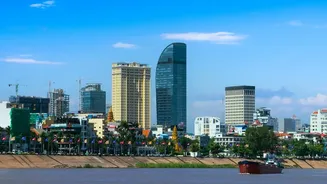
The best memories often cost the least. In Luang Prabang, wake up early to witness the serene morning alms-giving ceremony, where monks collect offerings of sticky rice. Afterwards, explore the town's many beautiful temples, most of which are free to enter, or wander through the bustling morning market. Climbing Mount Phousi for sunset offers a panoramic view for a small fee. In Cambodia, the main event is Angkor Wat. To save money, consider a multi-day pass if you plan to explore extensively. Watching the sunrise over the main temple is a truly unforgettable, and free, part of the experience. In Phnom Penh, a walk along the riverfront provides a great sense of the city's pulse without costing a thing.