




What Does a 'Clean' Taste Mean?
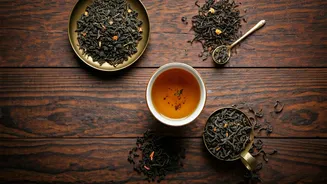
When tea experts talk about a “clean” taste, they’re describing a flavour profile that is pure, clear, and true to the leaf itself. A clean tea finishes smoothly, without any unpleasant, chemical, or muddy aftertaste. It's a taste that reflects its 'terroir'—the
unique combination of soil, climate, and altitude where it was grown. Think of the malty notes in an Assam, the bright, floral hints in a Darjeeling, or the vegetal, nutty character of a Japanese green tea. These flavours are inherent to the tea leaf, developed through careful cultivation and processing. A clean taste is complex but not confusing; it is nuanced and allows the drinker to appreciate the subtle layers of flavour that good-quality leaves possess. It should leave a pleasant sensation and even a lingering sweetness in your throat.
The Allure of the Artificial
Flavoured and perfumed teas dominate much of the modern market, and their appeal is understandable. They offer bold, predictable flavours like vanilla, strawberry, or caramel that can be very inviting. However, these additions are often used for a specific reason: to mask the taste of low-quality base leaves. If the tea itself is bland, broken, or stale, a strong artificial scent can cover up those flaws. This is why many mass-market tea bags and even some loose-leaf blends rely on 'natural' or artificial flavourings. These flavours are created in a lab to mimic a desired taste and are then sprayed onto the leaves. While a 'natural flavour' must be derived from a natural source, the end product is a highly processed concentrate. Artificial flavours are created entirely from chemical compounds. In both cases, the result is often a tea that smells intensely fragrant in the tin but delivers a flat or chemical-tasting brew.
Scented vs. Flavoured: An Important Distinction
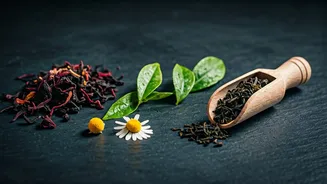
Not all added aromas are created equal. It's important to distinguish between modern flavoured teas and traditional scented teas. Scenting is an ancient, natural process where tea leaves are layered with fresh, fragrant blossoms like jasmine or magnolia. The tea leaves, being highly absorbent, naturally take on the floral aroma over several days. The flowers are then often removed, leaving behind only their essence infused into the tea. The result is a harmonious blend where the tea and floral notes complement each other. In contrast, flavouring involves coating the tea leaves with oils or chemical aromas, which can taste overpowering and fade quickly after the first infusion. While some high-quality teas like Earl Grey use oils (bergamot oil), the best versions use high-grade natural extracts on an equally high-grade tea base.
How to Find a Cleaner Cup
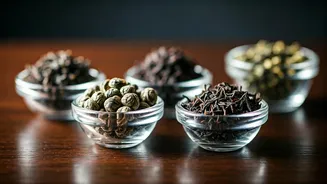
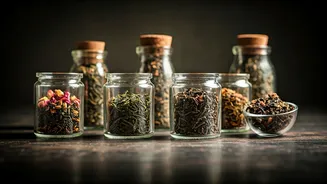
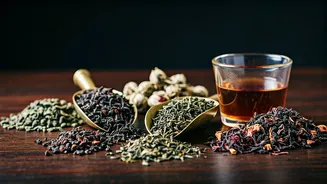
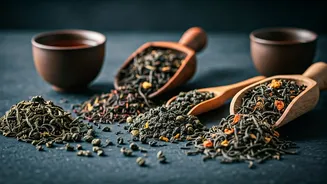
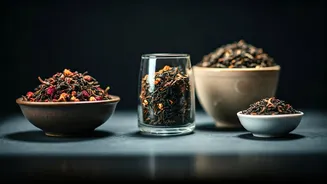
Training your palate to appreciate clean tea is a rewarding journey. Start by exploring single-origin, unblended teas. Look for whole or large, intact leaves, as this is a sign of careful harvesting and processing. Tea dust and small broken pieces, common in tea bags, release their flavour all at once, resulting in a harsh, one-dimensional cup. Read the ingredients list carefully. If you see “flavouring” or “artificial flavours,” the tea's taste isn't coming purely from the leaf. High-quality tea should smell fresh and true to its type—vegetal for green tea, malty or sweet for black tea—not like cardboard or potpourri. Finally, brew it correctly. Using the right water temperature and steep time for your specific tea can dramatically improve the taste, allowing its natural complexity to shine through without becoming bitter.