
More Than Just a Meal
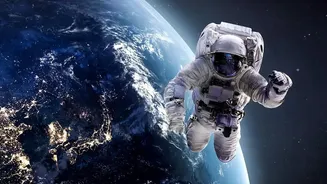
On Earth, a balanced diet keeps us healthy. In space, it is a critical line of defence against the harsh environment. Without gravity, astronauts' bodies undergo significant stress. They face muscle atrophy and a rapid loss of bone density, conditions
that nutrition can help mitigate. Spaceflight can also impact metabolism, immune function, and even vision. Standard pre-packaged meals provide calories, but they are not a perfect solution. Researchers are constantly refining diets to counteract the physiological toll of space, focusing on boosting nutrients like calcium and vitamin D for bone health and ensuring adequate protein intake to preserve muscle. The goal is to move beyond mere sustenance to creating optimised diets that actively protect astronauts and enhance their performance millions of kilometres from home.
The Three-Year Pantry Problem
A mission to Mars presents a logistical and nutritional nightmare. A round trip could take up to three years, meaning any food sent along must have a shelf life of at least five years to account for pre-positioning supplies. Over that time, the nutritional quality of pre-packaged foods degrades, with key vitamins and minerals breaking down. Beyond the chemical breakdown, there's a significant psychological component. Eating the same limited menu for years leads to 'menu fatigue', a condition that can affect morale and even lead to astronauts not consuming enough calories. The psychological boost from fresh, varied, and palatable food is crucial for coping with the isolation and stress of deep space missions. Solving this means creating a food system that is not only nutritious and stable but also enjoyable.
The Interstellar Greenhouse
The most promising solution to the pantry problem is growing food in space. Space agencies like NASA and ESA are heavily investing in bioregenerative life-support systems. Experiments aboard the International Space Station (ISS), such as the 'Veggie' program, have successfully grown crops like lettuce, kale, and alfalfa. These space gardens are more than just a source of fresh vegetables; they are living experiments. Scientists are studying how microgravity affects plant growth, from how roots develop without a clear 'down' to changes in their cellular composition. The magenta glow seen in these growth chambers comes from specialized LED lights that provide the specific red and blue wavelengths plants need for photosynthesis. This research is crucial for developing closed-loop ecosystems where plants not only provide food but also recycle waste, generate oxygen, and purify air.
A New Frontier for Food
Looking ahead, space nutrition is entering the realm of science fiction. Researchers are exploring personalised nutrition, where diets could be tailored to an astronaut's individual genetic makeup and real-time health data. Other innovations include cultivating algae like spirulina, which is packed with protein and antioxidants and can be grown efficiently on a thin film. Scientists are also working on bioengineering and biofortifying crops to be more nutrient-dense, making a head of lettuce, for example, a better source of calcium. Even insects, which can efficiently convert inedible plant matter into protein, and lab-grown protein from microbes are being considered as part of a future space menu. These novel systems aim to create a food supply that is completely independent of Earth, a necessary step for establishing a sustainable presence on the Moon or Mars.