






The Cardio and Calorie Question
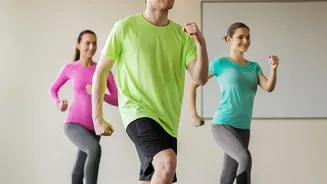
When it comes to cardiovascular health, both aerobics and trampolining, also known as rebounding, are excellent choices. A traditional aerobics class, with its mix of jumping jacks, high knees, and dance-like sequences, effectively elevates your heart
rate. The intensity can be easily modified, making it suitable for various fitness levels. Similarly, trampolining is a moderate-to-vigorous aerobic exercise. Some studies suggest it can be incredibly efficient; a well-known NASA study found that 10 minutes of rebounding can offer cardiovascular benefits similar to a 30-minute run. In terms of calorie burn, it's a close race and depends heavily on intensity and body weight. A high-intensity aerobics session can burn a significant number of calories, while a 30-minute rebounding session can burn between 150 to 300 calories, with the potential for more during vigorous workouts. For example, a 140-pound person might burn around 405 calories in a 40-minute rebounding session.
A Look at Joint Impact
Here lies the most significant difference between the two. Many forms of aerobics are high-impact, meaning movements involve both of your feet leaving the ground, which can put stress on your ankles, knees, and hips. While low-impact aerobics options exist, the bouncy surface of a mini-trampoline is specifically designed to be gentle on the body. The trampoline mat absorbs a huge portion of the impact with each jump, by some estimates as much as 80%. This makes rebounding an ideal choice for individuals with joint sensitivities, those recovering from certain injuries, or anyone looking to minimize wear and tear on their body while still getting an intense workout.
Muscle Toning and Engagement
Aerobics provides a fantastic full-body workout, engaging your legs, core, and arms through a variety of movements. Trampolining, however, introduces an element of instability that forces your body to work harder to stay balanced. This constant adjustment engages deep stabilizer muscles, especially in the core and lower back, that might be missed in a standard aerobics routine. Rebounding is particularly effective for toning the legs, glutes, and core muscles. Every bounce requires you to tense and relax your abdominals, making it a surprisingly effective core conditioner.
The Unique Benefit of Bouncing
Trampolining has a unique advantage that floor-based aerobics cannot offer: enhanced lymphatic drainage. The lymphatic system is part of your immune system and helps remove toxins and waste from your body, but it has no pump of its own and relies on body movement to circulate. The vertical up-and-down motion of rebounding is incredibly effective at stimulating lymphatic flow, acting as a full-body pump. Studies suggest that rebounding can increase lymph flow by up to 15 times, which can help reduce inflammation and boost your immune system.
Accessibility, Cost, and Fun Factor
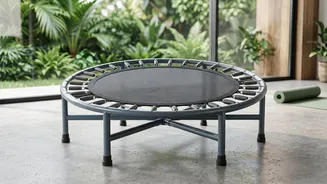
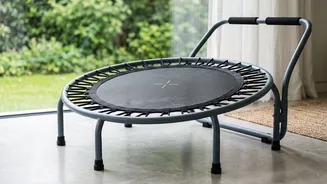
In terms of accessibility, aerobics often wins. You can do it anywhere with minimal to no equipment, and countless free videos are available online. Trampolining requires purchasing a rebounder, which involves an initial cost and requires some dedicated space in your home. However, the 'fun factor' is a powerful motivator. Many people find the playful act of bouncing more enjoyable and sustainable than a traditional workout. This can make it feel less like a chore and more like play, increasing the likelihood that you’ll stick with it long-term. Ultimately, the best workout is the one you consistently do.