


Venus: The Evening Star
Venus will be the most dazzling object in the western evening sky throughout July. Look for it about 30 to 45 minutes after sunset, where it will shine brilliantly. On July 9, Venus will have a close encounter with Regulus, the brightest star in the constellation
Leo, appearing just to the star's upper right. This pairing will be visible to the naked eye, though binoculars will enhance the view, showing the contrast between the silvery-white planet and the blue-white star. Later in the month, on July 17, the crescent Moon will join Venus in the sky, creating another beautiful pairing low in the west shortly after sundown. This is one of the easiest events to spot, even from light-polluted cities.
Saturn and Mars: The Morning Planets
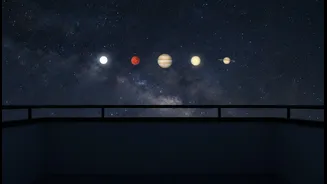
If you are an early riser, the pre-dawn sky offers its own rewards. Saturn will be visible in the eastern sky, rising around 1 a.m. at the start of the month and by 11 p.m. towards the end. It shines with a steady, yellowish-white glow that distinguishes it from twinkling stars. On the mornings of July 7 and 8, the last quarter Moon will pass close to Saturn, making the ringed planet easy to identify. Mars will also be a morning object, appearing as a reddish point of light in the east. Before sunrise on July 11 and 12, look for a beautiful lineup of the waning crescent Moon, Mars, and Saturn in the eastern sky. The Moon will be near the famous Pleiades star cluster, with Mars positioned nearby, creating a stunning visual treat.
A Meteor Shower to End the Month
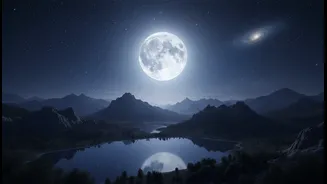
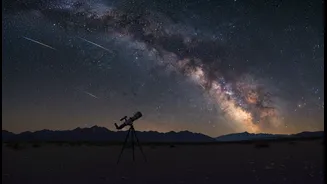
July concludes with the peak of the Southern Delta Aquariid meteor shower. This shower is active from mid-July to late August and is expected to peak around July 29-30. While not as prolific as the August Perseids, the Delta Aquariids can produce around 15 to 20 faint meteors per hour in a dark sky. Unfortunately, the peak in 2026 coincides with a bright full moon on July 29, which will wash out many of the fainter meteors. Your best bet is to look in the week before the peak, during the moon-free hours after midnight, for a chance to see some shooting stars.
Tips for Best Balcony Viewing
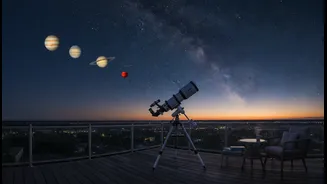
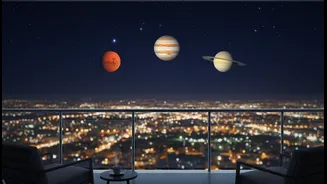
You don't need special equipment, but a few simple tips can improve your experience. First, find a spot with the clearest possible view of the horizon, especially to the west for evening planets and the east for morning ones. Give your eyes about 15 to 20 minutes to adjust to the darkness; this means avoiding looking at your bright phone screen. Using a stargazing app on your phone (with the screen turned to its dimmest red-light mode) can help you identify constellations and pinpoint the exact locations of the planets. Finally, be patient. The wonders of the night sky reveal themselves slowly, so settle in, relax, and enjoy the show.