






The Rise of a New Travel Guide
Imagine a map that doesn't just show you the quickest way from your hostel to a historic monument, but also tells you which streets are poorly lit after sunset, where to avoid walking alone, and which neighbourhoods have a welcoming vibe for solo women.
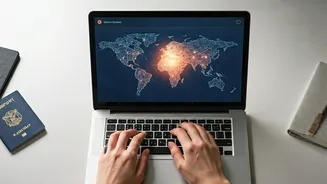
This is the promise of what are being termed 'decentralized map forums.' The word 'decentralized' sounds technical, but the concept is simple: instead of a single company like Google or Apple deciding what’s important, these platforms are powered by a community of users. They are peer-to-peer information networks where women share real-time, ground-level safety intelligence with other women. It’s word-of-mouth advice, scaled for the digital age.
Why Standard Maps Aren't Enough
Conventional navigation tools are marvels of efficiency. They are optimized for speed and traffic avoidance, calculating routes based on algorithms that don't account for human feelings of vulnerability or safety. A route that cuts through a dark, deserted alley might be 200 meters shorter, but it's not a path most solo travelers would choose to take at night. These apps lack the nuance to differentiate between a 'fast' route and a 'safe-feeling' route. They can't tell you if a particular area is known for catcalling, if the streetlights are functional, or if it's generally a place where a woman would feel comfortable walking alone after 8 PM. This is the gap that community-sourced platforms are designed to fill.
How These Platforms Function
These digital safe spaces operate on the principle of collective wisdom. They come in various forms, from dedicated apps to private social media groups. Members can pin comments onto a map, flagging specific streets or entire areas with safety warnings or endorsements. For instance, a user in Jaipur might drop a pin on a market street warning about persistent touts, while another might highlight a well-policed, brightly lit path to a popular restaurant in Goa. The information is often hyper-local and incredibly specific, including tips like 'the auto-rickshaw stand here is reliable' or 'avoid the underpass after dark.' The value lies in the recency and relevance of the advice, coming directly from others who have just been there.
Where to Find These Communities
While a single, perfect 'decentralized map' for everything doesn't exist yet, this ethos is alive in many places online. Apps like GeoSure provide location-specific safety scores, including categories for women’s safety, but the most dynamic information comes from community forums. The 'Host A Sister' Facebook group is a massive network where women offer not just travel advice but also homestays and meet-ups, creating a vetted ecosystem of trust. Reddit’s r/solotravel subreddit is a trove of firsthand accounts, with users often sharing detailed itineraries and safety feedback on specific routes. Travel blogs and dedicated solo female travel influencers also create and share annotated maps or detailed guides based on their and their followers' experiences.
A Smart Tool, Not a Magic Shield
These community-sourced tools are incredibly empowering, but they require a savvy user. It's crucial to remember that information, even from a well-meaning community, can be subjective or become outdated. One person's 'perfectly safe' is another's 'slightly uncomfortable.' The best practice is to use this information as one layer of your safety strategy, not the only one. Always cross-reference advice, look for consensus from multiple sources, and download offline maps as a backup. Most importantly, these platforms should supplement, not replace, your own intuition. If a situation or a place doesn't feel right, trust your gut, regardless of what an app or forum says.