

The Number Four Conundrum
For years, the number four batting position has been a source of debate for the Indian ODI team. Shreyas Iyer seemed to have finally solved the puzzle with his temperament, ability to rotate strike against spin, and knack for finding the boundary. However,
a history of injuries has created a sense of vulnerability around this crucial spot. Recent reports confirm that top Indian players, including Iyer, have undergone fitness tests ahead of a packed season, highlighting the board's focus on player conditioning. While Iyer's talent is undeniable, the team management, led by head coach Gautam Gambhir, is understandably keen to have a contingency plan. A long and demanding tournament like the ODI World Cup requires not just a first-choice XI, but a squad with dependable players who can step up at a moment's notice. The question is not just about replacing a player, but finding someone who can replicate Iyer’s specific skill set in the middle overs.
1. Tilak Varma: The Left-Field Challenger
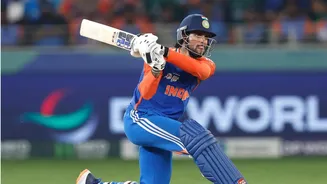
Tilak Varma has emerged as a front-runner, bringing a unique advantage to the table: he's a left-handed batsman. In a middle-order dominated by right-handers, Varma’s inclusion would introduce a valuable tactical variation, making it harder for opposition captains to settle on their bowling plans. Reports suggest that the team management is seriously considering him for the role, viewing him as a key part of future plans. His rise has been meteoric, transitioning from a standout performer in the IPL to India's T20I vice-captain. Beyond his batting, the management has encouraged Varma to work on his off-spin, potentially offering the captain an extra bowling option to chip in with a few overs. While his ODI experience is limited, his impressive List A average and recent leadership role as captain of the India A team show a player with both talent and temperament. He represents a bold, forward-thinking choice.
2. Sanju Samson: The People's Choice
Few players evoke as much passion and debate among Indian cricket fans as Sanju Samson. Blessed with sublime timing and effortless power, Samson, on his day, is a match-winner. His supporters point to his exceptional T20 World Cup performance earlier this year, where he was named Player of the Tournament after a series of clutch knocks, as proof of his big-match temperament. In a recent interview, former captain Suryakumar Yadav praised Samson's selfless attitude after being initially dropped from that very squad, highlighting his strong character. However, the knock on Samson has always been consistency in the 50-over format. While he has shown flashes of brilliance, he has yet to cement his place with a long run of significant scores in ODIs. His presence at the recent fitness camp in Bengaluru alongside other World Cup probables confirms he is very much in the selectors' thoughts. For Samson, the challenge will be to translate his immense potential and T20 success into the sustained performance required at number four in an ODI World Cup.
3. Suryakumar Yadav: The T20 Maverick
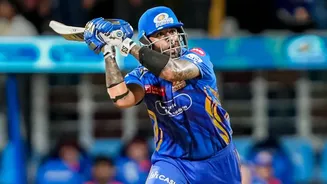
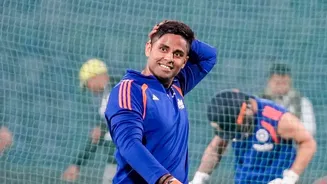
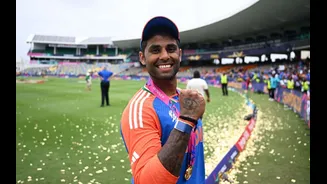
There is no more destructive T20 batsman in world cricket than Suryakumar Yadav. His ability to hit the ball 360 degrees and score at a blistering pace makes him a tempting option for any white-ball squad. He famously led India to a T20 World Cup victory this year, demonstrating his leadership credentials. The dilemma, however, lies in his ODI record. In a recent podcast, Suryakumar candidly admitted his own disappointment with his 50-over numbers, acknowledging that he perhaps didn't adapt to the demands of the format as well as he should have. His ODI career has been a series of starts and stops, with his last appearance being in the 2023 World Cup final. While his game-changing ability is undeniable, the selectors must weigh this against his struggles to find a consistent rhythm in the one-day game. Can India afford to use a precious World Cup spot on a high-risk, high-reward player, or will they opt for a more traditional and reliable anchor? The answer to that question could define India's middle-order strategy.