




A Breakthrough Discovery
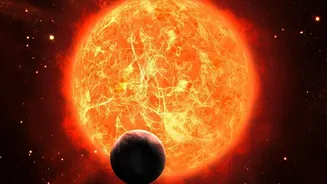
In a remarkable display of technological prowess, astronomers using the James Webb Space Telescope (JWST) have confirmed the presence of methane in the atmosphere of an exoplanet hundreds of light-years away. The detection was made on WASP-107 b, a planet classified
as a 'warm Neptune' for its size and temperature. While methane is a common molecule in our own solar system, found in the atmospheres of giants like Jupiter and Saturn, detecting it on distant exoplanets has been challenging. This clear signature, captured by the JWST's powerful instruments, provides a treasure trove of new data for scientists working to understand the chemical makeup and diversity of planets beyond our solar system. The discovery also included signatures of water vapor, carbon dioxide, and sulfur dioxide, painting the most detailed picture yet of this strange world's atmosphere.
What Is a 'Warm Neptune'?
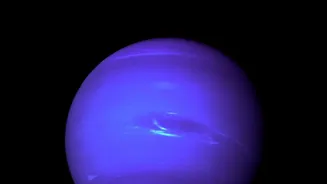
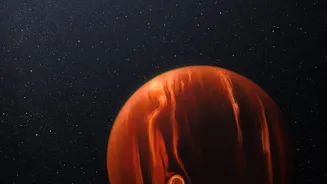
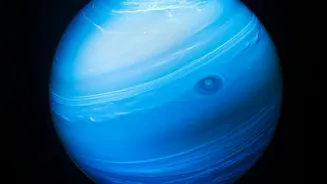
Imagine a planet similar in size to our own Neptune but orbiting much closer to its star. That is essentially a 'warm Neptune'. These planets are a fascinating and common type of exoplanet in our galaxy, yet they are entirely absent from our own solar system, making them a scientific puzzle. WASP-107 b is particularly noteworthy because it is a 'low-density' or 'fluffy' planet, about the size of Jupiter but with only a fraction of its mass. This gives it a puffy, expanded atmosphere that is easier for telescopes like the JWST to study. Its temperature is hot enough to prevent methane from freezing into ice clouds, yet cool enough that it should be a major component of the atmosphere. Discovering its precise amount helps scientists test and refine their models of planetary formation and atmospheric chemistry.
How the Telescope Found It
The James Webb Space Telescope did not see the planet directly. Instead, it used a technique called transmission spectroscopy. As WASP-107 b passed in front of its host star from our perspective—an event known as a transit—a tiny amount of starlight filtered through the planet's atmosphere. The gases in this atmosphere absorb specific wavelengths, or colours, of light. By analysing the starlight that reached the telescope, astronomers could identify the chemical fingerprints of the molecules present, including the clear signal of methane. The unprecedented sensitivity and extended wavelength range of the JWST's instruments were crucial for making this detection, which had eluded previous telescopes like Hubble.
Why Methane Matters
Methane is a particularly interesting molecule for planet-hunters. On Earth, the vast majority of methane in the atmosphere is produced by living organisms. This has led some to consider it a potential 'biosignature'—a chemical sign of life. However, it is crucial to note that methane can also be produced by purely geological processes, such as volcanic activity or reactions in a planet's hot interior. For a gassy, Neptune-like world such as WASP-107 b, the presence of methane is not considered an indicator of life. Instead, its detection is significant because it provides deep insights into the planet's internal heat, the mixing of its atmosphere, and its formation history. The amount of methane detected was actually much lower than expected, which suggests the planet's interior is hotter than previously thought, driving vigorous vertical winds that alter the atmosphere's chemistry.
A New Era of Planet Hunting
This discovery is more than just an inventory of gases on a single planet; it is a powerful demonstration of the JWST's capabilities. It proves that the telescope can detect key molecules that will be central to the future search for habitable worlds. By successfully identifying methane and other compounds on a warm Neptune, scientists are honing the techniques they will use to study smaller, rocky, Earth-like planets that may have the potential to support life. Each new atmospheric profile builds a more complete picture of how planets form and evolve across the galaxy. This finding helps astronomers understand the physical processes that create certain atmospheric compositions, providing critical context for when they eventually point the telescope at a world that looks a little more like home.