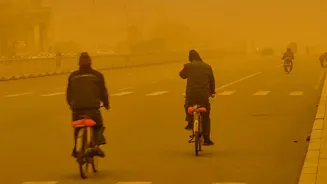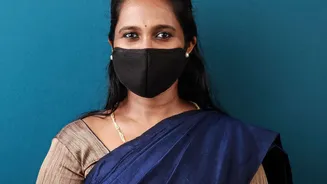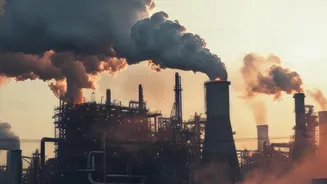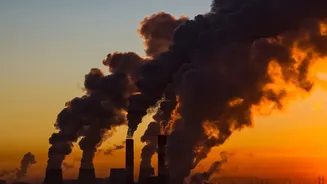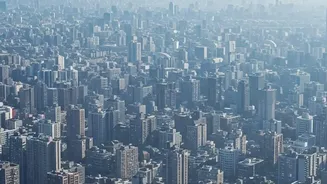



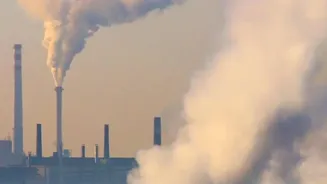


The grey haze that blankets many Indian cities is more than just a grim sight. It is a quiet thief, systematically robbing the nation of its economic vitality in ways that go far beyond hospital bills for respiratory illness.
The Trillion-Rupee National Deficit
The most arresting figures
related to India's air pollution are not just air quality index numbers, but the economic cost, which runs into trillions of rupees. Multiple reports paint a stark picture: air pollution costs Indian businesses an estimated $95 billion (approximately ₹7 lakh crore) every year, which is about 3% of the country's GDP. Another assessment from The Lancet suggests the total economic loss could be as high as 8.5% to 9.5% of GDP. This isn't a hypothetical future risk; it's a current and ongoing drain on the economy. For perspective, this loss is equivalent to 150% of India's healthcare budget. The economic damage comes from lost labour productivity, premature mortality, lower asset productivity, and increased health expenses. This massive financial burden could impede India's aspiration to grow its economy, turning what is often seen as a purely environmental issue into a core economic challenge.
A Crisis in the Workforce
The economic impact is acutely felt in India's workforce. The health effects of toxic air lead to significant losses in productivity. It is estimated that India loses about 1.3 billion working days annually due to pollution-related illnesses. In 2019 alone, this absenteeism cost businesses around $6 billion. However, the problem extends beyond just sick days. A more insidious cost is 'presenteeism'—when employees show up for work but perform at a reduced capacity due to the physical and cognitive effects of pollution. This on-the-job productivity loss costs Indian businesses a staggering $24 billion annually. Studies have shown that increased exposure to PM2.5 directly slows district-level GDP growth year on year. The impact is especially pronounced in cognitively demanding jobs, like the IT sector, which loses an estimated $1.3 billion per year from pollution-induced productivity slumps.
Beyond the Lungs: A Wider Health Catastrophe
While respiratory problems are the most visible health impact, they are only one part of a much larger crisis. Air pollution is a leading risk factor for a host of non-communicable diseases. Fine particulate matter like PM2.5 can enter the bloodstream, contributing to strokes, heart disease, diabetes, and even dementia. These illnesses result in substantial healthcare costs from hospitalisation, medication, and long-term care. The economic loss from premature deaths and morbidity attributable to air pollution was estimated at $36.8 billion in 2019, representing 1.36% of India's GDP. Premature deaths linked to air pollution cost the economy nearly $29 billion, while morbidity, or illness, accounted for another $8 billion in lost output that same year.
An Invisible Tax on Future Generations
The economic costs of air pollution are not just being paid by the current generation; they are being levied on the future. Exposure to toxic air has a detrimental impact on children's cognitive development. Studies have shown a direct link between PM2.5 exposure and lower performance in math and reading tests among children. This impairment of cognitive function and learning capacity creates a long-term drag on human capital, which is essential for a productive future workforce. A workforce with diminished cognitive abilities is less innovative and less productive, posing a significant threat to India's long-term economic competitiveness. Therefore, the failure to address air quality is an accumulating tax on the nation's future potential.
Damaging Key Sectors: Agriculture and Tourism
The economic damage also extends to critical sectors like agriculture and tourism. Ground-level ozone, a key component of smog, is toxic to plants and has been shown to significantly reduce crop yields. Studies have found that air pollutants contributed to a 36% reduction in India's wheat yields in 2010. More recent research has also documented significant losses in rice and wheat crops across various states due to ozone pollution. Simultaneously, the country's poor air quality deters international visitors, costing the tourism and hospitality sectors an estimated $22 billion annually due to reduced footfall. The iconic images of smog-filled cities are a powerful disincentive for tourists, impacting a vital source of revenue and employment.