
The Sun: A Powerful, Unpredictable Neighbor
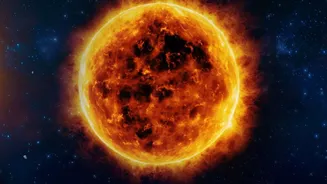
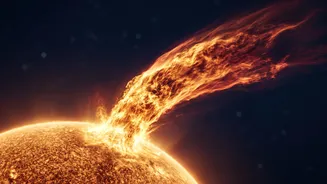
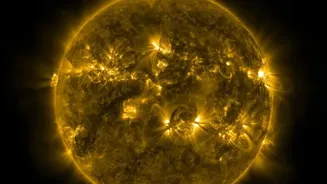
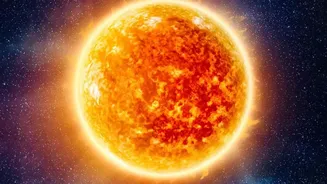
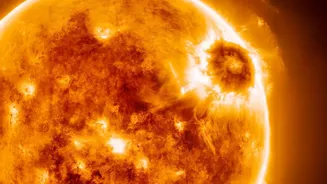
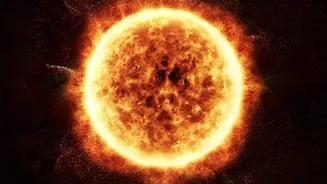
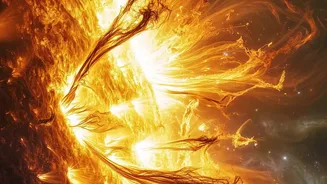
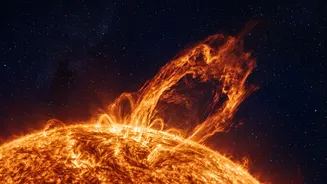
The Sun isn't just a benign source of light and heat; it's an active, volatile star. It constantly sends out a stream of charged particles called the solar wind. Sometimes, it unleashes much more powerful bursts of energy, known as solar flares, and massive
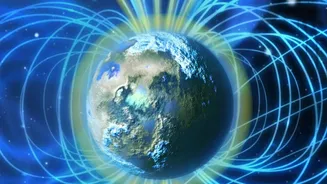
eruptions of plasma called coronal mass ejections (CMEs). When these eruptions are aimed at Earth, they can cause geomagnetic storms that have the potential to wreak havoc. While these storms create beautiful auroras, they can also induce electrical currents in the ground, disrupt radio communications, damage satellite electronics, and even cause widespread power blackouts. A severe event could have devastating consequences for a world that has become increasingly dependent on technology since the last major storm.
The Challenge of Forecasting Space Weather
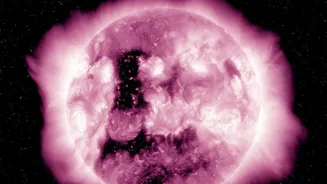
Predicting when a dangerous solar storm will hit Earth has been a significant challenge for scientists. Traditional forecasting methods have provided some warning, but often with limited accuracy and short lead times. Forecasters track active regions on the Sun—areas of intense magnetic fields where sunspots form—as these are the primary engines of severe space weather. However, knowing that a region is active is different from knowing if and when it will erupt and what the impact will be on Earth. For satellite operators and power grid managers, the difference between a few minutes of warning and a few hours is enormous, making the development of faster, more reliable prediction models a critical priority.
Artificial Intelligence Enters the Forefront
This is where artificial intelligence is changing the game. NASA, in collaboration with various partners, has been developing AI models that can sift through immense volumes of data from solar observatories and satellites. One such model, known as DAGGER (Deep Learning Geomagnetic Perturbation), uses AI to analyze real-time measurements of the solar wind and predict its effects on Earth. Another model, developed by a NASA-led team, can predict the emergence of active regions up to 12 hours before they become visible on the solar surface by analyzing subtle acoustic and magnetic signals. These AI systems are trained on years of solar data, allowing them to recognize complex patterns that are difficult for humans to detect, essentially giving us a new, more powerful way to watch the Sun.
From Days to Minutes: The AI Advantage
The primary advantage of these AI models is their speed and precision. The DAGGER model, for instance, can provide a 30-minute advance warning of where a solar storm will strike and how intense its effects will be on the ground. While 30 minutes may not sound like much, it is a crucial window of time. It's enough time for power grid operators to take preventative measures, for satellite controllers to put sensitive equipment into a safe mode, and for airlines to reroute flights away from areas with communication disruptions. This represents a significant leap from previous models, which were either less timely or less precise. By combining deep learning with real-time data, AI provides actionable intelligence rather than just broad warnings.
Protecting Our Connected World
Ultimately, this research isn't just an academic exercise; it's about safeguarding the technological backbone of modern society. Our reliance on GPS for navigation, satellites for communication and financial transactions, and stable power grids for almost every aspect of daily life makes us more vulnerable than ever to space weather. An extreme solar storm could cause trillions of dollars in damage and lead to widespread, long-lasting disruptions. By improving our forecasting ability, AI acts as a crucial early warning system. According to Vishal Upendran, a lead researcher on the DAGGER model, this AI makes it possible to minimize or even prevent devastation to modern society. It represents a shift from simply weathering solar storms to proactively managing their impact.