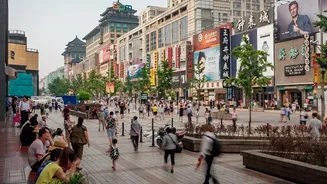




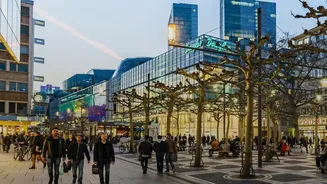
There’s a special magic to a street built for people, not cars. In historic city centers, car-free zones transform shopping from a transaction into an experience, blending heritage, commerce, and community in a way that feels both timeless and modern.
What Makes a Walkable Street Work?
Before we journey to some specific examples, it's worth understanding the ingredients of a great pedestrian street. It’s more than just the absence of cars. Success lies in a combination of factors: a 'human scale' where buildings don't tower intimidatingly, a mix of things to do (shops, cafes, residences, galleries), and a sense of safety. Key elements include wide, unobstructed sidewalks, plenty of seating, good lighting, and engaging storefronts that create visual interest. Historic districts often have these qualities baked in, with their narrow lanes and heritage architecture providing a naturally intimate and attractive setting that modern urban planning often tries to replicate.
Strøget – Copenhagen, Denmark
Often cited as one of Europe's longest and oldest pedestrian shopping areas, Strøget (pronounced 'Stro-yet') is more a network of streets than a single road. Its name aptly translates to 'to stroll'. In 1962, Copenhagen's leaders took a gamble, turning this traffic-clogged artery into a temporary car-free zone despite fears from local merchants that business would collapse. The experiment was a resounding success. Pedestrians flocked to the street, and it was made permanent two years later. Today, it’s a vibrant hub stretching over a kilometre, connecting City Hall Square to the King's New Square. It's a masterclass in urban revitalization, proving that prioritizing people can boost both public life and commercial success. The project's incremental expansion inspired cities worldwide to rethink their own centers.
Rue du Petit-Champlain – Québec City, Canada
Nestled at the foot of the cliff below the grand Château Frontenac, Rue du Petit-Champlain is frequently called one of North America's most picturesque streets. As the continent's oldest commercial district, its roots go back to the 17th century when it was home to artisans and dock workers. By the mid-20th century, the area had fallen into disrepair, with some even suggesting it be demolished. However, a visionary revitalization project in the 1970s and 80s, led by local artisans and merchants forming a cooperative, brought it back to life. They restored the historic stone buildings, preserving their unique character and focusing on independent boutiques and craft shops rather than large chains. Today, its cobblestone path offers a distinctly European feel, creating an intimate, year-round destination.
The Shambles – York, England
Walking down The Shambles in York feels like stepping onto a film set. With its overhanging timber-framed buildings, some dating to the 14th century, it is one of the best-preserved medieval streets in the world. Its name comes from 'fleshammels', an Anglo-Saxon term for the shelves butchers used to display meat. The street's unique architecture had a practical purpose: the jettied upper floors created shade, protecting the fresh meat below from sunlight before refrigeration existed. In some narrow sections, you can almost touch the buildings on both sides. Though the butchers are long gone, replaced by bookshops, cafes, and souvenir stores, you can still spot old meat hooks on the facades, hinting at the street's rich history.
Navigli District – Milan, Italy
While not a single street, Milan's Navigli district is a historic neighborhood defined by its pedestrian-friendly canal towpaths. The two main canals, Naviglio Grande and Naviglio Pavese, were once vital for transporting goods, including the marble used to build the city's famous Duomo. Today, the area is Milan's social heart, especially in the evening. The paths along the water are lined with an endless array of bars, restaurants, art galleries, and artisan shops. The district truly comes alive during 'aperitivo' hour, when locals gather for pre-dinner drinks and snacks, creating a festive, communal atmosphere. Much of the area is a restricted traffic zone (ZTL) or fully pedestrianized, making it perfect for an evening stroll than punctuated by crossing the charming iron and stone footbridges.