







The Flavour Factor: Real vs. Reconstituted
The primary battleground is taste, and here, there’s no contest. Instant soups rely on tomato powder, starches, flavour enhancers, and sugar to mimic the taste of real tomatoes. The result is often a one-dimensional sweetness with a slightly metallic
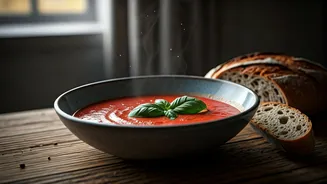
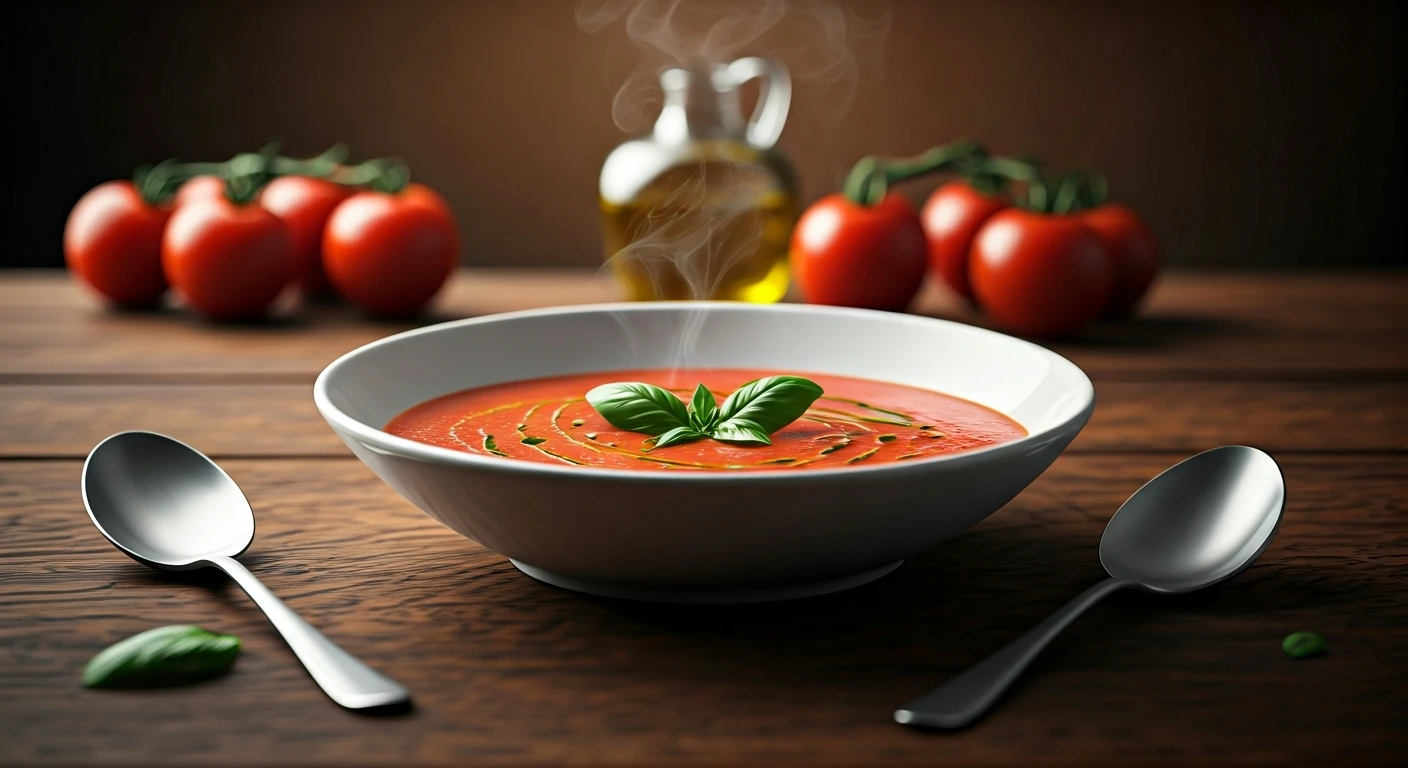
aftertaste. Homemade soup, on the other hand, builds complex, deep flavour from the ground up. Roasting or slow-simmering fresh tomatoes caramelises their natural sugars, creating a rich umami base. Sautéed onions and garlic add aromatic depth, while fresh herbs like basil or a dollop of cream provide a finish that powder simply cannot replicate. Each spoonful of homemade soup tells a story of its ingredients; instant soup just tells you it came from a factory.
Your Health, Your Rules
A quick glance at the nutritional information on an instant soup packet can be revealing. They are often loaded with sodium—sometimes containing over half of your recommended daily intake in a single serving. They also frequently contain corn syrup or added sugars to balance the acidity of the tomato powder, along with various preservatives and anti-caking agents. When you make soup at home, you are in complete control. You decide how much salt to add. You can use a touch of honey or jaggery for sweetness, or none at all. You can enrich it with vegetables like carrots and celery for added nutrients and fibre. Homemade soup is food, not a food product, and your body will thank you for the upgrade.
The Real Cost of Convenience
A single-serving packet of instant soup might seem cheap, but the cost adds up. When you compare it to the price of making a large batch from scratch, the economics shift. A kilo of fresh, seasonal tomatoes, an onion, a few cloves of garlic, and some basic pantry staples can produce enough soup for several meals. The per-serving cost of homemade soup is often significantly lower than its instant counterpart. Plus, you gain the benefit of having delicious leftovers that can be enjoyed for days, frozen for later, or used as a base for other dishes like pasta sauces. It’s an investment in future you, saving both time and money in the long run.
More Than a Meal: The Joy of Creation
Beyond taste and nutrition lies the simple, meditative joy of cooking. Tearing open a packet and adding hot water is a transaction. Spending 30 minutes in your kitchen, smelling the aroma of garlic sizzling in oil and watching the vibrant red of the tomatoes deepen as they cook, is an experience. It’s a small, creative act that can de-stress and ground you after a long day. Serving a bowl of soup that you made with your own hands brings a unique sense of satisfaction and care, whether you're enjoying it alone or sharing it with family. This intangible benefit—the feeling of accomplishment and connection to your food—is something no instant product can ever offer.
Your Simple, No-Fuss Recipe
Convinced? Here’s a basic recipe that proves how easy it is. In a large pot, heat a tablespoon of oil or ghee. Add one chopped onion and 2-3 minced garlic cloves, and cook until soft. Add 1 kg of roughly chopped ripe tomatoes (no need to peel!), one chopped carrot for natural sweetness, and 4 cups of water or vegetable broth. Bring to a boil, then reduce the heat, cover, and let it simmer for 20-25 minutes until the tomatoes are falling apart. Let it cool slightly, then use an immersion blender (or a regular mixer in batches) to blend until smooth. Season with salt, a generous amount of black pepper, and a pinch of sugar if needed. For a richer soup, stir in a splash of cream or milk at the end. That's it. Perfect tomato soup, ready to go.