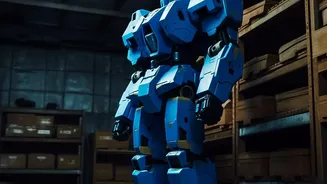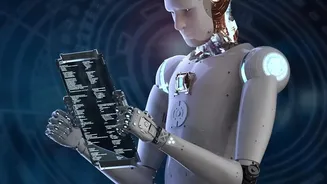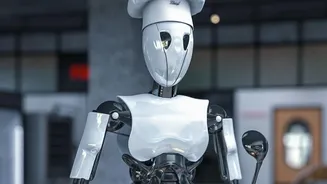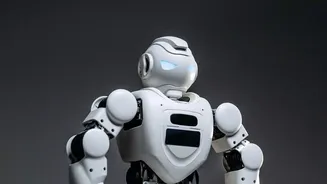



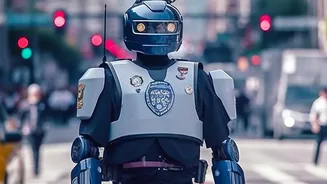
For years, humanoid robots were the stuff of viral videos, performing backflips and dancing on stages. Now, they are clocking in at factories. But the shift from spectacular demos to the unglamorous grind of daily work is proving to be their real test.
From Lab Marvels to Factory Workers
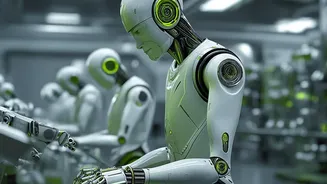
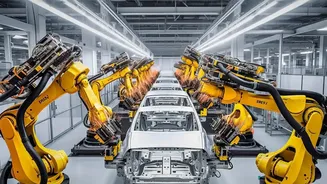
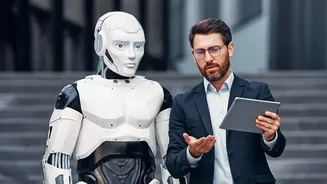
The era of humanoid robots as mere science projects is over. Companies like Figure AI, Agility Robotics, and Tesla are moving their creations from controlled labs into the messy, unpredictable world of manufacturing and logistics. Figure's robots have been deployed in a partnership with BMW, assisting in the production of cars at the automaker's Spartanburg plant in the US. Initially tasked with moving sheet metal, the latest generation, Figure 03, is now tackling more complex logistics. Similarly, Agility Robotics' Digit model is working in facilities for GXO, Toyota, and Amazon, handling tasks like moving totes and sorting parts. These are not one-off demos; they represent paid pilot programs and initial commercial deployments designed to prove these robots can be reliable, value-adding members of the workforce.
The Promise: Solving a Trillion-Dollar Problem
The business case for humanoid robots is compelling. Industries worldwide face persistent labour shortages for roles that are often dull, dirty, and dangerous. Proponents argue that robots capable of operating in spaces designed for humans—without the need for massive infrastructure changes—can fill these gaps, boost productivity, and improve worker safety by taking over physically demanding jobs. Automakers in particular see them as a key to creating more flexible production lines for electric vehicles. The economic logic is powerful: as the cost of robots declines, the return on investment becomes increasingly attractive compared to rising human labour costs. Some projections suggest operating costs could fall below five dollars per hour by 2030, making the financial argument hard to ignore.
The Reality Check: Everyday Hurdles
Despite the progress, the path to widespread adoption is filled with practical challenges. One of the most significant is battery life; most current models cannot complete a full eight-hour shift on a single charge, with operational times typically ranging from two to five hours. This necessitates downtime for recharging or complex battery-swapping systems. Another major issue is dexterity and adaptability. While robots excel at highly repetitive tasks, they can struggle with variation. Grippers that work perfectly on one object may fail when presented with a slightly different one, leading to errors. Navigating cluttered, dynamic factory floors also remains a challenge, as does seamless integration with existing legacy manufacturing software systems.
Early Deployments Reveal Key Lessons
The first wave of factory pilots is providing invaluable, if sometimes harsh, feedback. Tesla's Elon Musk has been candid that while Optimus robots are deployed in Tesla factories, their main role is currently data collection for training, not yet performing economically useful work. This highlights a crucial distinction: being 'in a factory' is different from being a productive asset. Issues like the reliability of touch sensors and the difficulty of mass-producing complex components like hands are common across the industry. The consensus emerging from early adopters is that success depends on starting with simple, non-critical tasks—like moving boxes—to build confidence and work out kinks before scaling to more complex operations.
The question is no longer whether humanoid robots can work, but how to make them work reliably and economically at scale. The focus for companies like Figure and Agility is proving that their initial deployments can expand across a customer's entire operation, moving from a single pilot to a fleet of hundreds. This involves overcoming not just technical hurdles but also the high upfront costs, although Robot-as-a Service (RaaS) subscription models are emerging to lower the barrier to entry. Analysts predict that fewer than 100 companies will manage to scale their humanoid robot programs beyond the pilot stage in the near future, indicating a period of consolidation and intense competition. For now, the industry is in a critical 'show me' phase, where tangible results in realworld settings will determine the winners and losers.