


Getting There on a Shoestring
Your journey to the abode of clouds will most likely begin from Guwahati, the nearest major airport and railway hub. From Guwahati, the most economical way to reach Shillong, Meghalaya's capital, is by shared Sumo or taxi. These vehicles are readily available
outside the airport and railway station, with a per-person fare typically ranging from ₹400 to ₹700. The scenic three-hour drive is an experience in itself. Once in Shillong, you can base yourself there or travel further towards Cherrapunji (Sohra), the gateway to many root bridges. Shared taxis from Shillong to Cherrapunji are also common, costing around ₹200-₹400 per person, making it a very affordable connection. Planning your transport in stages using shared vehicles is the single biggest money-saver for travel within the state.
The Homestay Advantage
To truly experience Khasi culture and keep accommodation costs low, forgoing hotels for homestays is essential. In Cherrapunji and the villages surrounding the root bridges, homestays are the primary form of lodging. Expect to pay between ₹800 and ₹1,500 per night for a basic, clean room. In Nongriat village, home to the famous Double-Decker Root Bridge, costs can be even lower, with some dorm beds available for a few hundred rupees. These homestays offer more than just a bed; they provide home-cooked meals at reasonable prices (a full meal can cost ₹150-₹300) and invaluable advice from local hosts who can guide you on treks and timings. This not only saves money but also offers an authentic glimpse into local life that a conventional hotel cannot match.
The Trek to Nongriat's Wonders
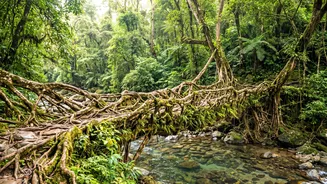
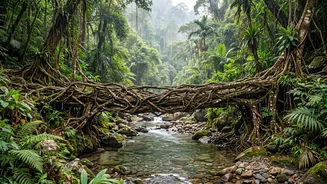
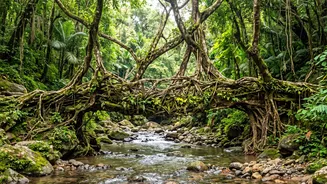
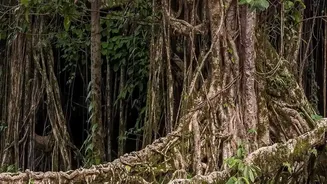
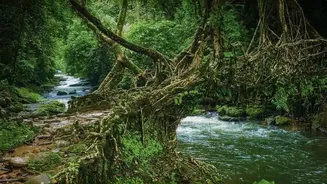
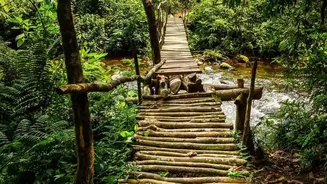
The most iconic living root bridge, the Umshiang Double-Decker Bridge, is located in Nongriat village. Reaching it is an adventure that requires a trek down approximately 3,500 stone steps from the starting point in Tyrna village. To get to Tyrna, you can hire a taxi from Cherrapunji. While the trek sounds daunting, it is a well-paved path and does not require a guide. The journey through the lush forest, crossing smaller root bridges and suspension bridges, is breathtaking. While you can do the trek as a day trip, budget travelers often choose to stay overnight in one of Nongriat's affordable homestays. This allows for a more relaxed pace and the opportunity to trek further to the stunning Rainbow Falls the next day, making the strenuous climb back up the steps more manageable.
Managing Daily Costs
Beyond transport and lodging, daily expenses in Meghalaya can be kept remarkably low. Eating at local eateries instead of tourist-centric cafes is key. A simple but delicious Khasi meal of rice, dal, and a meat or vegetable curry can be found for as little as ₹150. Entry fees to most natural attractions like waterfalls and the root bridges themselves are nominal, often around ₹20 to ₹50. To keep costs down, focus your itinerary. Instead of trying to cover the entire state, stick to one region, like the East Khasi Hills where Cherrapunji and Nongriat are located. This minimizes travel time and transport costs. Always carry cash, as digital payments are not widely available in the more remote villages.
Beyond the Double-Decker Bridge
While the Double-Decker bridge is the main draw, the region is dotted with over 100 other living root bridges. For a less crowded experience, consider visiting the single-decker root bridge near Riwai village, close to Mawlynnong. Mawlynnong, famously known as 'Asia's Cleanest Village', offers another homestay-rich environment. Combining a trip to Cherrapunji and Nongriat with a visit to Mawlynnong and the crystal-clear Umngot River in Dawki can be done economically using shared transport. A well-planned 5-6 day itinerary focusing on these key areas allows a deep dive into Meghalaya's natural and cultural heritage without feeling rushed or overspending.