



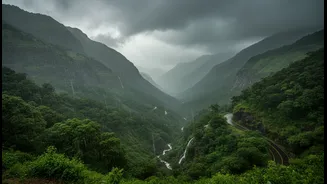




The Fragile Charm of Himalayan Resorts
For decades, the go-to monsoon escape has been the majestic Himalayas. Hill stations in states like Himachal Pradesh and Uttarakhand promise cool air, dramatic clouds, and breathtaking vistas. However, this beauty comes with increasing peril. Geologically,
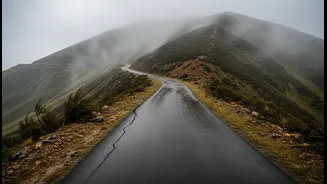
the Himalayas are young, active, and fragile mountains. Composed of weaker rock and steep slopes, they are highly susceptible to landslides, especially when saturated by intense monsoon rains. In recent years, tragic incidents of roads being washed away, flash floods, and entire hillsides collapsing have become frighteningly common, often triggered by extreme rainfall events. Travellers heading to popular spots like Manali or routes in Uttarakhand face the real risk of being stranded by blocked highways, sometimes for days. This has led authorities to frequently issue travel warnings during peak monsoon months, advising caution for what has become a high-risk travel corridor.
Goa's Hidden Strength: The Ancient Western Ghats
In stark contrast, the portion of the Western Ghats that runs through Goa offers a different geological story. These mountains are vastly older and more stable than the Himalayas. Formed from ancient, hard crystalline rock, their slopes are generally more moderate and have been weathered over millions of years, resulting in a more mature and resilient topography. While Goa is not entirely immune to landslides, especially due to factors like unregulated construction and hill cutting, the natural terrain is inherently less volatile. The risk profile is significantly lower compared to the tectonically active Himalayan belt. A government-appointed committee in Goa has noted that while heavy rain and laterite soil can create instability, human factors like improper construction are often the primary driver of modern incidents, rather than the inherent instability of the mountains themselves. Recent landslides in Goa have been localized and often linked to such activities.
The Protective Shield of a Forest Canopy
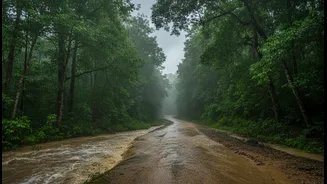
The headline's claim hinges on Goa's dense rain canopies, and for good reason. These forests act as a powerful, natural defence system against soil erosion and landslips. A multi-layered forest canopy intercepts a significant amount of rainfall, acting like a giant umbrella that lessens the impact of downpours on the soil below. This process, known as canopy interception, slows down water, allowing more of it to evaporate or be absorbed gently. More importantly, the extensive and deep root systems of the trees and shrubs weave through the soil, binding it together like a natural net. This reinforcement makes the soil far more resistant to being washed away. In the Western Ghats, it's been noted that forested slopes are stable even at steep angles where deforested slopes might fail. This combination of water absorption and soil binding by the forests of interior Goa mitigates the primary triggers of rainfall-induced landslides.
Discovering the Serene Inland Experience
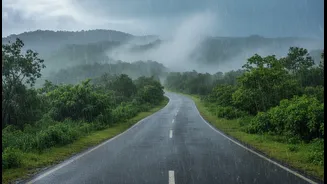
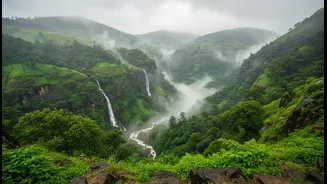
Swapping a high-altitude resort for a forest homestay in Goa’s hinterlands is a shift in mindset. Instead of peak-views, you get the immersive experience of a thriving ecosystem. During the monsoon, interior Goa transforms into a lush, emerald paradise. Areas like the Chorla Ghats, Netravali, and the regions around the Bhagwan Mahavir Wildlife Sanctuary offer a tranquil escape. The experience here is less about frantic sightseeing and more about slow travel. Think waking up to birdsong, trekking to seasonal waterfalls like Tambdi Surla, exploring spice plantations, and enjoying the quiet solitude of an eco-lodge. Unlike the shuttered beach shacks, the interiors come alive, with local festivals and a landscape teeming with biodiversity. It’s a chance to see a different side of Goa—one that is peaceful, culturally rich, and, crucially, offers peace of mind during a season of unpredictable weather.