




A Clock Ticking in Orbit
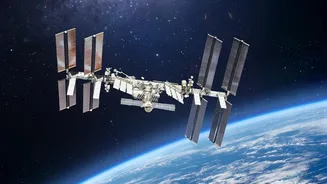
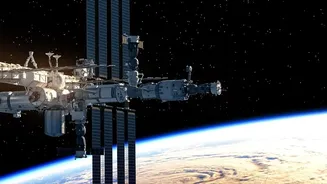
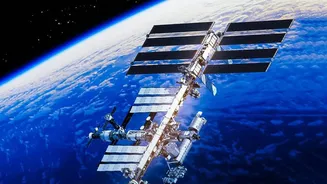
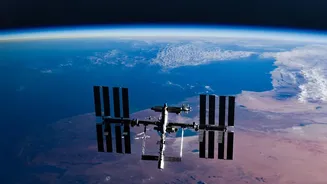
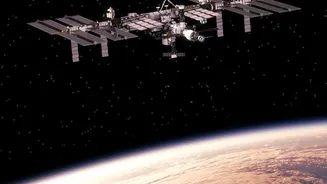
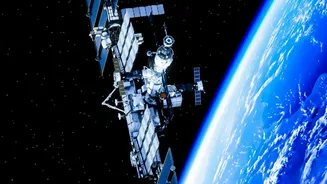
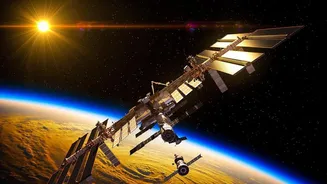
For over two decades, the International Space Station (ISS) has been a symbol of human ingenuity and a vital laboratory for science in microgravity. But this incredible feat of engineering is aging. With mounting operational costs and wear-and-tear, NASA
and its partners plan to deorbit the station around 2030. This impending retirement creates a critical challenge: without a successor, humanity could lose its continuous foothold in Low Earth Orbit (LEO) for the first time in a generation. To prevent this gap, NASA has turned to the private sector, launching the Commercial Low Earth Orbit Destinations (CLD) program. This initiative funds companies like Blue Origin, Sierra Space, and Axiom Space to design, build, and operate their own commercial space stations, with NASA planning to be just one of many customers.
The New Players in Space Real Estate
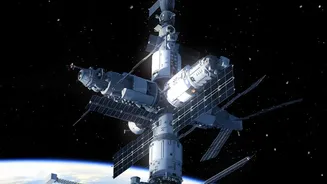
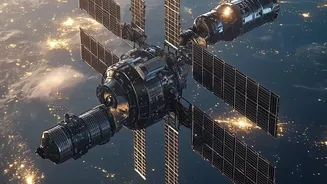
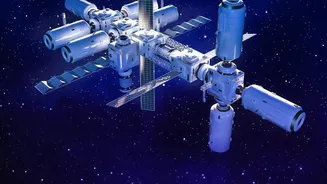
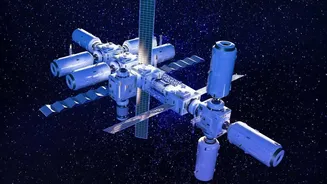
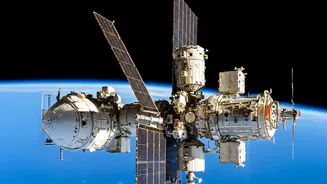
The competition to build the first commercially run space station is fierce, with several concepts in development. One major project is Orbital Reef, a joint venture by Blue Origin and Sierra Space, envisioned as a "mixed-use business park" in space. Another key player is Axiom Space, which is taking a unique approach by first attaching its own modules to the ISS before they detach to become a free-flying station. These companies are exploring different architectural philosophies. Axiom is building traditional rigid modules, similar in construction to the ISS itself. Sierra Space, meanwhile, is championing its Large Integrated Flexible Environment (LIFE) habitats. These are inflatable modules that launch in a compressed state and expand in orbit to provide vast living and working spaces. Each design presents unique engineering and safety challenges that must be solved on Earth before ever reaching orbit.
Built to Burst: Inflatables Under Pressure
How can a 'bouncy castle' be safe in space? The answer lies in advanced materials and extreme testing. Inflatable habitats like Sierra Space's LIFE module are made from layers of high-strength fabrics, such as Vectran, which become rigid and incredibly strong once pressurized. To prove their durability, engineers subject them to the ultimate stress test: the Ultimate Burst Pressure Test. At facilities like NASA's Marshall Space Flight Center, full-scale prototypes are deliberately inflated until they explode. These tests are designed to ensure the habitat can withstand pressures far beyond its normal operating levels, confirming its safety margin. The tests have been successful, with prototypes withstanding pressure equivalent to 164 sticks of dynamite and exceeding NASA's required safety factors, validating the structural integrity of these soft-goods habitats.
Simulating Life in a Vacuum
A space station is more than just a strong container; it's a self-contained world. The Environmental Control and Life Support System (ECLSS) is the heart of any habitat, responsible for providing breathable air, clean water, and stable temperatures. Companies rigorously test these complex systems on the ground in full-scale mockups. They simulate the presence of a crew to test oxygen generation, carbon dioxide removal, and water recycling systems under realistic conditions. Engineers also conduct "human-in-the-loop" tests, where participants walk through daily tasks in life-sized models to evaluate ergonomics and workflow, from moving cargo to using the lavatory. This feedback is crucial for refining the internal design to ensure it is not only safe but also efficient and comfortable for the future inhabitants.
Testing for the Hazards of Space
Beyond air pressure, space is an incredibly hostile environment filled with radiation and tiny, high-velocity projectiles called micrometeoroids. Station designs must protect against these threats. Ground-based testing involves firing projectiles at sample materials to simulate micrometeoroid impacts and ensure the habitat's shielding can withstand them. Radiation protection is also a major concern, and designs are analyzed and tested to shield astronauts from harmful cosmic rays. Power systems, like the Roll-Out Solar Arrays (ROSA) being built for Axiom Station, are subjected to extensive testing to ensure they can reliably power the station's critical systems. Propulsion systems, like the 32 thrusters planned for Axiom's first module, also undergo iterative testing on the ground to validate their performance before being integrated into the final vehicle.