



More Than Just A Pretty Picture
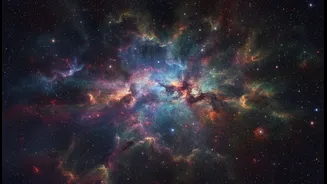
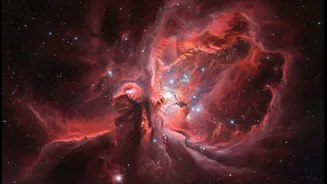
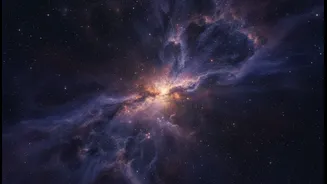
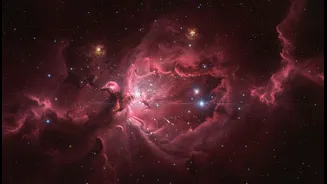
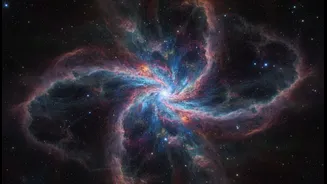
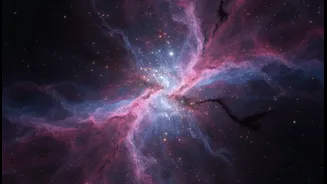
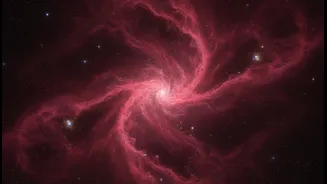
Scroll through any science feed online and you will inevitably stop at a breathtaking image from the James Webb or Hubble space telescopes. Often, it will be a nebula, a vast cloud of interstellar gas and dust, painted in hues of impossible vibrancy.
The caption might name it—the Pillars of Creation, the Orion Nebula—and give a few dry facts about its distance in light-years. And that’s it. The image is left to do the heavy lifting, a silent spectacle that is both awesome and alienating. We are shown a masterpiece but told nothing of the artist or the drama unfolding on the canvas. This approach, while visually arresting, misses a grand opportunity. It treats nebulae as static objects of beauty rather than dynamic, vital arenas of cosmic activity. They become the universe's screensavers, when in reality, they are its nurseries and its graveyards.
The Truth About The Colour
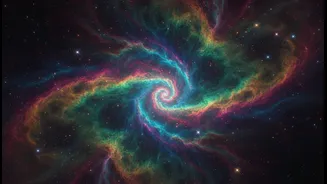
A common criticism is that these images are ‘fake’ because their colours are not what the human eye would see. This is true, but it’s also the wrong way to think about it. Telescopes like the JWST see in wavelengths of light, particularly infrared, that are invisible to us. The images they capture are initially monochrome. Scientists then assign visible colours to different wavelengths of this invisible light—a process known as using 'false colour'. For example, in the famous 'Hubble Palette', light emitted by sulphur might be coloured red, hydrogen green, and oxygen blue. This isn't deception; it's translation. It’s a way of making invisible data visible and meaningful, allowing scientists to highlight different chemical elements and processes occurring within the nebula. Knowing this doesn't diminish the beauty. Instead, it adds a layer of intellectual richness. The colour isn’t just for aesthetics; it’s data, telling a scientific story.
From Gas Cloud to Cosmic Story
With the colour explained, the next step is context. What is actually happening inside these celestial clouds? The answer is: everything. Nebulae are the crucibles of the cosmos. Within these dense clouds of gas and dust, gravity pulls material into clumps that heat up and ignite, giving birth to new stars and their planetary systems. The iconic Pillars of Creation are a stellar nursery, a place where stars are actively being formed. Conversely, some nebulae are the final, beautiful death rattles of stars. A planetary nebula, despite its name, has nothing to do with planets; it’s the expanding, glowing shell of gas thrown off by a dying star. By failing to tell these stories, we ignore the most profound connection of all: the elements forged in these stellar processes, the very stardust scattered by nebulae, are the building blocks of planets like Earth, and of us.
Reclaiming A Sense of Wonder
This brings us to the final, and most crucial, element: wonder. True wonder isn't just the passive appreciation of a pretty image. It’s an active, engaged sense of awe that sparks curiosity and a desire to understand. Research shows that storytelling increases comprehension, interest, and engagement in science. When we learn that the colours in a nebula image are a translation of unseen light, and when we understand that these clouds are the birthplaces of stars, the image is transformed. It ceases to be a static object and becomes a dynamic scene. It invites questions. It stirs the imagination. This is the wonder that science communication should strive for. By combining the visual spectacle with the colour explanation and the narrative context, we move from simply seeing a picture to understanding a story. And that story is about creation, destruction, and our own fundamental place in the universe. It’s a story that deserves to be told in its full, wondrous glory.