






The Annual Pothole Problem
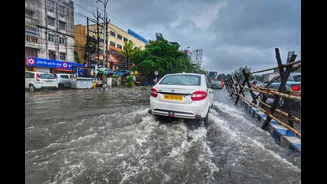
For millions of Indians, the end of the monsoon season signals the start of a different kind of challenge: navigating roads riddled with cracks and potholes. This annual cycle of damage is more than just an inconvenience. It leads to increased vehicle
wear and tear, higher fuel consumption, slower traffic, and tragically, a significant number of road accidents. According to government data, accidents caused by potholes on national highways have been on the rise. The traditional solution has always been reactive — sending out crews to patch up the damage after it has occurred, a process that is costly, disruptive, and often temporary.
What is Self-Repairing Asphalt?
Imagine a road that can fix its own minor injuries before they become major problems. That is the core idea behind self-healing asphalt. It’s not an entirely new road material, but rather an enhanced version of conventional asphalt. This innovative mixture is embedded with special agents that can autonomously repair small cracks. Several methods are being tested globally and in India. Some involve mixing in tiny capsules containing a rejuvenating oil. When a crack forms, the capsule breaks, releasing the oil to soften the surrounding bitumen (the black, sticky binder in asphalt) and seal the gap. Other methods use materials like steel fibres or iron oxide nanoparticles that, when heated, allow the asphalt to melt slightly and rebond.
The 'Eco-Binder' Innovation
The headline's mention of "eco-binders" points to a particularly promising and sustainable approach. Instead of relying solely on petroleum-based bitumen, researchers are developing binders from renewable, organic sources. Scientists at institutions like the Council of Scientific and Industrial Research (CSIR) have been working on creating bio-binders from agricultural waste, such as rice straw. This not only provides a use for materials that might otherwise be burned, causing air pollution, but it also reduces India's dependence on imported bitumen. These bio-binders can be engineered with the same self-healing properties, making the entire road system greener and more resilient.
How the Healing Process Works
The term "automatically" can mean a few different things depending on the technology. In the case of microcapsules filled with rejuvenating oil, the process is truly automatic. The stress from traffic causes a micro-crack, which in turn ruptures the capsules, triggering the repair instantly without any human intervention. Another approach being explored by the National Highways Authority of India (NHAI) involves adding materials like steel wool to the mix. This makes the asphalt conductive. While not fully autonomous, a maintenance vehicle equipped with an induction coil can pass over the surface, heating the fibres and melting the bitumen to seal cracks in minutes, a far cry from traditional road repair. This proactive maintenance could stop potholes before they even form.
Testing on Indian Roads
This technology is moving from the lab to the real world. In India, leading research bodies like CSIR and various IITs are actively experimenting with different forms of self-healing asphalt tailored for Indian conditions, which include heavy traffic loads and extreme weather. A trial stretch of road using a bio-binder was successfully constructed on the Jorabat-Shillong Expressway in Meghalaya, demonstrating its potential in a high-rainfall area. The NHAI is also seriously considering these methods to improve the durability of the national highway network, signaling a major potential shift in how we build and maintain our infrastructure.
The Road Ahead: Costs and Challenges
While the promise is enormous, widespread adoption faces hurdles. The primary challenge is the higher upfront cost of self-healing asphalt, which can be significantly more expensive than traditional mixes due to the specialised additives. However, the long-term economic argument is compelling. By potentially doubling the lifespan of a road and drastically reducing the need for frequent, costly repairs, the technology could save substantial amounts of money over time. It also means fewer traffic disruptions and a lower carbon footprint from repair activities. Before a nationwide rollout, authorities will need to conduct thorough cost-benefit analyses and ensure the technology can be scaled for large-scale production.