



A Catastrophe Unfolds
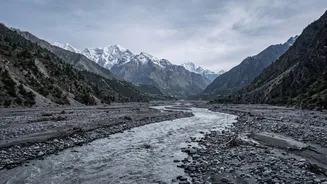
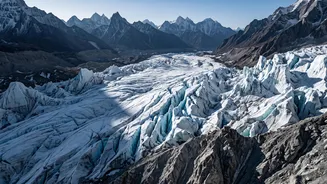
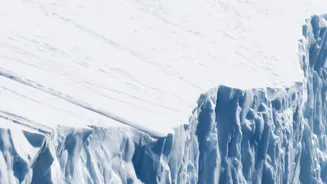
On August 26, 2026, a catastrophic event struck near the Nepal-Tibet border. A massive section of a glacier, reportedly 2,000 feet wide, broke away from an altitude of around 17,000 feet. This ice and rock avalanche plunged into the valley below, sending
a devastating surge of debris and water downstream. The event, which felt like a bomb exploding according to observers, triggered deadly flash floods that obliterated homes, bridges, and hydropower projects, leaving hundreds dead or missing in both Nepal and Tibet. The immediate aftermath was chaos, but as rescue operations began, a scientific investigation was also launched to answer a critical question: what caused this colossal failure?
The Obvious Suspect: Climate Change
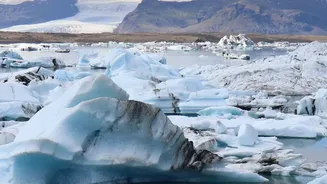
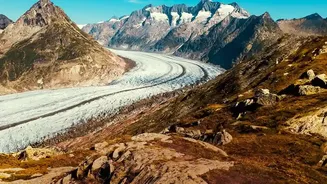
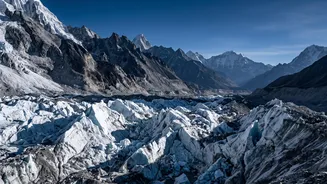
In a warming world, the first and most obvious suspect was climate change. Across the Himalayas, rising temperatures are accelerating glacier melt, making the entire region more vulnerable. Glaciers are shrinking, and the lakes forming at their edges, often dammed by unstable walls of rock and debris known as moraines, are growing larger and more dangerous. These moraine dams can fail, leading to what is known as a Glacial Lake Outburst Flood (GLOF). For years, experts have warned that the Hindu Kush Himalaya region is a ticking time bomb, with climate change creating the perfect conditions for such disasters. It seemed like a straightforward, albeit tragic, case of a warming planet claiming more victims.
A Twist in the Tale: The Seismic Signal
Initial reports suggested an earthquake might have been the trigger. However, analysis by the US Geological Survey (USGS) revealed a fascinating twist: there was no traditional earthquake. Instead, the seismic event that was recorded, initially reported as a magnitude 4.4 tremor, was determined to be the signature of the glacier collapse itself. The sheer force of the falling ice and rock crashing down generated its own seismic waves. But this doesn't close the case. Scientific studies, including analysis of the 2021 Chamoli disaster in India, show that minor, often unfelt, seismic activity can precede such collapses. These subtle tremors can act as the final push on an already unstable system, like a whisper that starts an avalanche.
How a Tremor Topples a Glacier
So how can a minor seismic shock lead to such a massive disaster? Think of the glacier as a precariously balanced structure, weakened by years of melting. Even small ground shaking, the kind that locals might not even notice, can destabilize this delicate balance. The seismic waves can further crack weakened ice, reduce friction at the glacier's base, or shake loose the unstable moraine dam holding back a glacial lake. Studies in the Himalayas have shown that even shallow earthquakes of moderate magnitude can have a significant impact on glacial bodies. The disaster in Nepal is a textbook example of a cascading hazard: long-term warming creates the vulnerability, and a short-term trigger, like a seismic shock, can initiate the catastrophic failure.
A Wake-Up Call for the Third Pole
The events in Nepal are not an isolated incident but a grave warning for the entire Himalayan region, often called the 'Third Pole' for its vast ice reserves. Similar conditions exist in mountain communities across India, Pakistan, and Bhutan. As glaciers continue to retreat, the potential for these disasters grows. The key takeaway is that risk assessment cannot focus on climate change alone. It requires an integrated approach that monitors both glacial changes and the subtle seismicity of the region. Studies on past events like the Chamoli disaster have emphasized that monitoring these seismic precursors could form the basis of an early warning system, potentially saving thousands of lives in the future.