





What Exactly Is Galangal?
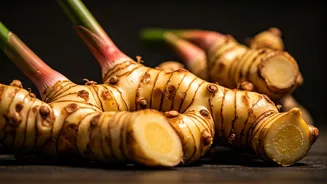
Galangal is a rhizome, or underground stem, belonging to the same family as ginger and turmeric. Often called 'Siamese ginger' or 'Thai ginger', it’s a key player in the cuisines of Thailand, Indonesia, Malaysia, and Vietnam. While it looks similar to ginger,
with a knobby shape, its skin is smoother, paler, and often has a pinkish hue. There are a few varieties, but the most common one you'll find is greater galangal, celebrated for its unique taste and aroma. Unlike ginger, its flesh is much harder and more fibrous, meaning you'll need a sharp knife to tackle it.
The Ginger vs. Galangal Showdown
This is the most common question, and the answer is definitive: they are not the same and cannot be used interchangeably. Swapping one for the other will dramatically change the flavour of your dish. Ginger offers a warm, spicy, and slightly sweet kick. Galangal, on the other hand, delivers a completely different experience. Its flavour is sharper, more peppery, and has distinct citrusy and pine-like notes. Some even compare its refreshing, medicinal aroma to eucalyptus or Vicks VapoRub, in a good way. While ginger is soft and juicy, galangal is dense and almost woody, which affects how you use it in cooking.
Unlocking the Aroma and Flavour
Galangal’s magic lies in its complex profile. The ‘heat’ it provides isn't the fiery burn of a chilli but a clean, peppery warmth. Its ‘earthiness’ is layered with a scent often described as piney or woodsy. This is all lifted by a bright, sharp citrus character that cuts through rich ingredients like coconut milk. It’s a cornerstone flavour in iconic Thai dishes like Tom Yum (hot and sour soup) and Tom Kha Gai (coconut chicken soup), where slices are simmered in the broth to release their essence. In Indonesian and Malaysian cooking, it's a key component of spice pastes (bumbus), forming the flavour base for dishes like beef rendang.
How to Use Galangal in Your Kitchen
Because of its tough texture, galangal is rarely eaten in large pieces. The most common methods are to slice it thinly for infusing broths and soups, or to pound or grate it for curry pastes and marinades. When adding slices to a soup, you can treat them like bay leaves or cinnamon sticks—let them infuse their flavour and then remove them before serving, as they are too tough to chew. For pastes, chopping it finely before pounding in a mortar and pestle helps break down the fibres. You can also grate it to add a zesty punch to stir-fries, salads, and even refreshing drinks like limeade. It pairs beautifully with seafood, cutting through any fishiness with its bright notes.
Buying and Storing This Aromatic Gem
You can find fresh galangal in Asian grocery stores and larger supermarkets, often near the ginger and turmeric. Look for firm, plump rhizomes with smooth, unblemished skin. Avoid any that look shrivelled or have signs of mould. Fresh, unpeeled galangal can be stored in the refrigerator for two to three weeks. For longer storage, it freezes exceptionally well. You can freeze the whole root, or slice it into thin rounds first. When you need it, you can grate or chop it directly from the freezer without thawing. You can also find dried slices and ground galangal powder, though the fresh form packs the most vibrant and nuanced flavour.