






Decoding the Numbers: What Is 10x50?
When you see “10x50” on a pair of binoculars, it’s not a complex code. It’s actually a simple guide to its power. The first number, “10x,” refers to magnification. It means the binoculars will make an object appear ten times closer than it does to your
naked eye. The second number, “50,” is the diameter of the large front lenses in millimeters. This is called the aperture, and it determines the binoculars’ light-gathering ability. The larger the aperture, the more light it can collect, resulting in brighter, clearer images, especially in low-light conditions like stargazing.
The ‘Goldilocks’ Balance for Stargazing
For astronomy, 10x50 is often considered the perfect compromise. The 10x magnification is powerful enough to reveal details on the Moon, separate double stars, and show the faint fuzz of distant galaxies, but it’s not so powerful that the natural shaking of your hands makes the image impossibly blurry. Magnifications higher than 12x often require a tripod to keep steady. Meanwhile, the 50mm lenses gather significantly more light than smaller, more compact binoculars, which is crucial for seeing dim objects in the night sky. This combination provides bright views and a wide enough field of vision to easily scan the constellations.
Your Autumn Celestial Checklist
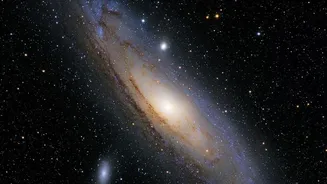
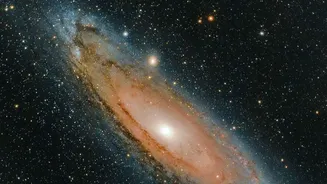
With your 10x50s, you’re equipped to hunt for some of autumn’s most breathtaking sights. The season offers a prime view of the Andromeda Galaxy (M31), the closest major galaxy to our own. Through binoculars, it appears as an elongated, hazy patch of light. Many find it’s actually easier to spot with binoculars than a telescope because of its large apparent size. Another must-see is the Pleiades star cluster (M45), also known as the Seven Sisters. While you might see six or seven stars with the naked eye, binoculars reveal dozens sparkling in a tight group. Binoculars are considered the best way to view this cluster, as most telescopes have too narrow a field of view to see it all at once. The clear autumn skies also provide great views of planets like Saturn, which is at its brightest for the year in early October 2026.
Simplicity is the Key
The beauty of using binoculars for astronomy is their simplicity. There’s no complex setup. You just point and look. For a steadier view, you don’t even need a fancy tripod. Simply bracing your elbows on a fence, a car roof, or even just sitting in a garden chair can significantly reduce shakiness. Basic 10x50 binoculars are an inexpensive entry point into the hobby, often serving as the perfect gateway instrument for beginner astronomers. They offer a tangible connection to the cosmos without the steep learning curve or expense of a large telescope, making the wonders of the universe accessible to everyone.