








The Dawn of a New Narrative
For decades, the story of India’s earliest cities was primarily anchored in the Indus Valley and later, the Gangetic plains. While the Sangam literature of ancient Tamil Nadu spoke of bustling cities and vibrant trade, physical proof remained elusive,
leaving a gap between literary memory and archaeological fact. This left the impression that large-scale urbanism in the south was a later development. But a wave of systematic excavations over the past decade has shattered that perception. What began with a single, game-changing discovery has now blossomed into a sprawling narrative of an advanced, interconnected civilisation that flourished across the Tamil landscape more than 2,600 years ago.
Keeladi: The Spark That Lit the Fire
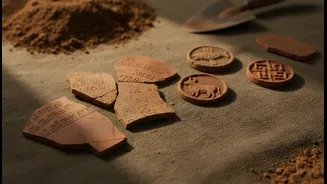
The revolution in understanding began at Keeladi, on the banks of the Vaigai River. Excavations here have unearthed a treasure trove of evidence pointing to a highly advanced urban settlement during the Sangam Age. Carbon dating of artefacts has pushed the timeline of this settlement back to at least the 6th century BCE, contemporaneous with the rise of cities in the Gangetic plains. The findings paint a picture of a literate, industrious, and secular society. Discoveries include well-laid brick structures, sophisticated drainage and water management systems like terracotta pipelines, and thousands of artefacts. Potsherds inscribed with Tamil-Brahmi script prove that literacy was not confined to an elite few. The absence of religious iconography suggests a focus on trade and industry, supported by finds of spinning whorls, weaving tools, and beads made from semi-precious stones.
A Web of Interconnected Cities
The most exciting development is the confirmation that Keeladi was not an isolated marvel. The story is getting wider, geographically and historically. The Tamil Nadu State Department of Archaeology is now excavating multiple sites, revealing a network of urban and industrial centres. At Vembakottai in Virudhunagar district, over 12,000 artefacts have been unearthed, revealing a 2,000-year-old hub for crafting shell bangles and glass beads. Crucially, the discovery of torpedo jar fragments points to robust maritime trade with the Roman and West Asian worlds. Further east, at Porpanaikottai, archaeologists have found the remains of a Sangam-age fort, a unique circular brick structure, gold pieces, and evidence of a bead-making industry that traded with northern India.
The Latest Piece of the Puzzle
Even as recently as July 2026, the story expanded again. At Karivalamvandanallur in Tenkasi district, excavators discovered the first-ever Sangam-age brick stepwell found in Tamil Nadu. The bricks used in this impressive 4x4 metre structure are of the same size and style as those found at Keeladi, providing a tangible link between these distant sites. Situated on an ancient trade route to the west coast, the site has also yielded high-tin bronze objects, indicating advanced metallurgical knowledge. Together, these sites—from Keeladi on the Vaigai to Vembakottai on the Vaippar and Sivakalai on the Porunai—showcase distinct but connected river valley civilisations thriving in parallel.