



What Exactly Happened?
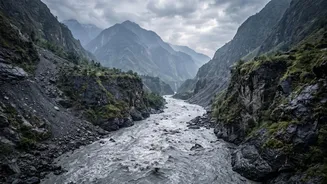
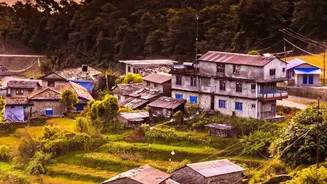
On the morning of August 26, 2026, a massive torrent of water, mud, and debris surged through river valleys near the Nepal-Tibet border. The force of the flood was immense, destroying entire villages, bridges, and hydropower projects, and leaving hundreds
dead or missing. Initial confusion surrounded the cause. Early reports suggested an earthquake may have been the trigger, but scientists quickly revised this theory. The U.S. Geological Survey (USGS) confirmed that the seismic signals, initially mistaken for a 4.4 magnitude earthquake, were in fact generated by the glacier collapse itself and the resulting debris flow. Experts have described the event as a rock and ice avalanche that blocked a river, leading to the catastrophic flood.
The Prime Suspect: A Glacier Collapse
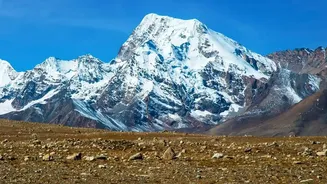
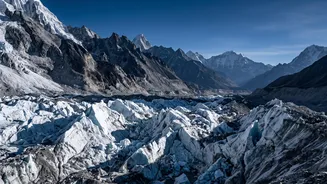
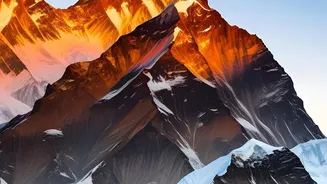
Scientific consensus points to the collapse of a large portion of a glacier as the primary trigger. Using satellite imagery, experts were able to pinpoint the event, noting that the lower part of a glacier broke off from an altitude of about 5,200 metres and crashed into the valley floor 1,200 metres below. This collapse involved a massive amount of ice and rock. The resulting landslide and debris flow generated a seismic signature equivalent to a 5.2 magnitude event. The energy released was enormous, creating a destructive flow that moved with incredible speed. One hydrologist noted that these types of events, which can strike even in dry weather without heavy rainfall, are nearly impossible to outrun and hit with the force of liquid concrete.
Understanding the Bigger Picture: GLOFs
This disaster highlights a growing threat in the Himalayas known as a Glacial Lake Outburst Flood (GLOF). A GLOF is a sudden and violent flood that occurs when the natural dam containing a glacial lake fails. These dams are often made of moraine—a loose mixture of rock, soil, and ice left behind by a retreating glacier—and can be very unstable. As glaciers melt due to rising temperatures, the lakes behind them grow larger, putting more pressure on these fragile dams. A trigger, such as a rockslide, an ice avalanche falling into the lake, or even seismic activity, can cause the dam to breach, releasing a catastrophic volume of water downstream.
The Fingerprints of a Changing Climate
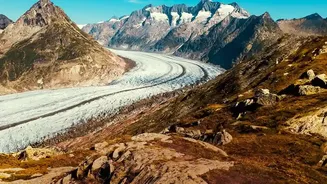
While it is too early for specific attribution studies, scientists widely agree that climate change is creating the conditions that make such disasters more likely. The Himalayas are warming at a rate faster than the global average. United Nations reports from 2023 noted that glaciers in Nepal melted 65% faster in the last decade than in the previous one. This accelerated melting not only causes glaciers to retreat but also leads to the rapid formation and expansion of potentially dangerous glacial lakes. Between 1977 and 2017, the number of glacial lakes in Nepal more than doubled. This warming trend makes the entire mountain system less stable, increasing the risk of avalanches and landslides that can trigger GLOFs.
Why the Himalayas Are a Hazard Zone
The extreme topography of the Himalayas makes the region uniquely vulnerable. The steep valleys act as funnels, amplifying the destructive power of any flood. Furthermore, these valleys are often lifelines for the region, hosting communities, crucial infrastructure like highways, and hydropower plants that are vital to Nepal's economy. A single GLOF can therefore have devastating and far-reaching consequences. The growing population and infrastructure development in these mountain valleys increase the number of people and assets exposed to this escalating risk. For India and other downstream nations, the stability of Himalayan glaciers is a critical issue of water and food security for billions of people.
What Can Be Done?
Preventing a glacier from collapsing is impossible, but managing the risk is not. The key lies in monitoring and early warning systems. Scientists use satellite imagery and field surveys to identify the most dangerous glacial lakes. In some high-risk cases, engineering solutions can be used to carefully lower the water level in a lake to reduce the pressure on its natural dam. However, the sheer number of lakes and the remote, difficult terrain make this a monumental challenge. Following a similar, smaller flood in the same region in 2025, Nepal committed to strengthening cross-border coordination with China for disaster warnings, a crucial step given that many of these hazards originate in one country and affect another.