



A Breakthrough Billions of Kilometres Away
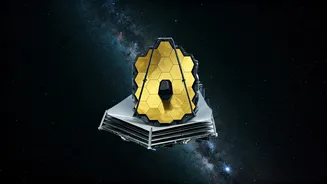
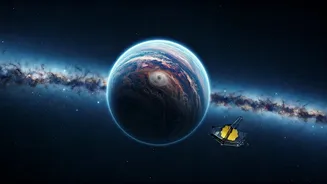
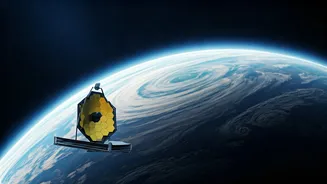
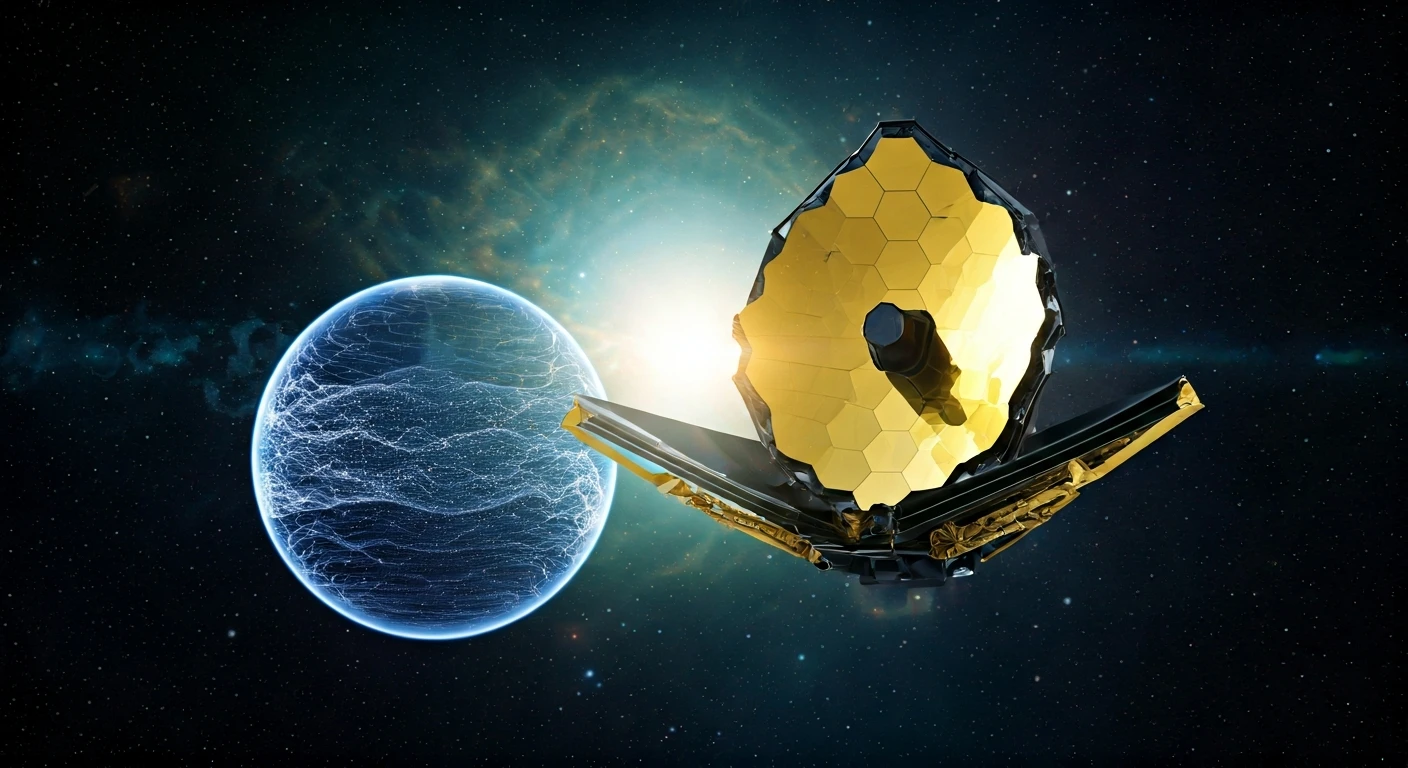
Humanity has long stared at the stars and wondered if we are alone. Now, we have one of our most tantalising clues yet. The James Webb Space Telescope (JWST), a joint mission by NASA, the European Space Agency, and the Canadian Space Agency, has confirmed
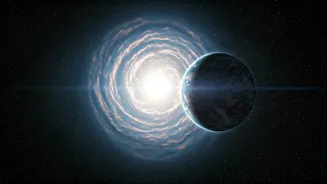
the unambiguous presence of water in the atmosphere of a planet hundreds of light-years from Earth. This is not a vague hint or a maybe; it is a clear, robust signal captured by the telescope's powerful instruments. While water has been detected on exoplanets before, the detail and clarity of this new finding represent a giant leap forward, showcasing the incredible capabilities of the JWST and ushering in a new era of exoplanet exploration.
How Webb 'Sees' a Distant Atmosphere
Detecting elements on a world you can't possibly visit sounds like science fiction, but the method is ingenious. It's called transmission spectroscopy. As an exoplanet passes in front of its host star from our perspective, a tiny fraction of the starlight filters through the planet's atmosphere. Molecules within that atmosphere absorb specific colours, or wavelengths, of light. By capturing the spectrum of the starlight before and during this transit, astronomers can see which colours are missing. These missing pieces act like a chemical fingerprint, revealing precisely which molecules are present. In this case, the Webb’s advanced spectrographs picked up the unmistakable signature of water vapour (H₂O), a molecule essential for life as we know it.
Why This Finding Is a Game-Changer
Finding water is a critical milestone in the search for extraterrestrial life. On Earth, liquid water is a prerequisite for every known living organism. Finding it in the atmosphere of a distant world is the first step toward identifying planets that might have the right conditions for life to arise. However, it's important to temper expectations. The presence of water vapour does not automatically mean the planet has oceans or is habitable. Many of the first planets studied by Webb, like the gas giant WASP-96 b, are far too hot for liquid water to exist on their surfaces. The true significance of these early discoveries lies in the proof of concept: Webb can successfully and clearly detect the building blocks of habitability from immense distances.
More Than Just Water
The telescope's power allows for a more complete chemical inventory. In addition to water, Webb can spot other key molecules like carbon dioxide, methane, and ammonia. The combination and ratio of these gases can tell a much richer story. For example, the detection of sulfur dioxide on one planet provided the first evidence of photochemistry (chemical reactions triggered by starlight) in an exoplanet's atmosphere. On another world, the presence of salt clouds was confirmed, solving a decade-old mystery. By analysing this complete chemical profile, scientists can begin to understand the planet's geology, climate, and whether its atmosphere is being influenced by biological or purely geological processes. This moves us from simply finding planets to truly characterising them.
What Happens Next in the Search?
This discovery is not an end-point, but the thrilling start of a new chapter in astronomy. Having proven its ability to detect water on larger, less-hospitable planets, the JWST is now turning its gaze towards smaller, rockier worlds. Scientists are particularly interested in planets orbiting within their star's 'habitable zone'—the region where temperatures could allow for liquid water to pool on the surface. One such target is the TRAPPIST-1 system, which features multiple Earth-sized planets. Each new observation will build upon the last, refining our models of how planetary atmospheres form and evolve. We are transitioning from asking if we can find the ingredients for life elsewhere to asking where they are most abundant.