


A Celebration of Island Life
Every year, events like the Island Tourism Festival and other food festivals bring together residents and tourists to celebrate the unique cultural fabric of the Andaman and Nicobar Islands. While music and handicrafts are a major draw, the food stalls
are the true heart of the celebration, offering a vibrant culinary map of the region. This is where the islands' identity as a 'Mini India' comes to life, with communities from Bengal, Tamil Nadu, and Kerala, alongside indigenous groups, showcasing their traditional recipes. Amid this diversity, a single, unifying flavour profile emerges, characterized by fresh seafood and the ubiquitous, indispensable coconut.
The Undisputed King of the Coast
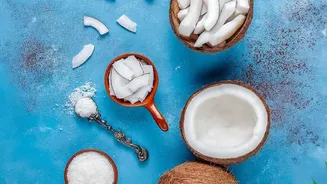
To understand Andaman cuisine, one must first understand the coconut palm. It is not merely a plant but a life-supporting species in this fragile island ecosystem. Having dispersed across the ocean from the Indo-Malayan region, coconuts found a natural home on these tropical coasts, becoming a cornerstone of the local economy and culture. The trees are everywhere, and every part is used, from the shells crafted into bowls and handicrafts to the fibre woven into ropes and mats. But its most celebrated role is in the kitchen. For island communities, the coconut is a symbol of self-sufficiency and a provider of nourishment in the form of water, oil, and its rich, white kernel.
From Creamy Curries to Sweet Delights
At any Andaman food festival, the versatility of fresh coconut is on full display. Unlike many mainland Indian cuisines that might use dried coconut, Andamanese cooking overwhelmingly favours fresh preparations. The star is often creamy coconut milk, which forms the base for the most iconic local dishes. This luscious liquid, extracted from freshly grated coconut, gives curries a subtly sweet and rich flavour that complements the saltiness of fresh seafood without overpowering it. Signature dishes like Coconut Prawn Curry and various fish curries rely on this creamy base, which balances the heat of local spices. Beyond curries, grated coconut is used in rice dishes, chutneys, and even as a crispy coating for fried fish. For dessert, you might find Coconut Laddoos, sweet balls made from grated coconut and jaggery, offering a simple yet profound taste of the islands.
A Taste of History and Place
The reliance on coconut is not just a matter of taste; it is a reflection of the islands' history and geography. The cuisine is a blend of influences from the various communities that settled here over the last century. South Indian settlers brought their love for coconut-based gravies, while Bengali influences can be seen in lighter fish preparations that sometimes use mustard alongside coconut. This fusion, adapted to local availability, created a culinary identity that is distinct from the mainland. The core principle remains letting fresh, local ingredients shine. Seafood is often whatever the fishermen brought in that morning, and the coconut is plucked from a nearby tree. This makes the food served at the carnival not just a meal, but a direct connection to the land and sea.