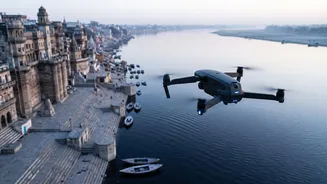








As Varanasi prepares for Dev Deepawali, the celestial 'Diwali of the Gods', the city is blending ancient tradition with modern technology. To manage the immense crowds, authorities are rolling out a massive security operation featuring eyes in the sky.
A River of Light, A Sea of People
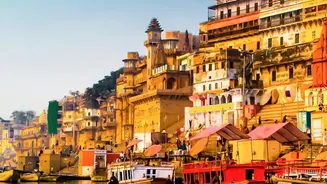
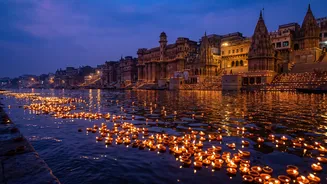
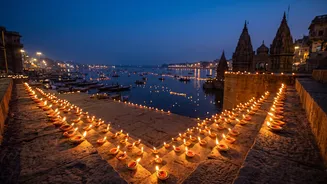
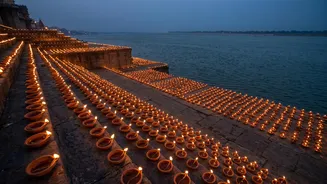
Dev Deepawali, celebrated on the full moon night of the Hindu month of Kartik, is a spectacle unlike any other. On November 24, 2026, over a million earthen lamps, or diyas, will illuminate the 84 ghats lining the Ganga river in Varanasi. According to mythology, the gods themselves descend to Earth to bathe in the holy river on this day. This belief draws hundreds of thousands of pilgrims and tourists, with crowd estimates ranging from 500,000 to over a million people, creating one of India's most breathtaking, and challenging, public gatherings. The entire riverfront, stretching nearly seven kilometres from Ravidas Ghat to Raj Ghat, transforms into a glittering pathway, an event of immense spiritual significance and a logistical feat.
The Challenge of Crowd Management
Ensuring the safety of every devotee in such a dense environment is a monumental task. The geography of the ghats—with the vast river on one side and a maze of narrow lanes on the other—creates natural bottlenecks and limited exit routes. The critical hours, between 5:00 PM and 9:00 PM, see peak crowd density, particularly around Dashashwamedh Ghat, the site of the grand evening aarti. The sheer volume of people puts immense pressure on public infrastructure and emergency services. To prevent stampedes, manage the flow of people, and respond to any incidents, Varanasi's administration has developed a multi-layered security plan where technology plays a leading role.
Eyes in the Sky: An Integrated Surveillance Network
At the heart of the 2026 security strategy is the use of drone technology. These unmanned aerial vehicles will provide a bird's-eye view of the entire festival area, streaming live video feeds to a central control room. Officials will use the drones to monitor crowd flow patterns in real-time, identify potential pressure points or suspicious activities, and spot unattended objects. This aerial surveillance is not a standalone measure. The drone feeds are integrated into the Kashi Integrated Command and Control Centre (KICCC), a state-of-the-art facility that serves as the nerve centre for city-wide surveillance. From this hub, authorities can monitor thousands of CCTV cameras, including those at private establishments like shops and hotels, creating a comprehensive security blanket over the city.
Boots on the Ground and on the Water
While technology provides the overview, traditional policing remains crucial. A heavy deployment of police personnel, including officers in plainclothes, will be present on the ghats and in the surrounding lanes. River police will patrol the Ganga, monitoring the thousands of boats that ferry tourists hoping for a spectacular view from the water and ensuring they are not overloaded. Traffic diversions will be implemented across the city, with vehicles being stopped far from the ghat area to allow for pedestrian-only zones. In previous years, the city has been declared a 'no-fly zone' for unauthorised drones and other aerial objects to mitigate security risks, a measure likely to be repeated. Emergency response teams, including medical aid points and fire extinguishers, are also a key part of the planning.