
Catch the Fading Glory of the Perseids
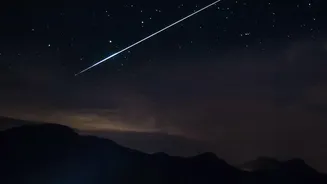
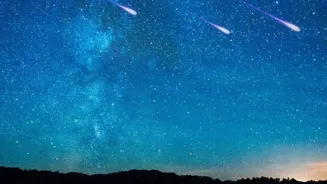
The Perseid meteor shower, one of the most beloved celestial events of the year, peaked around August 12-13 under ideal moonless conditions. While the absolute peak has passed, the show isn't entirely over. The shower remains active until late August,
and you can still catch stray 'shooting stars' in the hours after midnight. For the best chance, find a location away from city lights, give your eyes about 30 minutes to adjust to the darkness, and look towards the northeastern sky. Patience is key, as the rate of meteors will be lower than at the peak, but a bright Perseid fireball can still provide a memorable moment. The main challenge remains the monsoon clouds, with clearer skies more likely in high-altitude regions like Ladakh and Spiti or desert areas in Rajasthan.
The First Quarter Moon
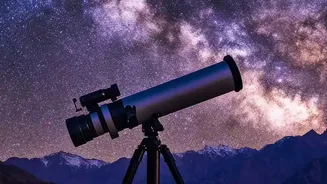
On August 20, the Moon will reach its First Quarter phase. This is when the Moon has completed the first quarter of its orbit around Earth, appearing as a perfect half-moon in the evening sky. It's an excellent time for new stargazers, as the sky is not overly brightened by moonlight, yet the Moon itself offers a stunning sight through binoculars or a small telescope. You can clearly see the line separating the sunlit side from the dark side, known as the terminator. This line of shadow highlights craters and mountains, giving the lunar surface a dramatic, three-dimensional look. Look for it in the sky as soon as the sun sets.
Witness the Full Sturgeon Moon
Mark your calendars for August 28, when the month's full moon will grace the night sky. This full moon is traditionally known as the 'Sturgeon Moon' by Native American tribes, named after the large fish that were more easily caught in North American lakes during this time of year. On this night, the Moon will rise in the east around sunset and remain visible throughout the night, setting in the west around sunrise. While a full moon's brightness can wash out fainter stars, its own majestic glow is a spectacle worth appreciating. Some sources also indicate a partial lunar eclipse will coincide with this full moon, potentially visible from India.
Get Ready for Saturn's Big Night
While its main event is in early October, late August is the perfect time to start observing Saturn. The ringed planet is getting brighter and larger in our sky as it approaches 'opposition' on October 4. Opposition is when Earth passes directly between the Sun and an outer planet, making that planet appear at its biggest and brightest from our perspective. In late August, Saturn will rise in the east during the evening and will be visible for most of the night, making it a prominent and rewarding target for anyone with a telescope. Even a basic instrument can reveal its iconic rings, a sight that never fails to inspire awe. Start tracking it now to watch it grow in brilliance over the coming weeks.
Monsoon Constellations and the Milky Way
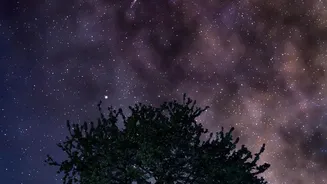
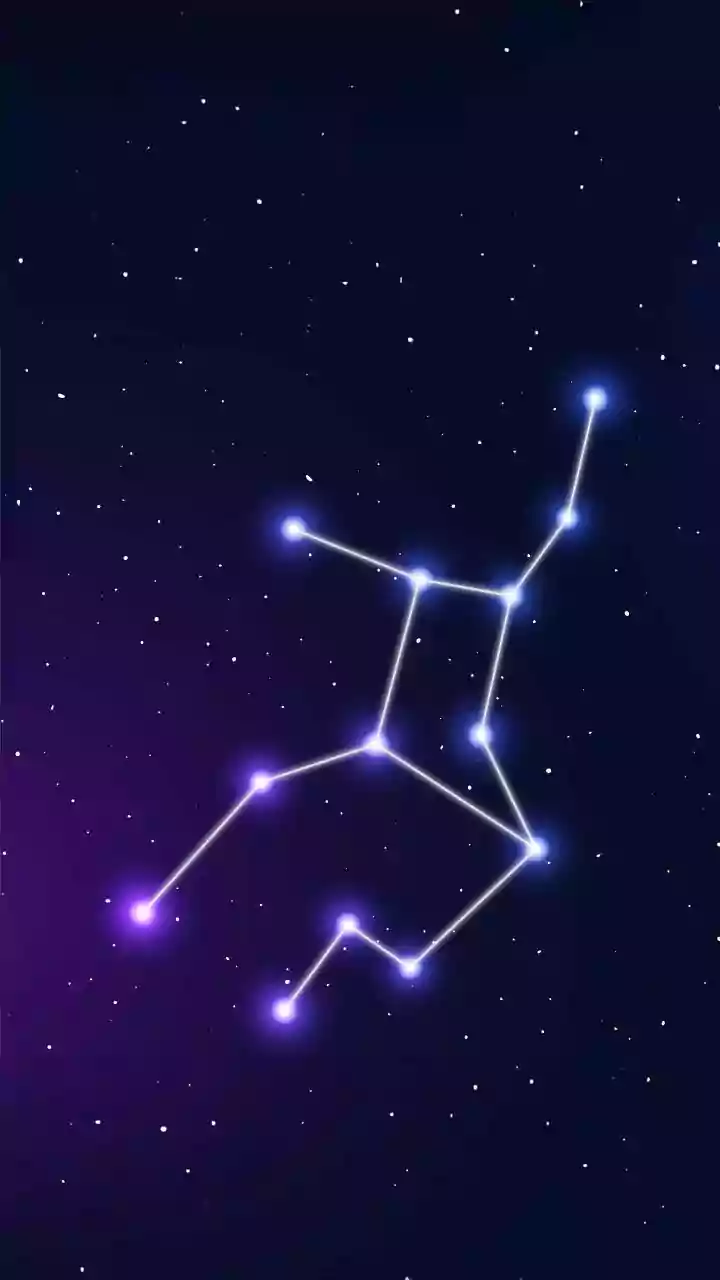
On clearer nights between monsoon spells, the late summer sky reveals some of its most beautiful constellations. Look towards the south to find Scorpius (Vrischika) and Sagittarius (Dhanu). Sagittarius is particularly special because it marks the direction of the center of our own Milky Way galaxy. From a truly dark site free of light pollution, you can see the Milky Way's dense, glowing core as a hazy band of light stretching across the sky. High overhead, you can also spot the Summer Triangle, an asterism formed by three bright stars: Vega in the constellation Lyra, Deneb in Cygnus, and Altair in Aquila. These bright stars are visible even from moderately light-polluted areas.