

Riding on a Sunbeam
Imagine a sailboat on the ocean, its sails catching the wind to move forward. A solar sail works on a similar principle, but its ocean is the vacuum of space and its wind is sunlight itself. Light is made of particles called photons which, despite having
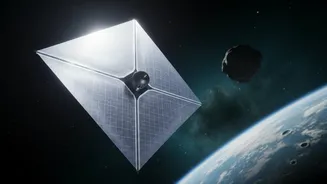
no mass, carry momentum. When these photons strike a solar sail's vast, mirror-like surface, they transfer their momentum, giving the spacecraft a tiny but continuous push. This constant acceleration, though gentle, allows a solar sail-powered craft to build up incredible speeds over time, far beyond what can be achieved with short, powerful bursts from chemical rockets. The fuel is sunlight, which is free and limitless, eliminating the need to carry heavy propellants onboard.
The Challenge of Asteroid Hopping
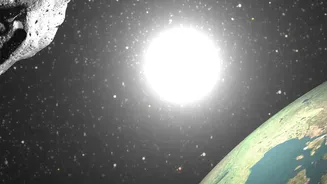
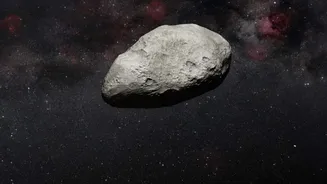
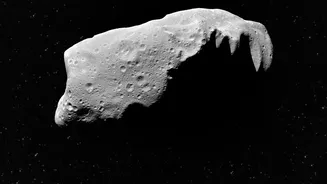
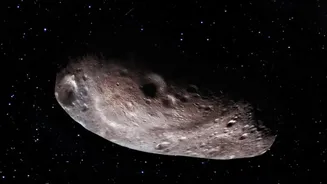
Near-Earth Asteroids (NEAs) are fascinating objects that hold clues about the formation of our solar system, but they are notoriously difficult targets for traditional spacecraft. Unlike planets with predictable orbits, NEAs can have erratic and inclined paths. A conventional rocket mission would need to carry enormous amounts of fuel to launch, chase down an asteroid, match its speed and trajectory for a rendezvous, and then potentially move on to another target. This makes multi-asteroid tours or long-duration observation missions prohibitively expensive and complex. Each maneuver burns precious, finite fuel, severely limiting the mission's scope and flexibility.
The Fuel-Free Advantage
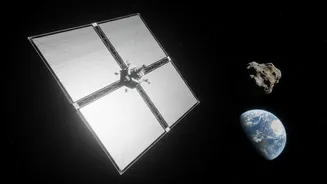
This is where solar sails shine. By eliminating the need for propellant, they offer low-cost operations and incredibly long operating lifetimes. A solar sail craft can spend years cruising through space, patiently adjusting its trajectory to meet up with multiple targets. By simply changing the angle of the sail relative to the sun, a spacecraft can steer, much like a sailboat tacking against the wind, allowing for precise and efficient orbital maneuvers. This capability is ideal for NEA reconnaissance, where a craft might need to perform a slow, close flyby to capture high-resolution images. Missions like NASA's NEA Scout were designed to demonstrate exactly this: a low-cost method for scouting asteroids for future robotic or human exploration. Although contact was lost with NEA Scout after its launch, the mission concept proved the viability of using small, sail-powered satellites for such tasks.
Breakthroughs Enabling New Missions
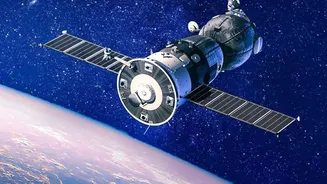
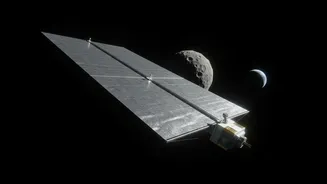
Recent advancements have moved solar sails from theory to proven technology. Projects like The Planetary Society's LightSail 2, which successfully used sunlight to change its orbit around Earth, have been crucial. The true breakthrough, however, lies in new materials and deployment systems. NASA's Advanced Composite Solar Sail System (ACS3) mission is testing lightweight, rigid composite booms that can be packed into a tiny satellite—about the size of a microwave—and then unfurl a sail the size of a small apartment. These innovations make it possible to build smaller, cheaper, yet highly capable spacecraft. This opens the door for fleets of small, autonomous solar sails that could potentially visit thousands of NEAs, transforming our approach to planetary science and defense.
The Future is Bright
The ability to study NEAs up close isn't just for scientific curiosity. It's a critical component of planetary defense, helping us identify and understand asteroids that could pose a threat to Earth. Furthermore, these asteroids are rich in resources that could one day be mined. Solar sails are a key enabling technology for these future endeavors. They provide a highly efficient way to perform a wide range of advanced maneuvers, from hovering at a point in space to changing orbital planes, that are difficult or impossible for conventional rockets. As the technology matures, with larger sails and even more advanced materials, solar sails promise to unlock not just the secrets of near-earth asteroids, but perhaps even faster travel to the outer solar system and beyond.