




The Heavyweight Champion of the Garden
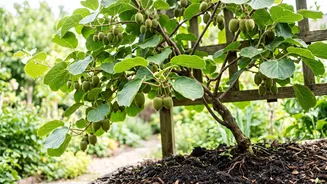
A kiwifruit vine is not a delicate, lightweight climber. It is a vigorous, woody vine, known in botanical terms as a liana. Over its long lifespan, which can exceed 50 years, it develops a thick, heavy trunk and an expansive network of branches. A fully
mature kiwi vine can weigh over 90 kilograms, and that’s before it’s laden with fruit. Each season, a single healthy plant can produce anywhere from 40 to 100 kilograms of fruit, adding a significant, temporary load to its support structure. This immense weight is the primary reason it cannot be treated like a simple decorative creeper.
Why Your Balcony Creeper's Frame Won't Cut It
Many popular balcony creepers in India, such as money plant (Pothos), bougainvillea, aparajita (butterfly pea), or morning glory, are relatively lightweight. They can often be supported by simple bamboo stakes, thin plastic trellises, or even just the balcony grille itself. These structures are designed to handle plants with pliable stems and a much lower overall mass. A kiwifruit vine, by contrast, exerts tremendous force on its support. Its woody growth will easily bend, break, or pull flimsy structures out of their mountings. The initial investment in a weak frame for a kiwi is a false economy that will almost certainly lead to collapse.
The Dangers of an Underbuilt Support
Using an inadequate frame for a kiwifruit vine is a recipe for disaster. As the vine grows, a weak structure will begin to sag and deform before eventually collapsing under the combined weight of wood, leaves, and fruit. This not only risks destroying the vine and losing years of growth and potential harvest, but it can also pose a significant safety hazard. A collapsing pergola or T-bar trellis loaded with dozens of kilograms of plant matter can cause serious damage or injury. The failure often happens gradually, with wires pulling free from mortar or wooden posts starting to lean, but a sudden failure during a storm or when the fruit is heaviest is also common.
Designing a Frame That Lasts
The key to success with kiwi is to build the support structure before you even plant the vine. The two most common and effective designs are the T-bar trellis and the pergola. Both systems are designed to handle heavy loads and provide good air circulation and light exposure, which are crucial for fruit quality and disease prevention. For a T-bar trellis, posts should be spaced about 5 to 6 metres apart in a row, with the top of the 'T' being about 1.8 metres (6 feet) off the ground. A pergola provides an overhead canopy, which is excellent for high yields. In either case, the fundamental principle is strength. Use substantial posts, set them deep, and use heavy-gauge wire.
Key Materials and Construction Tips
When selecting materials, durability is paramount. For posts, choose pressure-treated timber (at least 4x4 inch, but 6x6 is better), cedar, redwood, or galvanized steel pipes. These should be set at least 60-90 cm (2-3 feet) deep in the ground, preferably anchored in concrete for maximum stability, especially in softer soil. For the overhead wires that will support the fruiting canes, use heavy-gauge galvanized steel, typically 12-gauge. These wires must be tensioned properly using turnbuckles or similar devices to prevent sagging as the vine grows. A common mistake is underestimating the need for this robust foundation, but getting it right from the start ensures your kiwi vine has a secure home for its entire productive life.