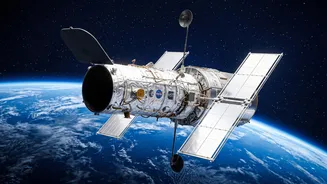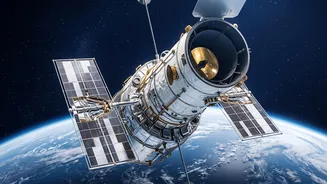







For over 35 years, the Hubble Space Telescope has been humanity’s eye on the cosmos, revolutionizing our understanding of the universe. But its legendary mission is at risk as its orbit slowly decays, forcing a critical decision.
A Legacy in a Slow Descent
Since its launch in 1990,
the Hubble Space Telescope has delivered breathtaking images and groundbreaking science, contributing to over 1.6 million observations and nearly 19,000 scientific papers. However, the icon is in a slow but accelerating orbital decline. Operating in low-Earth orbit, it experiences faint atmospheric drag that, like a constant whisper, slows it down and lowers its altitude. Without its own propulsion system to counteract this effect, Hubble's orbit is decaying by about 14 kilometers per year. This rate is increasing due to higher-than-expected solar activity, which causes the Earth's upper atmosphere to expand and create more drag. NASA projects a likely atmospheric reentry between 2033 and 2034 if no action is taken.
NASA Opens the Floor to Private Industry
Recognizing the urgency, NASA has formally turned to the commercial space sector for ideas. In late October 2026, the agency issued a Request for Information (RFI), essentially a call for proposals from private companies. This move invites the booming private space industry to present innovative and cost-effective solutions for Hubble's future. It marks a shift from a few years ago when the agency was more hesitant about a commercial rescue mission. Now, NASA is officially exploring three distinct possibilities: boosting Hubble to a higher, more stable orbit; launching a mission to service and upgrade its instruments; or planning for a safe, controlled deorbit to prevent it from falling to Earth uncontrolled.
The Reboost: A Simple Push for More Time
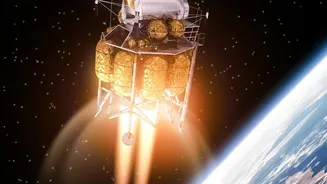
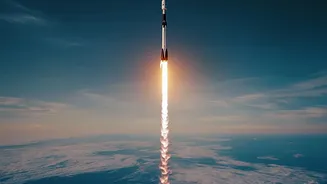
The most straightforward option is an orbital reboost. This would involve sending a spacecraft to rendezvous with Hubble, latch onto it, and gently push it into a higher orbit of at least 600 kilometers. Such a maneuver could extend Hubble's operational life by 15 to 20 years, giving scientists more time to use its unique capabilities. The idea gained traction in 2022 when a study between NASA and SpaceX explored the feasibility of using a Dragon spacecraft for this purpose. While that initial plan was not pursued, the new RFI revives the possibility, opening the door for SpaceX and other companies to propose a mission.
A Full Service: More Than Just a Boost
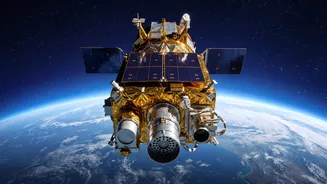
A more ambitious option is a full servicing mission, reminiscent of the five successful missions conducted during the Space Shuttle era. However, with the shuttle retired, any new mission would rely on modern commercial spacecraft and potentially robotics. Beyond an orbit boost, a servicing mission could enhance Hubble's capabilities, possibly by upgrading its aging components. For instance, the telescope is currently operating on a single gyroscope to maximize its remaining lifespan after others failed. A robotic or even crewed mission could potentially address these hardware issues, giving the observatory a more comprehensive life extension and ensuring it continues producing world-class science well into the next decade.
An Undecided Future
For now, nothing is set in stone. The RFI is a market study to gauge what is technically feasible and financially viable, not a contract for a mission. NASA has not allocated funding and is simply gathering information before making a decision. Any potential mission would need to launch by 2032 to be effective. The challenge is significant; a recent attempt to rescue the smaller Swift observatory by a private company failed due to technical issues, highlighting the difficulty of in_orbit rendezvous and servicing. Yet, the willingness to explore these options underscores Hubble's immense value. Its observations in the ultraviolet and visible spectrum are complementary to those of the James Webb Space Telescope, making its survival a top priority for many in the scientific community.