



A New Space Race, Led by Policy
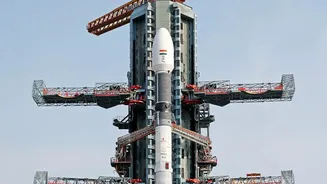
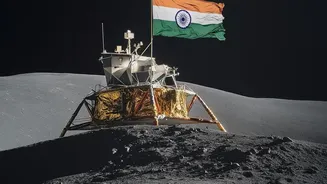
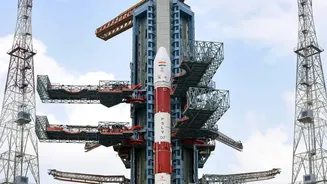
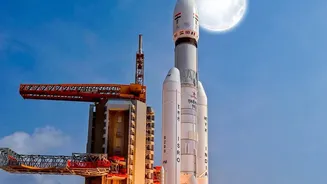
For decades, India’s space journey was synonymous with the Indian Space Research Organisation (ISRO). But a major policy shift is redrawing the map. The Indian Space Policy of 2023 has officially opened the final frontier to private companies, transforming
the sector from a government-led monopoly into a dynamic public-private ecosystem. The government has established the Indian National Space Promotion and Authorisation Centre (IN-SPACe) as a single-window agency to guide, authorise, and supervise all private space activities. This move allows ISRO to focus more on advanced research and development, while private players drive innovation and commercialisation. This has led to a boom, with the number of registered space startups climbing from just one in 2014 to around 440 by mid-2026.
Upstream Innovation, Downstream Application
The opportunities in the new space economy can be broadly divided into two categories. 'Upstream' activities involve building the infrastructure for space: rockets, satellites, and ground stations. Startups like Skyroot Aerospace, which successfully launched India's first privately developed rocket, and Agnikul Cosmos, known for its 3D-printed rocket engines, are leading the charge here. Then there are 'downstream' applications, which focus on using data from satellites to provide services on Earth. This is a rapidly expanding field. Companies like Pixxel, with its constellation of hyperspectral imaging satellites, are providing crucial data for agriculture, environmental monitoring, and urban planning. This data-driven side of the space economy is creating roles that didn't exist a decade ago.
It's Not Just Rocket Science Anymore
The most exciting part of this new era is the sheer diversity of roles it demands. While aerospace engineers remain crucial, you no longer need to be a rocket scientist to join the space industry. The downstream sector, for example, is hungry for data scientists and AI specialists who can analyse vast amounts of satellite imagery to derive actionable insights. There is a growing need for remote sensing and GIS experts who can apply this data to real-world problems in agriculture, insurance, and disaster management. Beyond the purely technical, the sector requires space lawyers to navigate complex international treaties and domestic regulations, as well as professionals in finance, marketing, and business development. Even creative roles, like visual designers for photography and filmmaking, are emerging in space-tech companies.
Skills to Reach for the Stars
For students and young professionals aspiring to enter this field, a strong foundation in a STEM discipline—like mechanical, electronics, or computer science engineering—is a clear advantage. Programming skills, particularly in languages like Python and C++, are highly sought after for simulation, data analysis, and developing flight software. However, the industry is increasingly looking for a mix of skills. The ability to collaborate in multidisciplinary teams, strong problem-solving capabilities, and a willingness to learn continuously are just as important. For those in non-technical fields, developing a deep understanding of the space ecosystem can provide a significant edge. Pursuing specialized courses in areas like space law, remote sensing, or satellite data analytics can open doors to this high-growth sector.