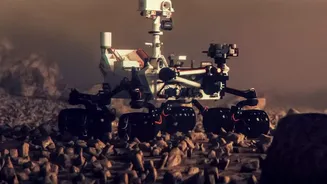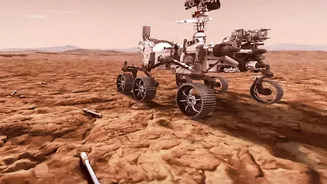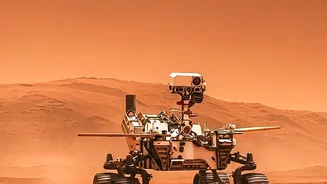






For years, bringing pieces of Mars back to Earth has been a top goal for scientists. Now, NASA has kicked off a fresh initiative to make it happen, re-evaluating its ambitious Mars Sample Return mission to be faster and more affordable.
The Ultimate Souvenir
Since its landing
in February 2021, NASA's Perseverance rover has been dutifully exploring Jezero Crater on Mars. More than just a tourist, its primary job is one of geology's greatest quests: collecting pristine samples of Martian rock, soil, and atmosphere. These samples, sealed in special tubes, are thought to hold secrets about the Red Planet's past, including the ultimate question of whether life ever existed there. While rovers can perform amazing science on-site, the most powerful instruments are here on Earth. Analyzing these samples in state-of-the-art terrestrial labs could revolutionize our understanding of planetary formation and our place in the cosmos. It's a mission described as one of the highest priorities for robotic exploration.
An Ambitious Plan Hits a Wall
The original plan for the Mars Sample Return (MSR) mission was a complex, multi-part campaign planned jointly with the European Space Agency (ESA). It involved sending a lander to retrieve the samples collected by Perseverance, launching them into Mars orbit with a small rocket, and having another spacecraft capture them for the long journey home. However, independent reviews raised serious concerns. The mission's complexity led to a ballooning price tag, with some estimates climbing as high as $11 billion, and a return date that was pushed back to 2040. NASA leadership deemed this timeline unacceptable and the cost too high, forcing a return to the drawing board.
Introducing the PSRA Initiative
In response to these challenges, NASA has announced the Perseverance Sample Retrieval Architecture, or PSRA. Announced on November 9, 2026, PSRA isn't a finished blueprint but rather a new strategic initiative to develop a better one. The goal is to create a more streamlined, faster, and cheaper way to get the samples home. A dedicated PSRA strategy team will officially kick off its work in January 2027. Their task is to develop 'impartial recommendations' by reviewing all previous lessons, assessing current technological capabilities, and exploring different mission options before presenting a final report in the winter of 2027-2028.
The Race to Return Martian Soil
The reset of the MSR program doesn't exist in a vacuum. The United States is not the only country with its eyes on Martian soil. China is making significant progress with its own ambitious sample return mission, Tianwen-3. Chinese space officials are planning to launch their mission around 2028, with the goal of returning about 500 grams of Martian samples to Earth as early as 2031. This adds a sense of urgency and a competitive dynamic to NASA's efforts, pushing the agency to find a workable and efficient path forward to maintain its leadership in planetary exploration.
What Happens Next?
While the architects in a boardroom hash out the new plan, the Perseverance rover continues its work hundreds of millions of kilometres away. It has already collected dozens of scientifically valuable samples and has both stored them onboard and deposited a backup cache on the Martian surface. The PSRA team will now spend the next year figuring out the best way to retrieve this treasure. They will weigh every option, from relying on proven technology to leveraging new commercial partnerships, to finally complete the last leg of this incredible interplanetary journey. The scientific community and space enthusiasts worldwide will be eagerly awaiting their conclusions, which will shape the next decade of Mars exploration.