

Why Freestyle Is a Coordination Supercharger
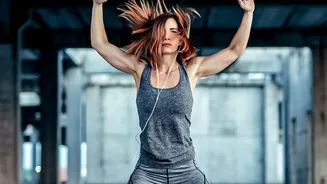
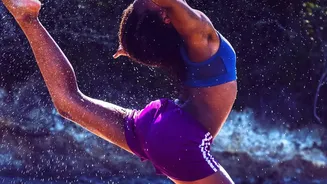
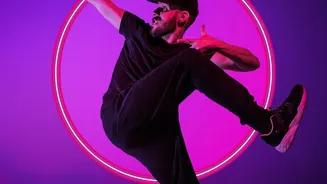
Unlike following choreographed routines where movements are memorised, freestyle dance is all about improvisation. It forces you to make split-second decisions, creating a real-time conversation between your brain and your limbs. This spontaneity is key.
When you freestyle, you’re not just repeating patterns; you're actively problem-solving with your body, deciding where to step, how to swing your arm, and how to shift your weight in the moment. This constant, rapid-fire decision-making forges new neural pathways, essentially upgrading the communication network that controls your coordination. It’s an accessible workout for all fitness levels because it requires no equipment and you don't have to memorise specific steps.
The Science of the Mind-Body Connection
The magic behind this improvement lies in a sense called proprioception. Think of it as your body's internal GPS. It’s the sense that allows you to know where your limbs are in space without looking at them. Dance, especially freestyle, puts your proprioception into overdrive. Every unplanned step, turn, and arm wave stimulates the brain regions responsible for motor control, like the cerebellum and somatosensory cortex. This strengthens the neural connections, improving your overall motor skills, balance, and spatial awareness. Over time, this training helps your body move more efficiently and gracefully, not just on the dance floor but in everyday activities as well.
Breaking Down Arm and Leg Independence
One of the biggest hurdles for many new dancers is getting the arms and legs to do different things at the same time. If you've ever tried to pat your head and rub your stomach, you know the feeling. The key is to simplify. Don't try to learn complex footwork and intricate arm movements all at once. The best approach is to master one part of the body at a time. Practice your footwork first, letting your arms rest. Once your legs feel comfortable with a rhythm or step, introduce a very simple, repetitive arm motion. This 'one complex part, one simple part' method allows your brain to automate one movement, freeing up mental space to focus on the other.
Simple Exercises to Build Coordination
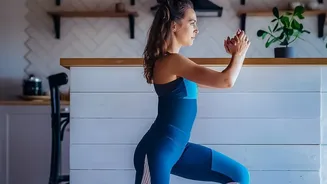
You can start building a solid foundation with a few basic exercises. Try these at home:1. Opposite March: Stand in place and march slowly, lifting your knees. As you lift your right knee, swing your left arm forward, and vice versa. Focus on maintaining a steady rhythm. This cross-lateral movement is a fundamental coordination pattern.2. Simple Box Step with Arms: Start with a basic step-touch: step to the right, bring your left foot to meet it, then step to the left and bring your right foot to meet it. Once that feels smooth, add a simple arm movement, like raising both arms in front of you and then lowering them with the beat. The goal is control, not speed.3. Slow It Down: Pick any simple movement, like a grapevine step or even just shifting your weight from side to side. Now, do it in slow motion, at about 10% of its normal speed. This forces you to pay attention to every part of the movement, strengthening your muscle memory and body awareness.
Putting It All Together in a Freestyle
When you're ready to freestyle, don't aim for perfection. The goal is to explore and have fun. Pick a song you genuinely love, one that makes you want to move. Start by simply bobbing your head or two-stepping to find the beat. As you get comfortable, begin to incorporate the exercises you've practiced. Try a few box steps, then transition into a slow-motion arm wave. Play with different levels by dancing low to the ground and then reaching up high. Don't worry about what you look like. Focus on how the movement feels inside your body. This internal focus, or 'flow state', is not only great for coordination but also a powerful stress reliever.