




Know the Rules Before You Pack
Before you fold a single shirt, check your airline's specific carry-on policy. In India, most domestic carriers like IndiGo, Vistara, and Akasa Air allow one cabin bag weighing up to 7 kg. Some, like Air India, may allow 8 kg on international economy
routes. The typical dimensions are around 55 cm x 35 cm x 25 cm. Additionally, you are usually permitted one small personal item, like a handbag or laptop sleeve, which must fit under the seat in front of you. However, enforcement has become stricter, with gate agents sometimes requiring all items to be consolidated into one bag. Exceeding these limits can lead to hefty fees at the airport, often starting from ₹600-₹700 per extra kilogram on domestic routes, so knowing your allowance is the first step to saving money.
Build a Capsule Wardrobe
The key to packing light is choosing versatile clothing. A 'capsule wardrobe' for a four-day trip means selecting a few core items that all mix and match. A good rule of thumb is the 5-4-3-2-1 method: pack five sets of socks and underwear, four tops, three bottoms, two pairs of shoes, and one accessory like a hat or jacket. For a short trip, this might look like two pairs of trousers or jeans, four tops (a mix of casual and smart), one light jacket or sweater, and two pairs of shoes (one you wear on the plane). Choose a neutral colour palette (like black, grey, navy, or beige) for your main items and add colour with lighter pieces like scarves or shirts. This strategy ensures you can create multiple outfits from a minimal number of items.
Master the Art of Rolling and Cubes
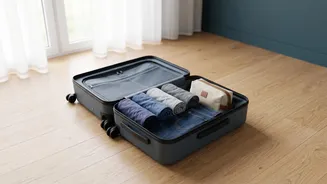
How you pack is as important as what you pack. Rolling your clothes instead of folding them is a classic space-saving technique. It compresses items and can reduce wrinkling in casual fabrics. For maximum efficiency, combine rolling with packing cubes. These are zippered fabric containers that help organize and compress your clothing. You can dedicate different cubes to tops, bottoms, and undergarments. For even more space, consider compression cubes, which feature a second zipper that squeezes out excess air, potentially saving you 20-30% more volume. This combination not only saves significant space but also keeps your bag tidy, making it easy to find what you need without unpacking everything.
Your Personal Item is a Secret Weapon
Most airlines allow a personal item in addition to your main carry-on. While often thought of as just a purse or laptop case, this is valuable extra space. A small backpack or a large tote bag can often fit under the seat and hold a surprising amount. This is the perfect place for your inflight essentials, such as headphones, a book, charging cables, and a neck pillow. It's also where you should pack your toiletries, any medications, and important documents. By strategically using your personal item for heavier or bulkier things like a laptop or a sweater, you can free up precious weight and volume in your main cabin bag, helping you stay under that 7 kg limit.
Shrink Your Toiletries
Liquids are a major challenge for carry-on travellers due to security restrictions—containers must be 100ml or less. Instead of buying expensive travel-sized products, decant your favourite shampoo, conditioner, and lotion into small, reusable silicone bottles. For an even better solution, switch to solid toiletries. Solid shampoo bars, conditioner bars, solid perfumes, and toothpaste tablets can do everything their liquid counterparts do without taking up space in your single, one-litre transparent bag. This not only helps you breeze through security but also eliminates the risk of leaks and spills ruining your clothes.
Wear Your Weight
This is one of the simplest and most effective hacks. Identify the heaviest and bulkiest items in your packing list and wear them on the plane. This typically includes your heaviest pair of shoes (like boots or sneakers), your jacket or a bulky sweater, and perhaps a pair of jeans. An airport terminal might be warm, but an airplane cabin can be cool, so wearing layers is often comfortable. Once you're on board, you can always take the jacket off and use it as a pillow or blanket. This single trick can free up several kilograms and a significant amount of space in your carry-on bag, making the difference between meeting the weight limit and facing an expensive fee at the gate.