


More Than Just Water
For years, finding water on a rocky exoplanet has been a celebrated goal. But the latest findings from the JWST go a critical step further. Astronomers are not just detecting the mere presence of water vapour; they are observing its 'dynamics'. This means
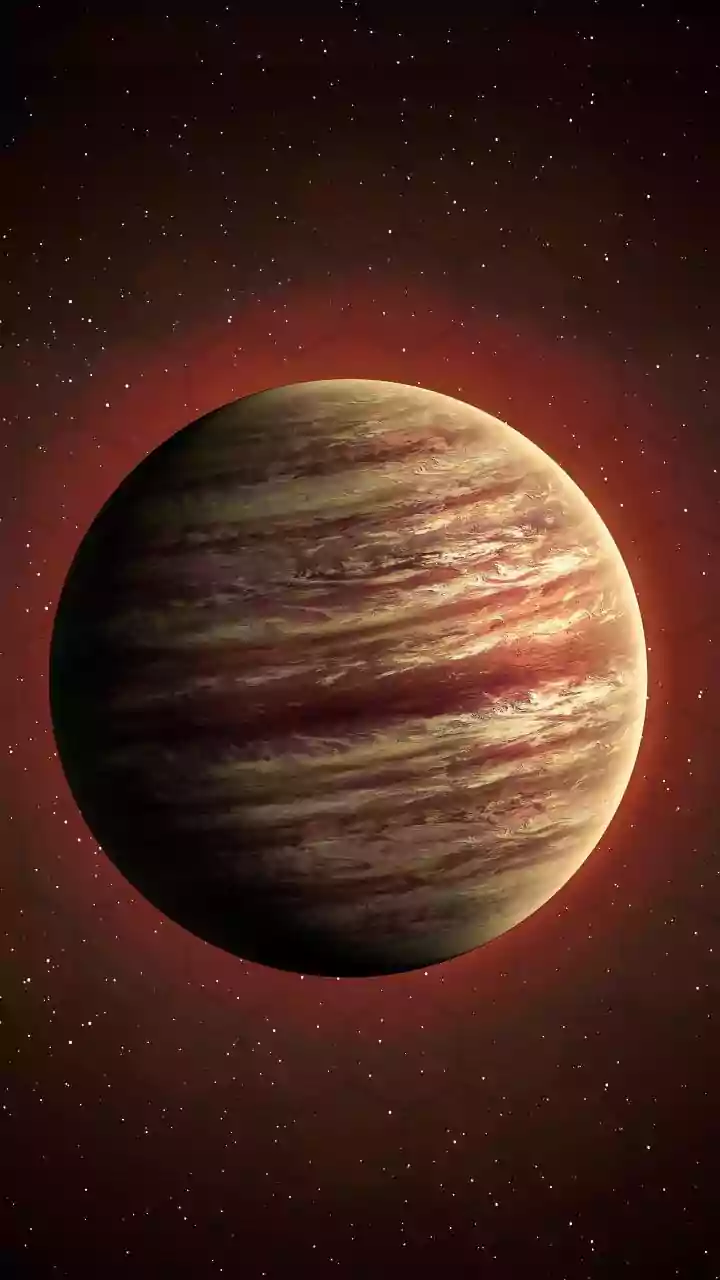
they are seeing the signature of water change over time. These variations strongly suggest an active atmosphere, with processes like cloud formation, wind, and atmospheric circulation stirring the molecules around the planet. It's the difference between finding a puddle and seeing the entire water cycle in action. This moves the study of exoplanets from simple cataloguing to complex characterisation, treating them as true, evolving worlds.
Decoding Light from Light-Years Away
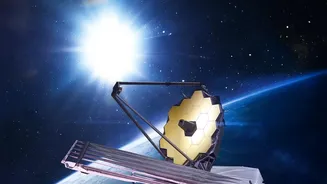
This remarkable feat is possible thanks to a technique called transmission spectroscopy. When an exoplanet passes in front of its host star from our point of view, a tiny fraction of the starlight filters through the planet's atmosphere. The JWST's incredibly sensitive instruments, particularly its spectrographs, capture this light and spread it out into a rainbow-like spectrum. Different molecules in the atmosphere absorb specific colours, or wavelengths, of light, leaving behind a unique chemical 'barcode'. By observing how this barcode of water vapour shifts and changes as the planet orbits its star, scientists can infer movement and activity in the atmosphere, a process that was previously beyond our technological reach.
What is a Super-Earth?
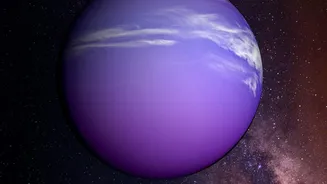
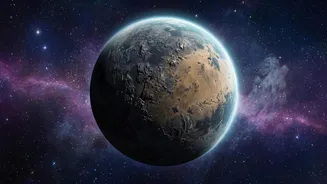
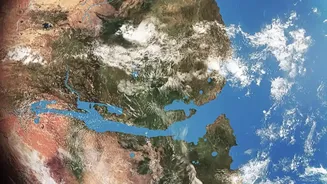
The term 'super-Earth' can be slightly misleading. It doesn't necessarily mean a bigger, better version of our own planet. The designation refers only to a planet's size: larger and more massive than Earth but smaller and less massive than ice giants like Neptune. Super-Earths are one of the most common types of planets discovered in our galaxy, yet our own solar system curiously lacks one, making them objects of intense scientific interest. The specific planets observed by Webb are often extremely hot, orbiting their stars in a matter of days. They are not habitable in any conventional sense, but they serve as perfect natural laboratories for testing our ability to study rocky planet atmospheres.
A Stepping Stone in the Search for Life
So why is observing weather on a scorching, uninhabitable world so exciting? Because it is a profound proof of concept. These observations demonstrate that the JWST can successfully detect and monitor the atmospheric dynamics of a rocky planet. This is a crucial dress rehearsal for the telescope's ultimate goal: to do the same for a temperate, Earth-sized planet located in its star's 'habitable zone'—the region where liquid water could potentially exist on a planet's surface. By refining these techniques on easier-to-observe hot super-Earths, astronomers are building the toolkit they will need to one day search for biosignatures—chemical signs of life—on a true Earth 2.0.