







The Hush Before the Awakening
For three days, the sanctum sanctorum of the Kamakhya Temple remains closed. This period marks the annual menstruation of the Goddess Sati, a powerful symbol of earth’s fertility and creative power. During this time, the Ambubachi Mela throngs with hundreds
of thousands of devotees, sadhus, and tantrics who gather on the temple grounds, but no worship takes place inside the main shrine. The atmosphere is one of patient, reverent waiting. It's a unique quietude amidst a sea of humanity. Pilgrims chant softly, sadhus sit in deep meditation, and the air is thick with the scent of incense and anticipation. This collective stillness is the deep breath before the plunge, a crucial part of the visual drama that is about to unfold. The real masterpiece begins not with a bang, but with this profound, shared silence.
The Unveiling and the Roar
The concluding ceremony, known as Pravritti, happens on the fourth day. At the break of dawn, the temple doors are ceremoniously opened. What follows is an explosion of sound and movement. The sharp, clanging symphony of temple bells cuts through the morning air, accompanied by the resounding blow of conch shells and the unified roar of devotees chanting “Jai Ma Kamakhya!” The silent crowd transforms into a dynamic wave of devotion, surging forward to receive the first darshan. This moment is pure sensory overload. It’s the visual and auditory release of three days of pent-up spiritual energy, a cathartic eruption of faith that is both overwhelming and profoundly moving to witness.
A Canvas of Saffron and Crimson
Visually, the ceremony is dominated by two powerful colours: saffron and crimson. The temple complex becomes a flowing river of saffron as thousands of sadhus, from Naga babas to Aghoris, move through the crowds. Their matted hair, ash-smeared bodies, and stoic expressions create a powerful, almost primal visual narrative. They are living embodiments of renunciation and ascetic power. Juxtaposed against the saffron is the symbolic crimson of the ‘rakta bastra’ or ‘angabastra’. These small pieces of red cloth, believed to be moistened with the menstrual fluid of the Goddess, are distributed as the ultimate prasad. Devotees clutch these fragments with immense reverence. The sea of people, dotted with these vibrant specks of red and the flowing robes of ascetics, creates a painterly canvas that is rich with symbolism—saffron for spiritual pursuit, and red for life, fertility, and divine power.
The Mystique of the Ascetics
The Ambubachi Mela is one of the few occasions where reclusive tantrics and sadhus make a public appearance, and the concluding day is the zenith of this gathering. Their presence adds an undeniable layer of mystique and theatricality to the event. You see ascetics displaying incredible feats of physical endurance, others lost in trance-like meditation, and some simply offering blessings to the endless stream of pilgrims. For an observer, they are a window into an ancient world of spiritual practices that often remains hidden. Their unique appearances—adorned with rudraksha beads, skulls, and sacred markings—are not for show but are part of their spiritual identity. Their gathering at the temple’s reopening transforms the ceremony from a simple ritual into a living museum of India's diverse and esoteric spiritual traditions.
An Orchestra of Light and Faith
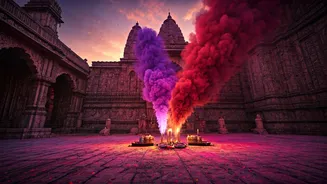
The final element that cements the ceremony as a visual masterpiece is the interplay of light, smoke, and human expression. As devotees finally enter the dark, cave-like sanctum, the flickering glow of countless diyas and earthen lamps illuminates faces etched with pure, unadulterated faith. The thick, fragrant smoke from incense and camphor creates a hazy, dreamlike filter over the entire scene, blurring the lines between the physical and the metaphysical. Watching a grandmother’s tears of joy as she receives the prasad, or a young man’s face completely absorbed in prayer, is to witness devotion in its most raw and beautiful form. It is this human element, this tapestry of a million individual stories of faith converging at one single point, that elevates the ceremony from a mere ritual to a profound work of art.