
The Reigning Moon King
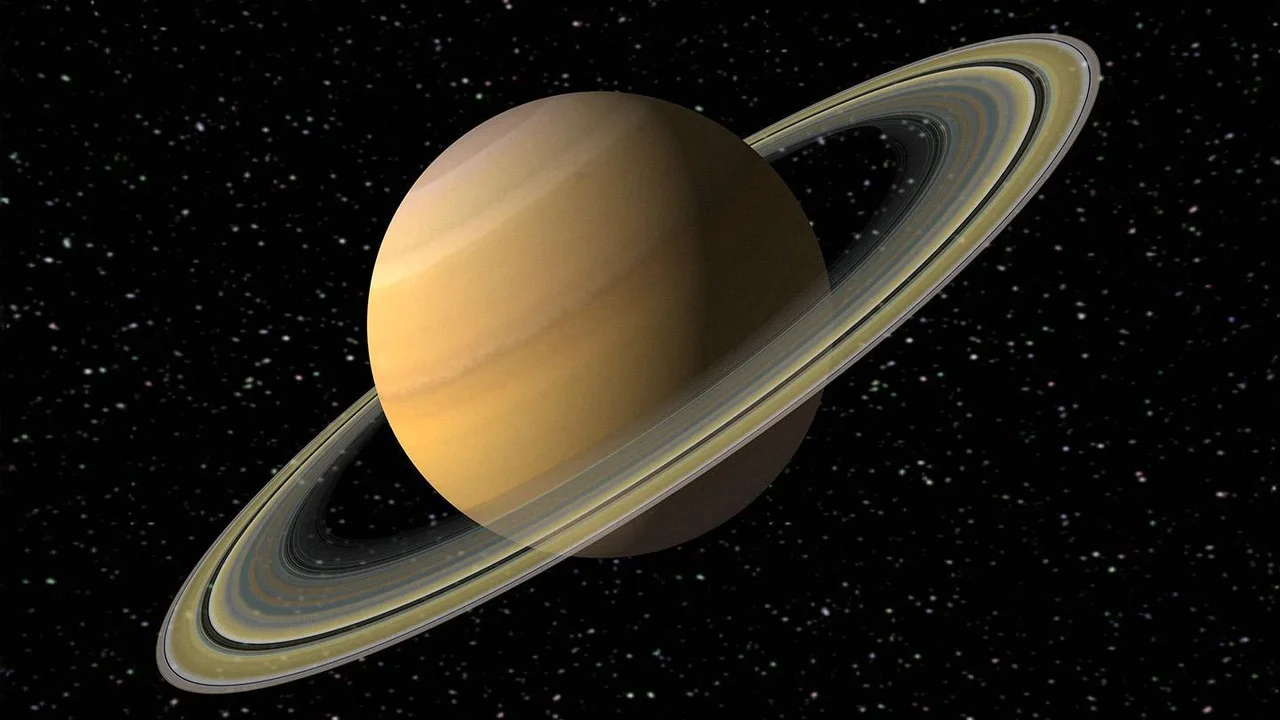
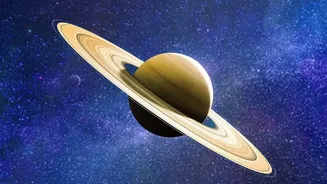
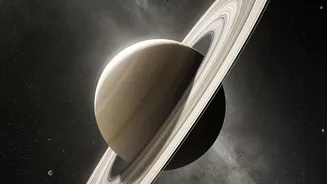
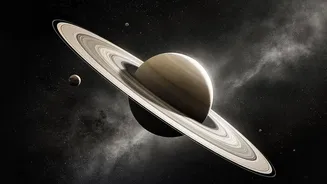
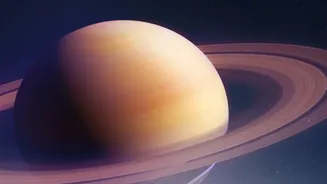
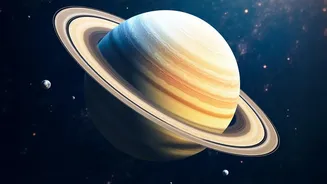
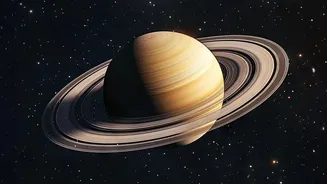
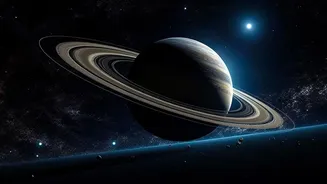
For years, Jupiter held the title for the most known moons. But in a celestial race, Saturn has decisively pulled ahead. As of mid-2026, astronomers have confirmed 293 moons orbiting the gas giant, making it the first planet known to have such a vast
satellite system. This number is not static; it feels like every year brings a new batch of discoveries, bumping the total higher and making textbooks almost immediately out of date. In 2025, a stunning 128 new moons were announced at once, followed by more discoveries in 2026. This constant revision isn't because Saturn is suddenly acquiring new moons. Rather, our ability to see them is getting dramatically better. These new additions are not giant spheres like our own moon. Most are tiny, often just a few kilometres across, and incredibly faint, which is why they have remained hidden until now.
A Tale of Two Moon Families
The secret to Saturn's high moon count lies in its two very different types of satellites: the 'regular' and 'irregular' moons. The regular moons are the ones we’re most familiar with. They include giants like the hazy, world-like Titan and the icy, ocean-bearing Enceladus. These moons follow tidy, nearly circular paths around Saturn’s equator and orbit in the same direction the planet spins. Scientists believe they formed alongside Saturn billions of years ago from a swirling disk of gas and dust, much like a miniature solar system. In stark contrast are the irregular moons, which make up the vast majority of Saturn's collection. These are cosmic rebels. They travel in large, elliptical, and highly tilted orbits, with many even moving backward (in retrograde motion) against the flow of the rest of the system. These chaotic orbits are the key clue to their violent origins.
Cosmic Kidnappings and Collisions
The irregular moons weren't born with Saturn; they were captured. In the chaotic early days of the solar system, countless small bodies, like asteroids and objects from the distant Kuiper Belt, zipped through space. Saturn’s immense gravitational pull acted like a giant net, snagging many of these wanderers as they passed too close. This explains their strange and distant orbits. But the story gets even more dramatic. Astronomers believe that these initial captured moons often collided with each other over billions of years. These ancient smash-ups created swarms of smaller fragments, which then became new, smaller moons themselves. This is why many irregular moons are found in distinct groups or 'families,' traveling in similar orbital paths—they are the scattered remnants of a much larger parent body that was shattered long ago.
How Astronomers Keep Finding More
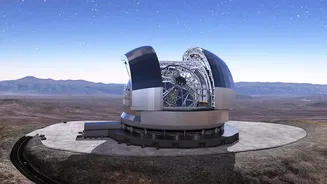
The recent explosion in moon discoveries is a testament to technological advancement. Finding a tiny, dark rock hundreds of millions of miles away is an immense challenge. Astronomers rely on powerful ground-based observatories, like the Subaru Telescope and the Canada-France-Hawaii Telescope, to peer into the dark outer reaches of Saturn’s domain. The real breakthrough, however, comes from a clever technique often called 'shift and stack.' Scientists take a series of images of a patch of sky over time. By digitally shifting and layering these images to follow the predicted path of a potential moon, the faint light from the tiny object is amplified, allowing it to emerge from the background noise. Once a candidate is spotted, it must be tracked for months or even years to confirm its orbit is stable and truly centered on Saturn before it can be officially catalogued by the International Astronomical Union's Minor Planet Center. This painstaking confirmation process is why discoveries made from observations in 2019 might only be announced years later.