


Understanding the ‘Special’ Train Category
The term 'special train' doesn't refer to just one type of service. It's a broad category used by Indian Railways for several kinds of trains. The most common are 'Special Fare' or 'Suvidha' trains, often introduced temporarily to manage high demand during
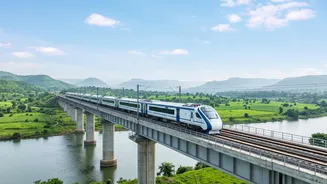
festivals, holidays, or specific events. These are different from premium, high-speed 'special' services like the Vande Bharat, Tejas, or Shatabdi Express, which run on fixed schedules and are known for their enhanced amenities. Regular trains are the mail, express, and passenger services that form the backbone of the railway network, operating on consistent schedules year-round.
Comparing Cost and Ticketing
This is where passengers notice the biggest difference. Regular mail and express trains have fixed fares. In contrast, 'Special Fare' and 'Suvidha' trains operate on a dynamic pricing model, similar to airline tickets. The fare for these trains is typically higher than for regular trains on the same route, often starting at the equivalent of a Tatkal ticket and increasing as seats fill up. According to the Railway Minister, special trains with reserved accommodation are intentionally priced higher. Furthermore, concessions, such as for senior citizens, are usually not applicable on these trains, and cancellation policies are much stricter, with often no refunds permitted. Premium services like Vande Bharat also have higher, fixed fares but justify it with superior amenities.
Speed, Punctuality, and Priority
One might assume 'special' means faster, but that's not always the case. Premium services like the Vande Bharat and Shatabdi are genuinely built for speed, with quicker acceleration and fewer stops, often reducing travel time. However, the temporary 'Special Fare' trains often have the lowest priority on the tracks. They are frequently delayed for hours to allow regular superfast, mail, and express trains to pass, a common complaint among passengers. If punctuality is your main concern, a regular superfast or a premium scheduled service like a Rajdhani or Shatabdi is a much safer bet than a 'Special Fare' holiday train.
Comfort and Onboard Amenities
Here again, the distinction between premium specials and temporary specials is crucial. Premium trains like Vande Bharat and Tejas offer a significantly upgraded travel experience. They feature fully air-conditioned coaches, automatic doors, bio-vacuum toilets, onboard Wi-Fi, GPS-based information screens, and better catering. Some Vande Bharat trains even have rotating seats in the executive class. On the other hand, 'Special Fare' trains deployed during peak seasons often use older coaches with basic facilities. Passengers have reported that these trains may lack pantry cars and have lower standards of cleanliness compared to their regular counterparts.
Booking and Availability
Regular trains can typically be booked up to 120 days in advance, allowing for well-planned travel. 'Special Fare' and 'Suvidha' trains have a much shorter booking window, often opening just 10 to 15 days before the journey. This makes them an option for last-minute travel when all regular trains are fully booked. However, because they are demand-driven, seats can get filled very quickly despite the higher prices. Booking for these is usually restricted to online platforms like the IRCTC website, and ticket agents are often not permitted to book them.