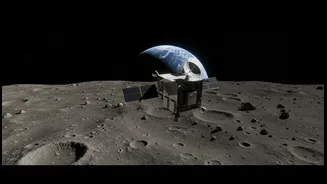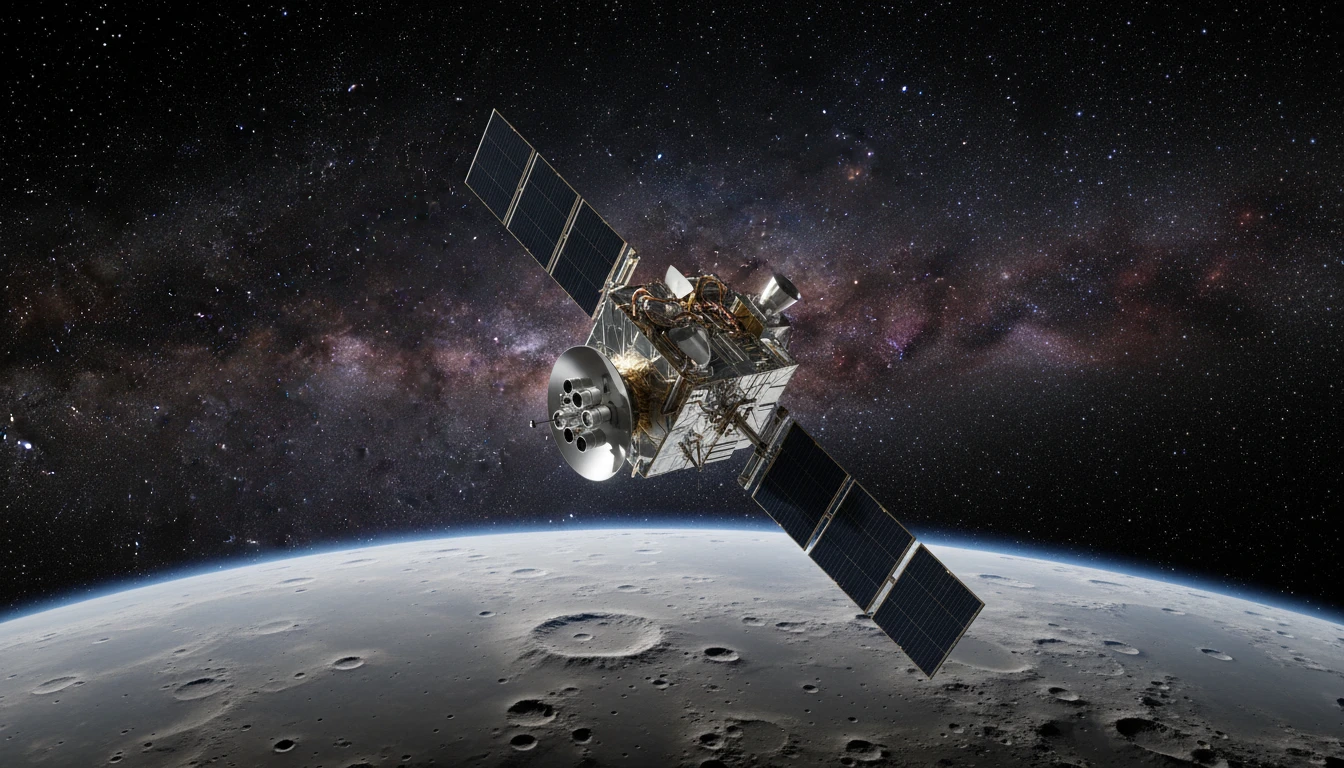



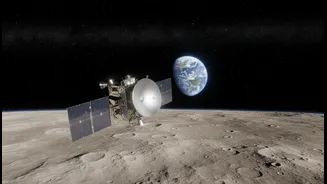



A Pioneer in a Unique Orbit
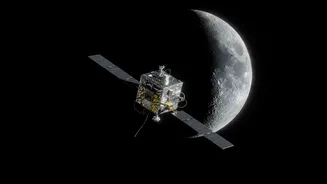
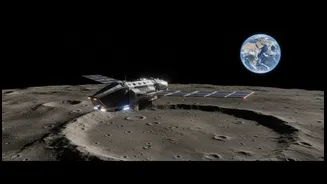
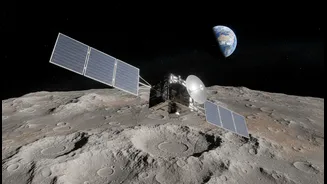
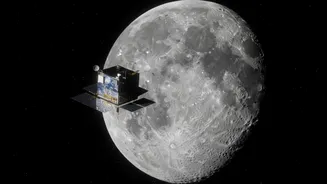
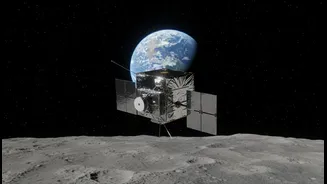
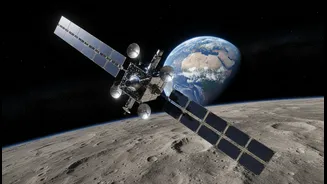
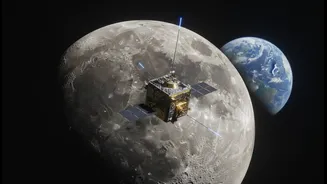
Launched in June 2022, the Cislunar Autonomous Positioning System Technology Operations and Navigation Experiment, or CAPSTONE, had a groundbreaking primary goal. It became the first spacecraft to successfully enter and operate in a unique, fuel-efficient
orbit around the Moon called a near-rectilinear halo orbit (NRHO). This specific orbit is a gravitational sweet spot, balanced between the Earth and the Moon, which drastically reduces the amount of fuel needed to stay in place. By proving the stability of this orbit, the 55-pound spacecraft served as a pathfinder, collecting vital data for future, much larger installations like NASA’s planned Artemis missions. After completing its primary six-month mission, CAPSTONE's operational life was extended, turning the small satellite into a hardworking testbed for the next wave of lunar technology.
Breaking Free From Earth's Control
For decades, navigating in deep space has been a slow and cumbersome process. A spacecraft's position could only be determined by communicating with the massive antennas of the Deep Space Network on Earth. This involves sending a signal from the spacecraft to Earth, where controllers calculate its position and then send instructions back. As the area around the Moon becomes more crowded with government and commercial missions, this Earth-dependent system presents a significant bottleneck. CAPSTONE was designed to test a revolutionary alternative: an autonomous navigation system that works without constant input from ground control. This technology, known as the Cislunar Autonomous Positioning System (CAPS), is the key to a future where spacecraft can figure out where they are and where they are going all on their own.
A New Lunar 'GPS' Is Born
The core of CAPSTONE's success lies in demonstrating a spacecraft-to-spacecraft navigation solution. To test the CAPS software, CAPSTONE communicated directly with NASA's Lunar Reconnaissance Orbiter (LRO), which has been circling the Moon since 2009. In a first-of-its-kind crosslink demonstration, CAPSTONE sent a signal to LRO, which then returned it. By measuring the time it took for the signal to make the round trip, CAPSTONE's onboard software could calculate its distance from LRO and, from there, determine its own precise position and velocity in orbit. This peer-to-peer system is analogous to how GPS works on Earth, where a receiver uses signals from multiple satellites to pinpoint its location. The success of this experiment proves that a reliable, independent navigation network can be established at the Moon.
Paving the Way for Artemis
The technologies validated by CAPSTONE are not just theoretical exercises; they are essential building blocks for NASA's Artemis program, which aims to establish a sustained human presence on the Moon. The unique NRHO orbit that CAPSTONE pioneered was originally slated for the Gateway, a planned Moon-orbiting outpost for astronauts. While plans for the Gateway have shifted, the orbit itself and the autonomous navigation capabilities remain critical for future lunar infrastructure, including surface habitats and other long-term missions. By successfully demonstrating autonomous navigation (autoNGC) and more resilient deep-space communication methods, CAPSTONE has significantly reduced the risk for the complex operations that will define the Artemis era. This allows NASA and its commercial partners to plan for more ambitious missions with greater confidence.
The Future of Cislunar Operations
NASA's official technology demonstrations aboard CAPSTONE concluded in June 2026, with the mission having achieved all of its primary and extended goals. The spacecraft, however, continues to be operated by its owner, Advanced Space, as a platform for further technology development. The success of CAPSTONE represents a significant shift in how we approach space exploration. It has proven that small, relatively low-cost CubeSats can serve as powerful pathfinders for critical technologies. Furthermore, it has demonstrated the ability to upload new software and experiments to a spacecraft already in orbit, transforming it into a flexible and cost-effective testbed. This small satellite has provided an invaluable preview of a future where operations in the busy environment around the Moon are more efficient, more autonomous, and less reliant on Earth.