




The Foundation: MOXIE's Historic Success
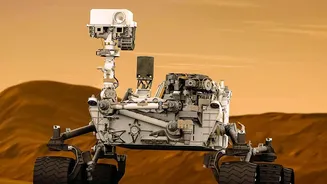
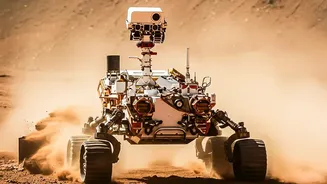
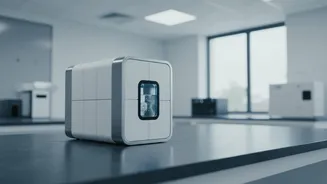
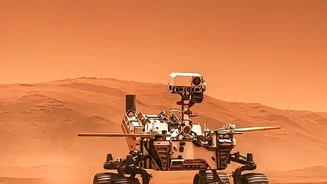
To understand where we're going, we first have to appreciate where we've been. The story of Martian oxygen production begins with a toaster-sized instrument aboard NASA's Perseverance rover called MOXIE, the Mars Oxygen In-Situ Resource Utilization Experiment.
Between 2021 and 2023, MOXIE repeatedly performed a small miracle: it inhaled the thin, carbon dioxide-rich Martian atmosphere and exhaled pure oxygen. Using a process called solid oxide electrolysis, it heated the air to around 800°C and electrochemically split the CO2 molecules into oxygen and carbon monoxide. The experiment was a resounding success, running 16 times and producing a total of 122 grams of oxygen. While that's only enough to keep a small dog breathing for about 10 hours, MOXIE wasn't designed to be a factory. Its purpose was to prove that the technology worked in the harsh, real-world conditions of Mars, and it passed with flying colours. This historic demonstration was the first time a natural resource on another planet was harvested for human use, turning a theoretical concept into a proven reality.
From Experiment to Industry: Scaling Up
MOXIE's success laid the groundwork for the next critical phase: scaling up. Making a few grams of oxygen is a scientific triumph, but sustaining a human crew and fueling a return rocket requires an industrial-scale operation. A crew of six astronauts would need about a ton of oxygen just for life support on a year-long mission, and launching a rocket from the Martian surface could require around 30 metric tons of liquid oxygen. Transporting all that from Earth is logistically impractical and prohibitively expensive. The real breakthrough, therefore, lies in developing systems that can produce oxygen continuously and in massive quantities. Companies like OxEon Energy, which helped develop MOXIE's core technology, are now building next-generation electrolysis stacks that are vastly more powerful. These new units have a cell area five times larger and can be stacked much higher, resulting in a system scaled up by more than 30 times compared to the original experiment. The goal is to create a robust, full-scale plant that can operate for months on end, stockpiling breathable air and rocket propellant before astronauts even arrive.
A New Challenger: Plasma Conversion
While scaling up the proven electrolysis method is a major focus, a different and potentially more efficient technology is also emerging: plasma conversion. Instead of just heat, this method uses plasma—an energized state of matter created by electricity, like miniature lightning bolts—to break apart carbon dioxide molecules. Research backed by the European Space Agency has shown this technique could be a game-changer. One reactor demonstrated the ability to produce oxygen at a rate of 1.1 kilograms per day, a yield roughly 30 times faster than what MOXIE achieved. Perhaps even more impressively, it did so while using only about 10% of the energy required by the electrolysis experiment. The lower power requirement and near-instantaneous startup time make it exceptionally well-suited for Mars, where energy will likely come from fluctuating solar power. This plasma method also offers an intriguing bonus: it can be used to create nitrogen oxides from the Martian atmosphere, which are essential components for making fertilizer to grow crops.
What High Volumes of Oxygen Really Mean
The ability to generate high volumes of oxygen on-site transforms the entire calculus of Mars exploration. It shifts the paradigm from temporary visits reliant on Earth-based supply lines to establishing a truly sustainable, long-term presence. The primary benefit is creating rocket propellant. The largest consumer of oxygen on a Mars mission won't be the astronauts' lungs, but the rocket engine needed for the ascent from the Martian surface. Manufacturing this oxidizer on Mars dramatically reduces the mass that needs to be launched from Earth, making missions cheaper and more feasible. Secondly, a steady supply of breathable air is a fundamental requirement for any habitat where humans will live and work. Beyond just breathing, oxygen is also crucial for other systems, such as water production when combined with hydrogen. Technologies like the brine electrolyzer, which aims to split the salty water found on Mars into oxygen and hydrogen fuel, further highlight how interconnected these resource utilization efforts are. Ultimately, these upgraded oxygen systems are not just an atmospheric experiment; they are a cornerstone technology for building a Martian outpost.