



The Psychology of Shape
Before you even consider the practicalities, it is worth understanding how our brains react to different forms. Sharp, angular lines can feel structured and formal, but in a tight space, they can also be perceived as harsh or obstructive. In contrast,
curves and rounded shapes often feel more natural, softer, and more welcoming. They mimic forms found in nature, which can have a calming and soothing effect on our psyche. This emotional response is the foundation of why rounded edges work so well in compact homes; they help create an atmosphere of comfort and safety, making a space feel more like a sanctuary.
Improving Flow with Rounded Edges
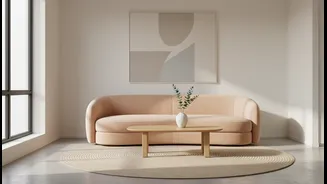
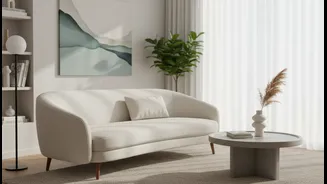
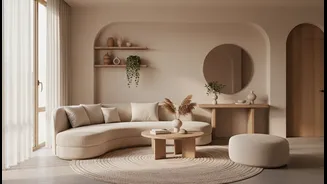
One of the most significant advantages of curved furniture in a small flat is the improvement of traffic flow. Sharp corners jut out, creating physical and visual barriers that can make a room feel cramped and difficult to navigate. A round coffee table, for instance, is much easier to walk around than a rectangular one, which can instantly make a living area feel more open. This principle applies to everything from dining tables to sofas. A sofa with rounded arms softens the overall look and prevents the piece from feeling like a rigid block in the middle of the room. This improved circulation is not just about convenience; by allowing the eye to move smoothly around the room without abrupt stops, curves create the illusion of more space.
The Nuanced Case of Oversized Forms
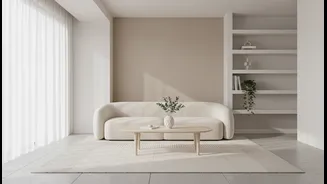
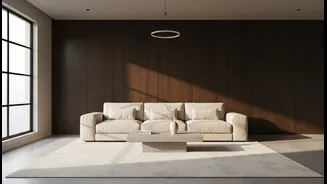
A popular piece of design advice for small spaces is to use one large, statement piece of furniture instead of several smaller ones. The logic is sound: fewer items can lead to less visual clutter. An oversized sofa, for example, can anchor a room and make it feel more cohesive. However, this strategy comes with significant caveats. An oversized piece that is also visually heavy—dark, bulky, and low to the ground—can easily overwhelm a small room and make it feel cramped. The trick often fails if the piece blocks entrances or natural light. For an oversized form to work, it often needs balancing features, such as being raised on slender legs to show more floor space, having a slim profile, or being a light, neutral colour to reduce its visual weight.
How to Strike the Perfect Balance
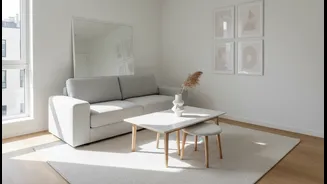
The ideal approach often lies in combining these principles. You can embrace a larger-scale piece if it also incorporates soft, rounded edges. For example, a large sectional sofa can work in a small living area if its design is curved. The curve helps to define a cosy seating area without creating the harsh boundary of a traditional L-shaped sofa. Similarly, you can balance a rectangular sofa by pairing it with a round coffee table or a circular rug. The key is to create a dialogue between straight and curved lines. This mix adds visual interest and ensures the space feels dynamic rather than being dominated by a single design element. Start by introducing one or two curved pieces, like an accent chair or a mirror, to see how they soften the room.
Applying the Principle Beyond Furniture
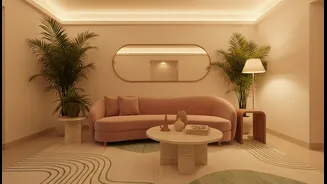
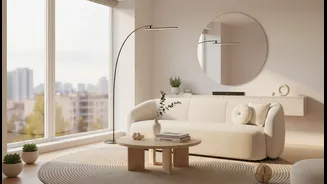
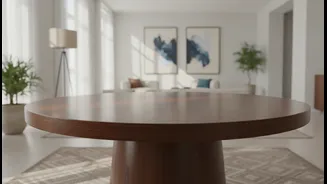
The power of curves is not limited to sofas and tables. You can incorporate this design principle in more subtle ways throughout your flat. Think about arched floor lamps, which draw the eye upwards while adding a graceful line. Round mirrors are excellent for bouncing light around and breaking up the monotony of a flat wall. Even textiles can play a role; a rug with a curved pattern can help to define a zone, like a dining area, and add a sense of movement. In the dining room, a round table can often feel more sociable and can sometimes seat more people in a smaller footprint than a rectangular equivalent. By applying this focus on shape to all your decor choices, you create a cohesive and thoughtfully designed home.