


Confirm the Day’s Gold Rate
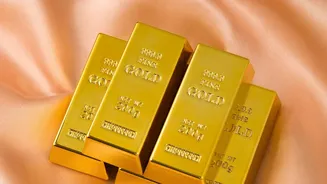
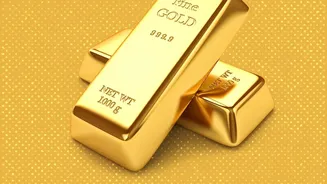
Before you even step into a jewellery store, check the current market rate for gold. Crucially, don't just look at the 24-karat (99.9% pure) price. Most Indian jewellery is made from 22K (91.6% pure) or 18K (75% pure) gold. Jewellers' buying rates for old gold will
be based on these purities. Reputable financial news outlets and bullion association websites publish these rates daily. Knowing the day's rate gives you a solid baseline and protects you from being offered an outdated or unfair price.
Verify Purity and Weight Transparently
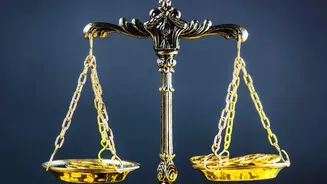
The value of your gold is determined by its net weight and purity. When you present your jewellery, the jeweller should weigh it on a calibrated scale in front of you. If your jewellery has stones, enamel, or other non-gold elements, these will be removed or their weight deducted to determine the net weight of the gold. For purity, modern jewellers use non-destructive methods like XRF (X-ray fluorescence) machines, often called Karatmeters, which provide a precise reading without damaging the ornament. Insist that all testing and weighing happens in your presence to ensure complete transparency.
The Power of the Hallmark
A BIS (Bureau of Indian Standards) hallmark is a certification of purity and significantly boosts your confidence during valuation. A hallmarked piece will have the BIS triangular logo, the karat purity and fineness (e.g., 22K916), and often a six-digit alphanumeric Hallmark Unique Identification (HUID) number. You can verify the HUID using the BIS Care mobile app to confirm the jeweller's details and the item's authenticity. While even hallmarked gold may be re-tested by the jeweller, it serves as strong proof of purity and generally leads to a smoother valuation process with fewer disputes.
Question Every Single Deduction
Here is where a significant part of the value can be lost if you are not careful. Jewellers will apply certain deductions from the gold's calculated value. Common deductions include 'melting' or 'refining' charges, which typically range from 1-3%. Some may also apply 'wastage' charges, especially on non-hallmarked items, to account for potential impurities. Be wary of arbitrary or high percentage deductions for things like 'wear and tear'. Always ask the jeweller to provide a clear, itemised list of all deductions and their corresponding percentages. If they cannot explain a charge clearly, consider it a red flag.
Understand Exchange vs. Cash Sale
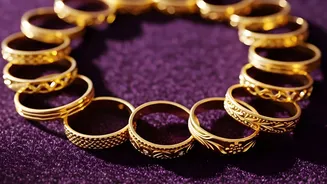
Jewellers often prefer to give you credit for new jewellery rather than paying cash for your old gold. As a result, the valuation might be slightly more favourable in an exchange offer. However, be careful. A generous offer on your old gold could be balanced out by inflated making charges on the new piece you purchase. The best approach is to evaluate both sides of the transaction separately. Ask for the cash value of your old gold first, and then get a full price breakdown for the new item, including its gold value, making charges, and GST.
Always Demand a Detailed Receipt
Whether you are exchanging or selling, the final transaction must be documented with a proper bill or receipt. This document should clearly state the gross weight of your old jewellery, the net gold weight after deductions, the purity (karat) confirmed during testing, the gold rate applied, a full list of all deductions, and the final value credited to you. This receipt is not just for your records; it's your proof of a transparent and fair transaction.