

A Rainbow Against the Ice
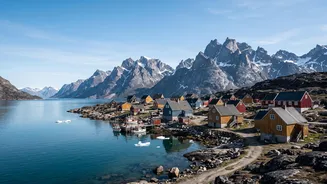
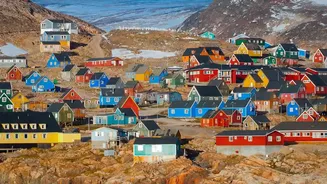
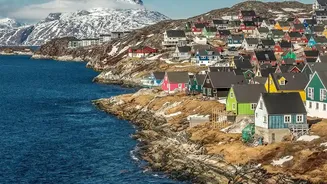
From Nuuk, the world's smallest capital, to tiny, isolated settlements like Ittoqqortoormiit and Kulusuk, a unique architectural tradition dots the stark Arctic landscape. Brightly painted wooden houses in shades of primary red, sunny yellow, bold blue,
and deep green cling to rocky coastlines and cluster around quiet fjords. This isn't a recent trend for the benefit of tourists; it’s a living tradition that turns entire towns into palettes of colour. In places like Ilulissat and Tasiilaq, the rows of colourful homes create a visual warmth that defies the icy surroundings, offering a spectacle that photographers travel thousands of miles to capture. The sheer contrast—the sharp, clean lines of a red house against a backdrop of monumental white icebergs—makes for profoundly compelling imagery.
A Practical Splash of Colour
The tradition of painting houses in specific colours is rooted not in aesthetics, but in pure practicality. Dating back to the colonial era of the 18th and 19th centuries, when prefabricated timber kit homes were sent from Scandinavia, colour was a crucial navigational tool. With no street names or numbers, and in a climate known for sudden snowstorms and thick fog, colours helped residents and visitors identify a building’s function at a glance. Red was used for churches, schools, and the homes of ministers or teachers. Yellow designated hospitals and the residences of doctors and nurses. Blue was for fish factories, black for police stations, and green for telecommunications or workshops. This simple, effective system was essential for community life in a challenging environment.
The Photographer's Muse
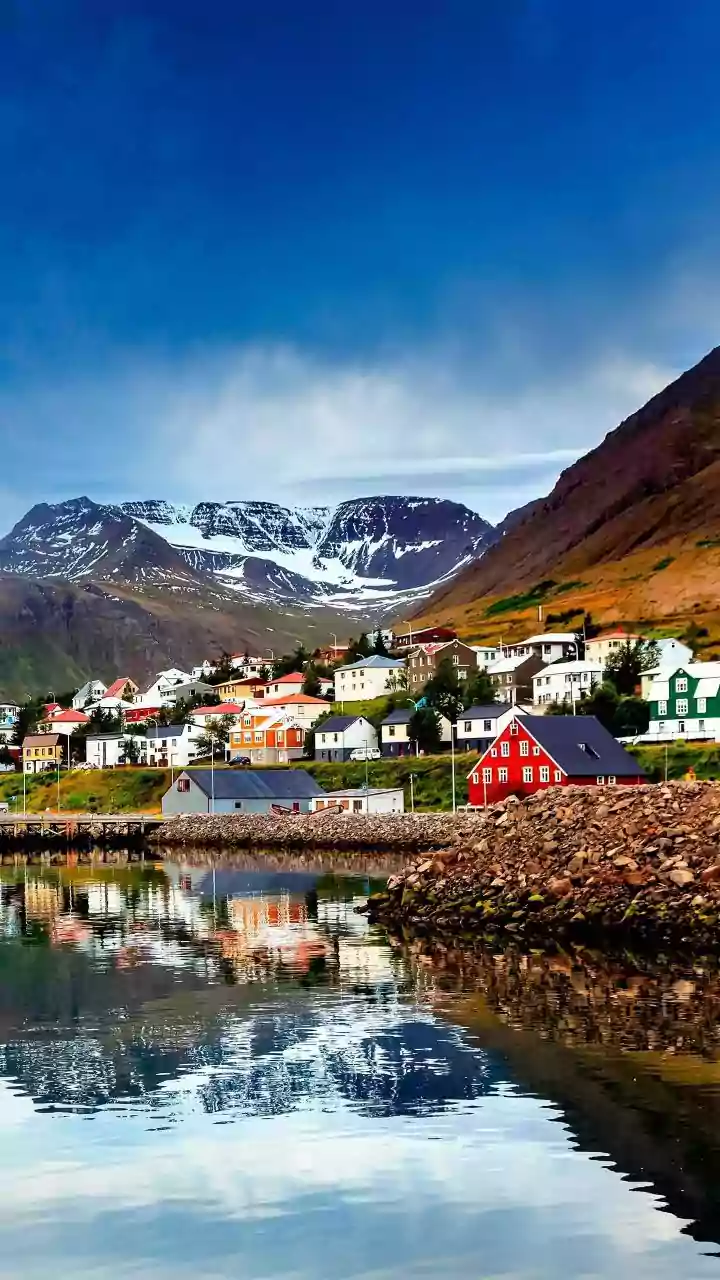
For any photographer, light and contrast are fundamental elements, and Greenland offers them in dramatic abundance. The low arc of the Arctic sun creates long golden hours with soft, ethereal light that makes colours appear even more saturated against the snow. This unique quality of light, combined with the stark, monochromatic landscape, makes the colourful villages a dream subject. Photographers seek out classic compositions: the waterfront of Nuuk with Sermitsiaq mountain in the background, the vibrant houses of Sisimiut reflected in calm harbour waters, or a single coloured cabin standing resiliently against a field of ice. It’s a landscape that offers endless opportunities to capture the interplay between human resilience and the raw power of nature.
Tradition in a Modern World
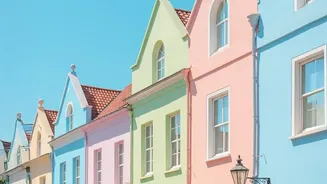
Today, the strict colour-coding system is no longer a rule. Homeowners are free to choose any colour they wish, leading to an even more diverse and personal palette in many towns. Pinks, purples, and pastels now join the traditional hues, reflecting individual expression rather than communal function. However, the legacy of the old system remains. As a nod to the past, many hospitals in Greenland are still painted yellow, and some churches retain their historic red. This evolution adds another layer to the story, blending historical identity with modern life. The colours, once a tool for survival and navigation, have become a symbol of cultural identity—a joyful and defiant statement of life and community in the heart of the Arctic.